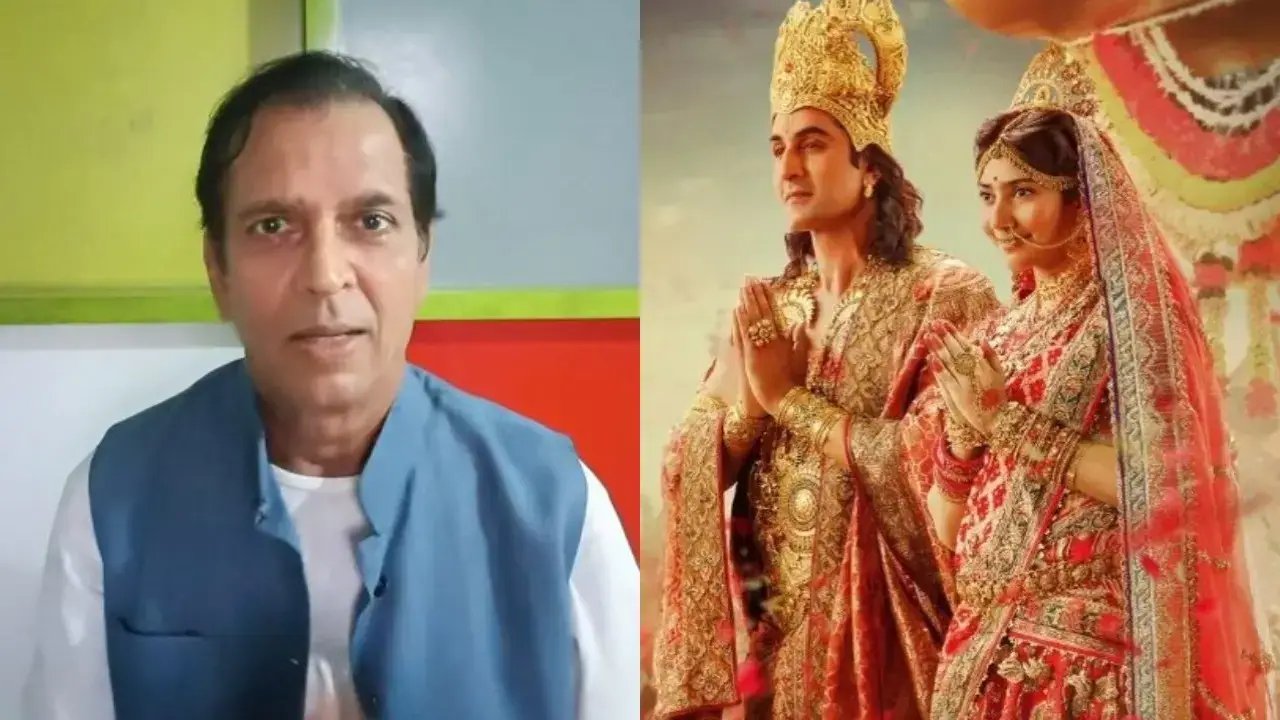
Sunil Lahri holds one of Indian television’s most enduring legacies. For millions who lived through the late eighties, his portrayal of Lakshman in Ramanand Sagar’s classic Doordarshan serial remains an indelible gold standard. So when Nitesh Tiwari’s lavish cinematic retelling of Ramayana opened in theatres worldwide today ahead of Diwali, Lahri spoke out. He has not watched the complete theatrical cut yet. But the tracks previewed across the promotional trailer left him distinctly underwhelmed.
Music forms the heartbeat of any epic. Lahri drove that point straight home in a video address on Instagram, delivering an unfiltered assessment of the production's sonic palette. "I have full faith... Nitesh ji is a very fine director who has crafted remarkable films in the past," Lahri said. Yet his reaction to the melodies carried an unvarnished critique: "Music plays an essential role; in many ways, it is the backbone. From the music I have heard so far, certain songs disappointed me a little."
The actor zeroed in on cultural geography. He argued that an adaptation rooted in the ancient heartlands demanded an uncompromising sonic grounding in northern folk traditions — specifically the local intonations native to Ayodhya and Mithila. That earthy resonance, Lahri observed, felt completely missing from the sweeping soundtrack. He stopped short of posturing as an academic critic, pointing out that he was speaking purely as an ordinary listener rather than an authority on classical composition.
The critique lands during an already vocal public discourse surrounding the score. The film marks the maiden creative partnership between two global heavyweights — Academy Award winner A.R. Rahman and Hollywood titan Hans Zimmer. Film enthusiasts initially greeted the Indo-Hollywood alliance as an unprecedented musical event. But early listener feedback proved polarized. The track "Mangal Rang" drew immediate pushback online from listeners who questioned its perceived Sufi and Qawwali undertones, arguing the arrangement drifted far from traditional devotional ragas.
Yet Lahri refused to write off the larger enterprise. He tempered his musical reservations with full backing for Tiwari, lead star Ranbir Kapoor, and the expansive cast and crew steering the project.
Had he harbored cynicism, it would have shown. Instead, Lahri grounded his solidarity in economic reality. A production mounted on this scale supports thousands of daily-wage livelihoods across soundstages, digital effects suites, and regional cinema halls. Lahri openly rooted for the film to turn into an undeniable commercial juggernaut, emphasizing that box-office returns protect the wider ecosystem powering Indian cinema.
Tiwari's grand venture unfolds across two cinematic chapters. Part 1 is now confronting global audiences ahead of the festive Diwali weekend, while the second instalment stands locked for a theatrical rollout in Diwali 2028.