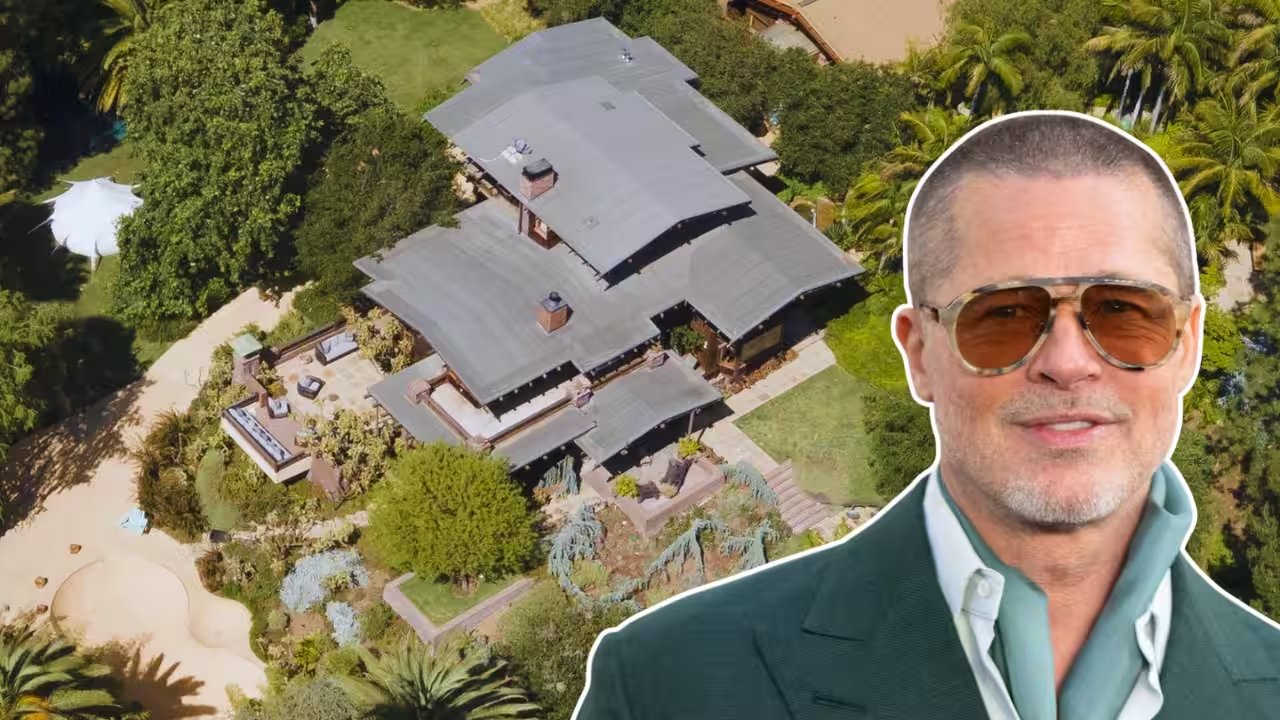
You’d think Hollywood’s biggest names reserve their estates for paparazzi, not for a septuagenarian tenant. When Brad Pitt bought the Craftsman‑style mansion in 1994 for $1.7 million, he didn’t just snag a property—he snagged a living legacy.
The story surfaced through Cassandra Peterson, the actress who sold the house and later chatted with PEOPLE about the unusual arrangement. Peterson says Pitt bought the neighbouring home, then let its elderly owner—already in his 90s—remain there rent‑free, a kindness that stretched beyond the usual landlord‑tenant etiquette.
The house itself is a 1910-built gem, with mahogany panels and copper ceilings that even the actor’s design‑obsessed side appreciated. It’s not just a backdrop for star‑studded parties; it became the nucleus of a sprawling 1.9‑acre compound that eventually housed a pool, tennis pavilion, and even a skate park.
After three decades, Pitt put the Los Feliz estate on the market and sold it to oil heiress Aileen Getty for roughly ₹33 million ($33 million). The sale marked the end of a nearly 30‑year chapter that began with a $1.7 million bargain and grew into a symbol of Hollywood real‑estate ambition.
But the story that really sticks is the neighbour who lived there until 105. After Peterson’s joint interview, fans started to see Pitt in a new light—as a patron of his community, a man who could keep a 15‑year‑old arrangement alive. It’s a narrative rarely heard in the industry, where stories usually revolve around contracts, taxes, or controversies.
Today, Pitt’s portfolio still reads like a curated museum of design: a Malibu home, a Santa Barbara retreat, and the D.L. James House in Carmel for $40 million. Yet his Los Feliz chapter remains the most human, a quiet testament that even the most glamorous can choose kindness over profit.