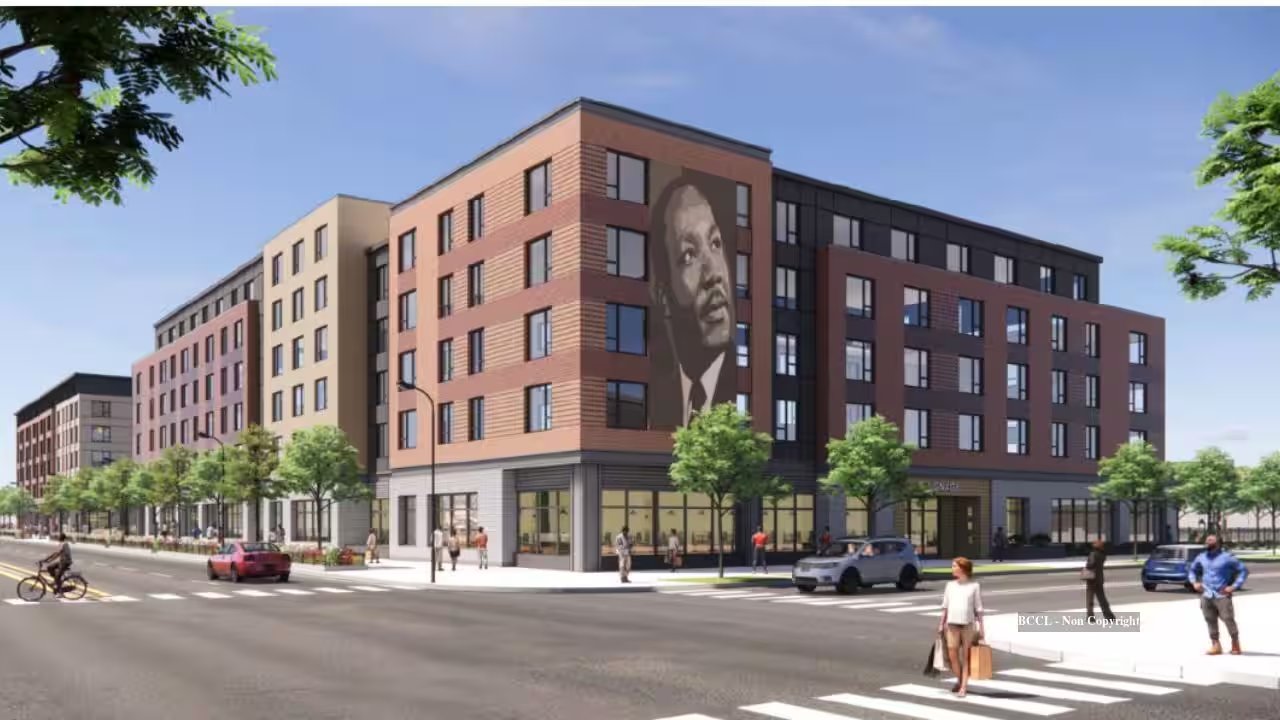
Chicago City Council members voted to unlock $127 million in public and private financing for the long-stalled LeClaire Courts site, finally breaking ground on a mixed-income neighborhood on the city’s Southwest Side. This approval ends a fifteen-year limbo for the 32-acre parcel, which has sat largely empty since the Chicago Housing Authority (CHA) demolished the original public housing complex in 2011.
The first phase, led by a partnership between Cabrera Capital Partners and The Habitat Company, will deliver 183 apartments across two six-story buildings on Cicero Avenue. Architecture firm SCB designed the structures to include a 10,000-square-foot early childhood center, a 134-vehicle parking garage, and a rooftop apiary—an unusual touch aimed at boosting local biodiversity and providing educational opportunities for residents.
Affordability isn't an afterthought here; roughly 90 percent of the Phase I units will be income-restricted to ensure they remain accessible to low-income families and those using CHA vouchers. The financing stack is complex, involving a $43.7 million senior construction loan, $24.5 million from the CHA, and $33.7 million in Low-Income Housing Tax Credit equity. This layered approach ensures the units stay affordable for decades rather than flipping to market rate after a short period.
The site, bordered by the Stevenson Expressway and minutes from Midway International Airport, has long been a visual reminder of the failed mid-century housing projects. By positioning the new buildings on the west side of Cicero Avenue between 44th and 45th streets, developers aim to connect future residents to public transit and major job corridors. The broader vision includes up to 700 residential units and 440,000 square feet of commercial space, transforming a barren lot into a functioning community.
The George Sollitt Construction Company will lead the build-out of the residential phase. With the funding secured, the project moves from planning to physical construction, bringing a new layer of housing to a neighborhood that has waited a decade and a half for its next chapter.