Lalitpur JailKarwa ChauthPrisoners' WelfareUttar PradeshRehabilitation
Lalitpur Jail Lets 5 Women Prisoners Observe Karwa Chauth With Husbands' Photos
Published: October 30, 2026
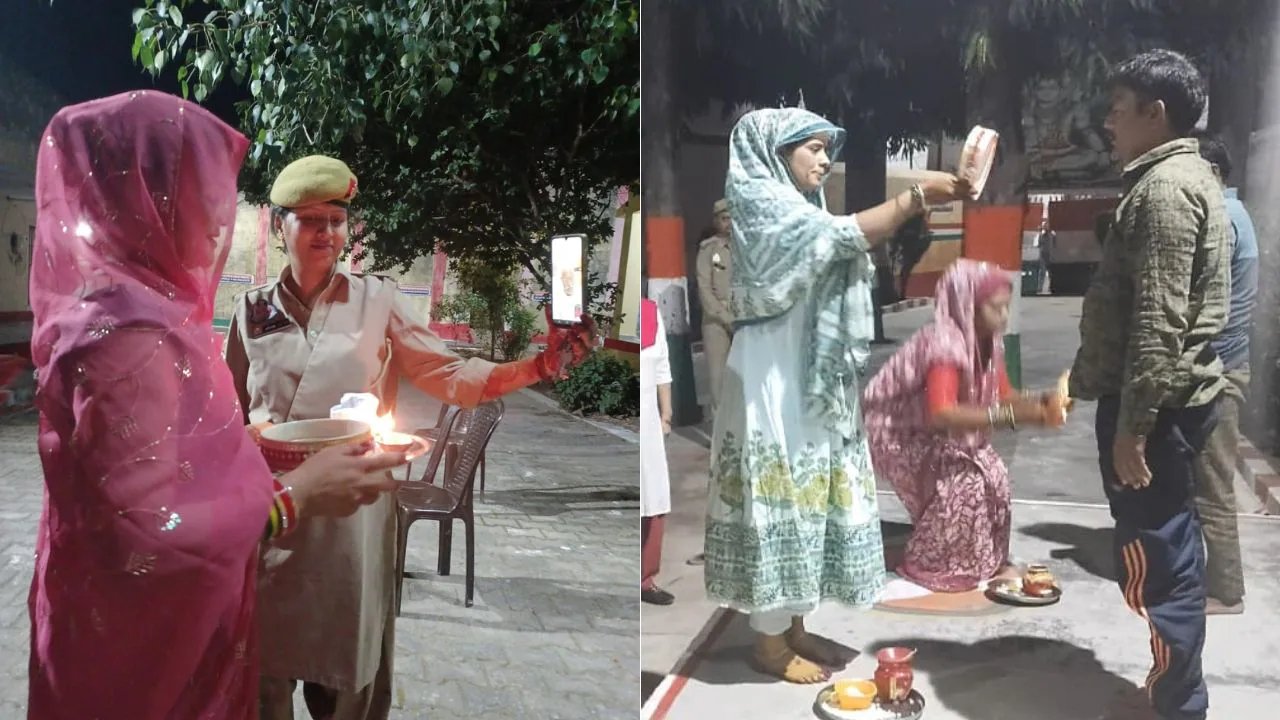
Five women prisoners at Lalitpur District Jail observed Karwa Chauth on Sunday, with three breaking their fasts using their husbands' photographs displayed on mobile phones. Jail Superintendent Prashant Upadhyay utilized the Prisoners' Welfare Fund to procure traditional items, reinforcing the facility's focus on religious rehabilitation.
Five women behind bars at Lalitpur District Jail fasted for their husbands' long lives on Sunday. They completed the traditional Karwa Chauth rituals despite being separated from their families. The prison administration orchestrated a detailed setup to facilitate this religious observance within the facility's confines.
Jail Superintendent Prashant Upadhyay arranged for the procurement of mehendi, bangles, traditional clothing, puja materials, fruits, and sweets. These items were purchased using funds from the Prisoners' Welfare Fund. The preparations began early in the morning, with female staff supervising the women as they applied henna and donned festive attire in their barracks.
The festival proceedings were divided into two distinct experiences for the inmates. Chanda, serving a 12-year sentence under the NDPS Act, and Pushpa, facing trial under Section 103, performed their rituals face-to-face with their husbands, who are also incarcerated in the same jail. For the other three women, the situation was different. Prison staff displayed photographs of their spouses on mobile phones, allowing them to complete the moonrise prayers and break their fasts in the presence of these images.
Among the participants, Jaleb Raja, wife of Pancham Singh, is serving a life sentence for murder. Chandni, wife of Mulayam, is an undertrial in a DP Act case, while Reena, wife of Jagdish, faces trial in an NDPS matter. Upadhyay told NDTV that the prison is not merely a place of punishment but a center for reform. He emphasized that respecting religious beliefs is integral to the rehabilitation process. The jail regularly organizes similar arrangements for other festivals like Raksha Bandhan, Eid, and Diwali.
The women looked at the moon through sieves, prayed for their husbands' well-being, and consumed the refreshments provided by the administration. This event highlights the intersection of strict security protocols with humanitarian efforts in Indian prisons. The next such major festival arrangement at Lalitpur Jail will likely follow the annual cycle of religious observances mandated for inmate welfare.