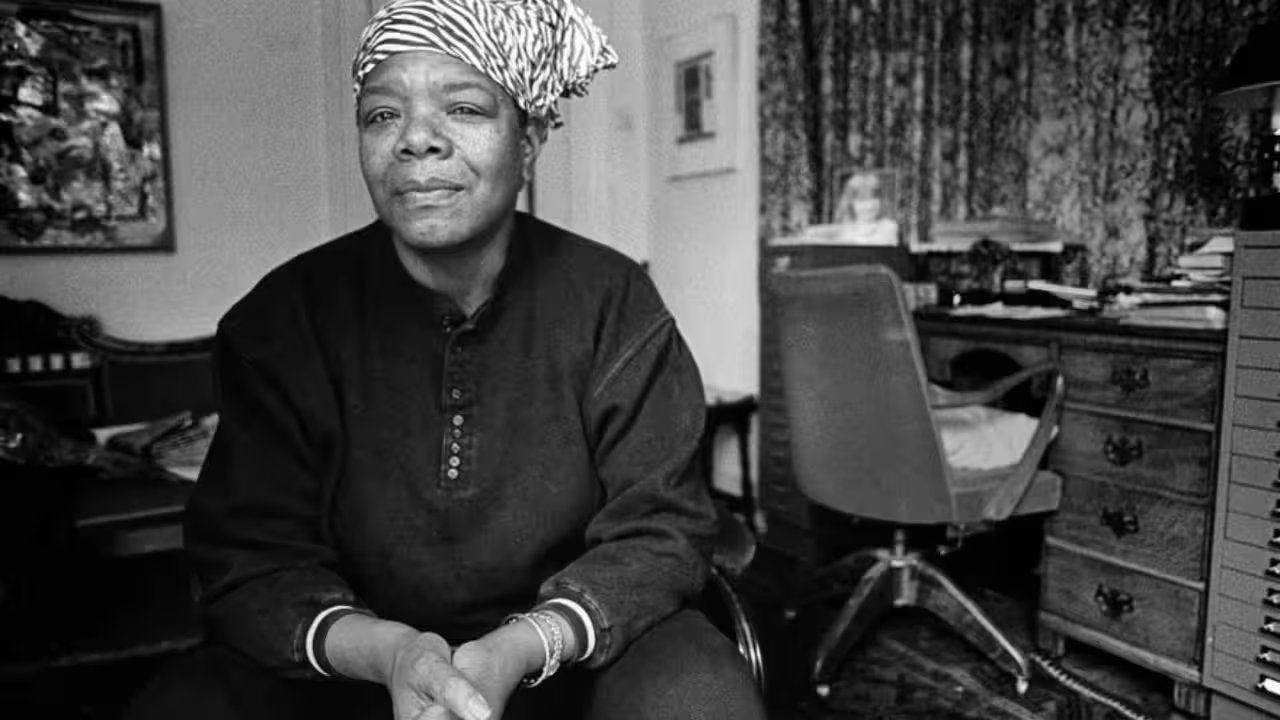
Most of us treat love as something that happens to us—a feeling that hits hard and then slowly fades. Maya Angelou saw it differently. In her famous line, “Love recognizes no barriers. It jumps hurdles, leaps fences, penetrates walls to arrive at its destination full of hope,” she reframes love as a verb. It’s not just a vibe; it’s a physical act of moving toward someone despite the obstacles in the way. That shift in language changes how you approach a cold war with your partner or a drifting friendship. You stop waiting for the wall to disappear and start looking for a way over it.
But here is the part people miss because they’re too busy romanticizing the struggle. Angelou’s words are about effort, not endurance. There is a massive difference between jumping a hurdle for someone and walking into traffic because they told you to. Psychologists note that while human beings are wired for connection, connection requires safety. If the 'barrier' is abuse, manipulation, or chronic disrespect, the quote doesn't apply. You are not obligated to 'penetrate' a wall that is made of harm. Sometimes the healthiest act is to step back, not because you don't care, but because you respect your own well-being.
So how do you apply this? Use the 'hope' in the quote as your compass, not the 'barriers.' When you’re stuck in a cycle of silence or misunderstanding, ask yourself: Is this a wall I can jump, or is it a cliff? If it’s a misunderstanding born of pride or timing, the act of reaching out—sending that one text, asking that one question—is the jump. It’s messy and terrifying. But Angelou’s point is that the movement itself is what defines the connection. You don’t need to win the argument; you just need to show up with the intention to understand.
For now, try this tonight. Think of one relationship where the silence has grown thick. Don’t analyze why it got there. Just take the first step, however small. A simple 'I miss us' or 'Can we talk?' is enough. You’re not trying to fix everything in one sentence. You’re just proving to yourself and them that the connection is still alive.