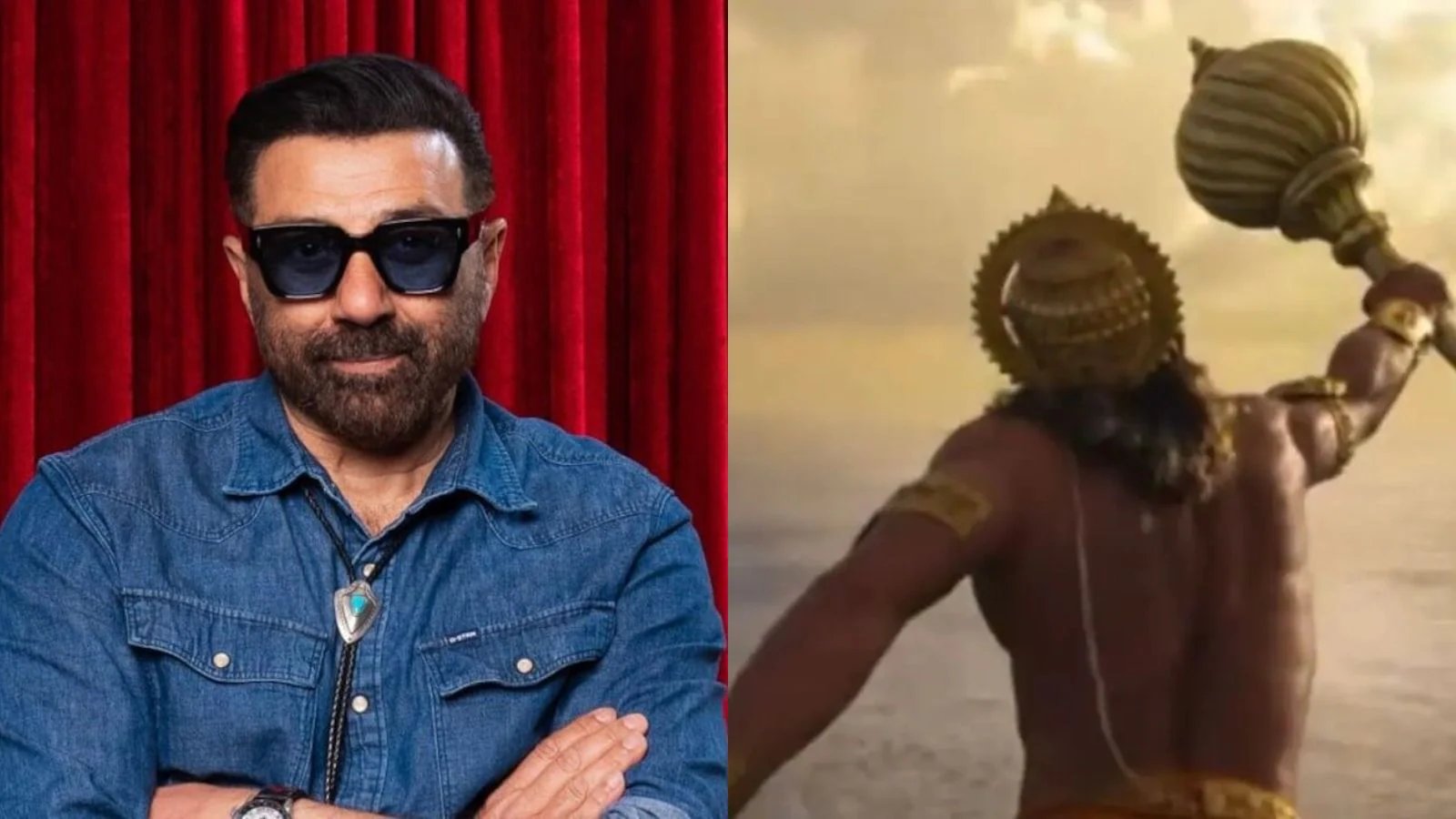
The loudest roar did not belong to the hero. Nor did it belong to the villain. As the lights dimmed on the closing minutes of director Nitesh Tiwari’s ₹4,000 crore mythological epic Ramayana, theatre halls erupted over a silhouette soaring across the screen. Sunny Deol had arrived as Lord Hanuman. The sudden, unbilled reveal slipped into the film’s post-credits frame, instantly setting cinema halls ablaze and outpacing the applause reserved for Ranbir Kapoor’s Lord Rama and Yash’s Ravana.
Tiwari keeps the card close to his chest. The sequence never unmasks Deol’s full face. Instead, the camera sweeps across a frantic jungle where wild beasts scatter in terror, establishing a presence of titanic physical scale. Then comes the liftoff. A mountainous figure launches into the clouds, backed by the thunderous battle cry of "Jai Shri Ram." To heighten the spectacle, the makers deployed five heavyweight playback voices—Kailash Kher, Shankar Mahadevan, Diljit Dosanjh, Sukhwinder Singh, and Mohit Chauhan—uniting their vocals in a blistering choral rendition of the Hanuman Chalisa. It is brief. It is blunt. And it landed with the force of an artillery shell.
Opening-day dispatches and audience clips flooded social platforms within hours of the first morning screenings, showing crowds leaping to their feet as Deol's unmistakable baritone echoed through the sound system. Many cinephiles observed that while Ranbir Kapoor’s Rama drew measured approval and Yash brought a stylised theatricality to Ravana, Deol’s five-second silhouette triggered raw, visceral hysteria. For an actor riding high on the historic box-office resurgence of Gadar 2, the cameo functions less like a conventional teaser and more like an old-school single-screen seismic jolt.
Yet the real test sits on the editing floor. Mounting India’s most expensive cinematic production requires balancing spiritual solemnity with high-stakes visual effects. Beside Kapoor and Deol, Tiwari’s ensemble features Sai Pallavi, Ravi Dubey, Vivek Oberoi, and Kunal Kapoor, spreading the narrative weight across multiple heavyweight players. But by handing Deol the franchise’s ultimate mythic anchor, the production has altered audience expectations overnight.
Spectators must now endure a two-year holding pattern. Tiwari has constructed the adaptation as a two-part epic, holding back Deol’s full physical appearance and central dramatic arc for Ramayana: Part 2, slated for theatrical release in 2028. If the opening-day bedlam is any measure, that sequel will not belong solely to the kings in conflict—it will hinge entirely on the titan who tore through the clouds.