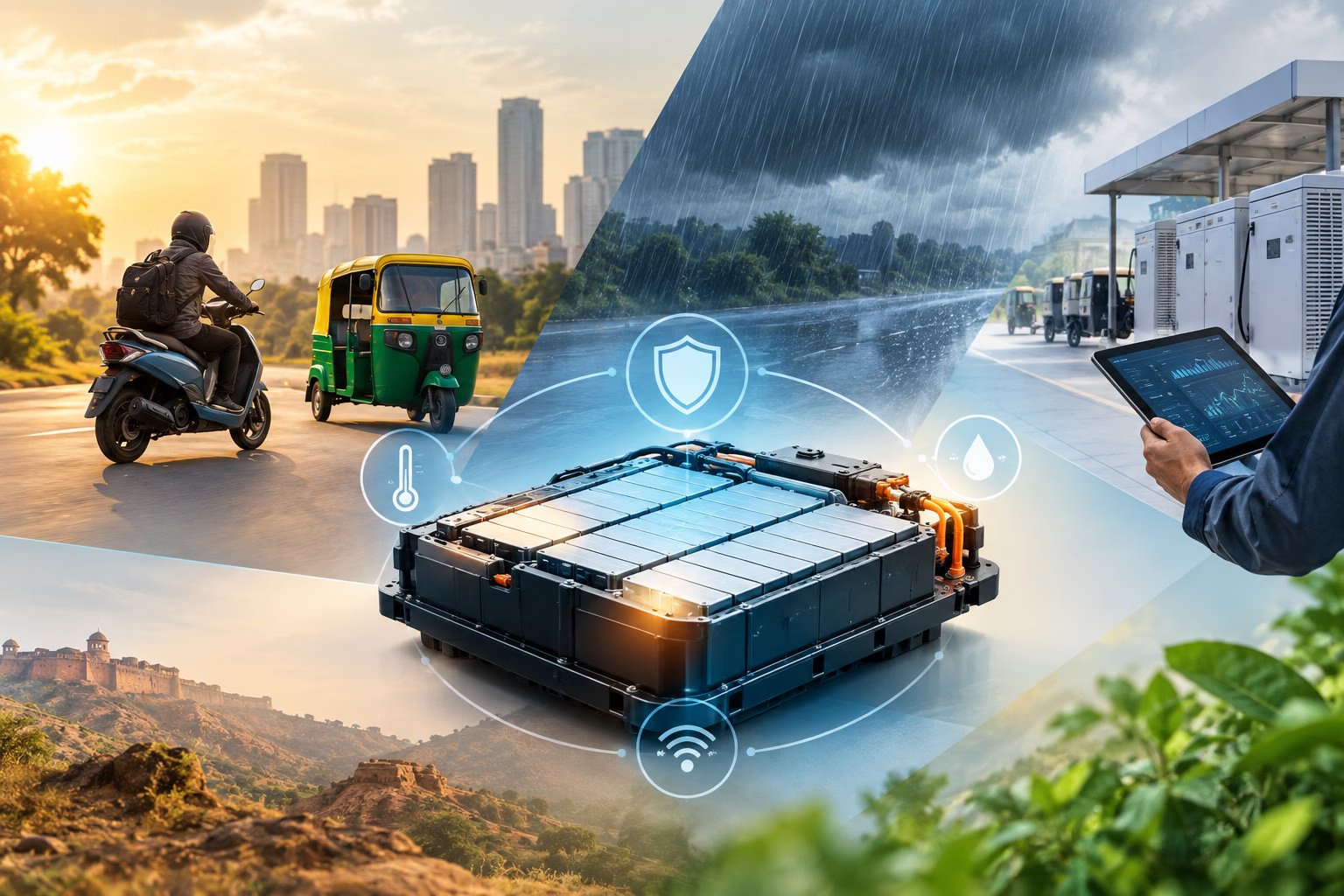
Range no longer clinches the sale. For years, buyers obsessed over single-charge distances because every additional kilowatt-hour inflated sticker prices to eye-watering levels. That dynamic broke wide open in 2025 when global lithium-ion pack prices dropped to an all-time low of USD 108 per kWh, propelled by the swift mass-market transition to cheaper lithium iron phosphate (LFP) cells. But lower pack prices create a different dilemma on the ground. A vehicle that advertises 150 kilometres on paper means very little if high summer temperatures slash battery capacity within two years of hard delivery runs.
For the commercial operator, battery degradation directly threatens daily earnings. The calculus is brutally simple. A cheaper battery pack that requires an unexpected mid-life replacement wipes out fuel savings entirely. Cycle life, thermal stability, and residual value now dictate vehicle viability over brochure claims.
India’s EV boom does not belong to premium electric sedans. It runs on two and three wheels. Out of the 2.45 million electric vehicles sold across the country in FY2026, electric two-wheelers accounted for 57 per cent while electric three-wheelers secured 34 per cent. Together, these utilitarian segments command more than 90 per cent of all EV transactions nationwide.
| Indian EV Market Metric | Recorded Figure | Segment / Timeframe |
|---|---|---|
| Total EV Deliveries | Over 10 million units | Cumulative: 2017 to early Sept 2026 |
| Overall EV Penetration | ~11% of all new vehicles | Jan to early Sept 2026 |
| Annual EV Sales Volume | 2.45 million units | FY2026 total |
| Electric Two-Wheeler Share | 57% of total EV sales | FY2026 |
| Electric Three-Wheeler Share | 34% of total EV sales | FY2026 |
| L5 Electric Auto Share | 46.9% of segment sales | Q1 FY2026-27 |
Consider the passenger L5 three-wheeler category—the standard passenger auto-rickshaws operating in crowded transit hubs. In the first quarter of FY2026-27, 46.9 per cent of all newly registered L5 units ran on battery packs. Nearly every second new auto hitting Indian tarmac now charges at a plug rather than fueling at a pump. These commercial rigs run continuously, carry heavy passenger loads, face hours of baking in 45-degree asphalt heat, and battle seasonal monsoon flooding.
Typical foreign duty cycles collapse under these conditions. Extreme heat accelerates cell decay, while monsoons expose poorly sealed modules to fatal moisture ingress. LFP chemistry offers a structural defense, delivering higher thermal thresholds and superior cycle life compared to nickel-rich chemistries during relentless daily charging cycles.
Regulatory mandates have forced vehicle manufacturers to fall in line. Following a series of two-wheeler battery fires, the Ministry of Heavy Industries and testing agencies updated the AIS-156 safety code. Compliance with AIS-156 Amendment III Phase 2 is now the mandatory baseline across two- and three-wheelers, enforcing pack-level thermal propagation safeguards and strict sealing against water and dust ingress.
Yet regulatory compliance represents merely the floor, not the ceiling. Advanced battery packs now integrate smart battery management systems (BMS) with live telematics. These units track cell impedance, surface temperatures, and charge cycles in real time, alerting fleet managers to voltage spikes before a module fails. As cumulative deliveries push past 10 million units and national EV penetration hovers near 11 per cent, domestic battery developers are engineering chemistry formulations specifically for local light commercial vehicles, e-tractors, and auto fleets. The next growth frontier belongs to batteries that survive Indian pavement.
| Global Li-ion Pack Price | USD 108 per kWh | 2025 average |