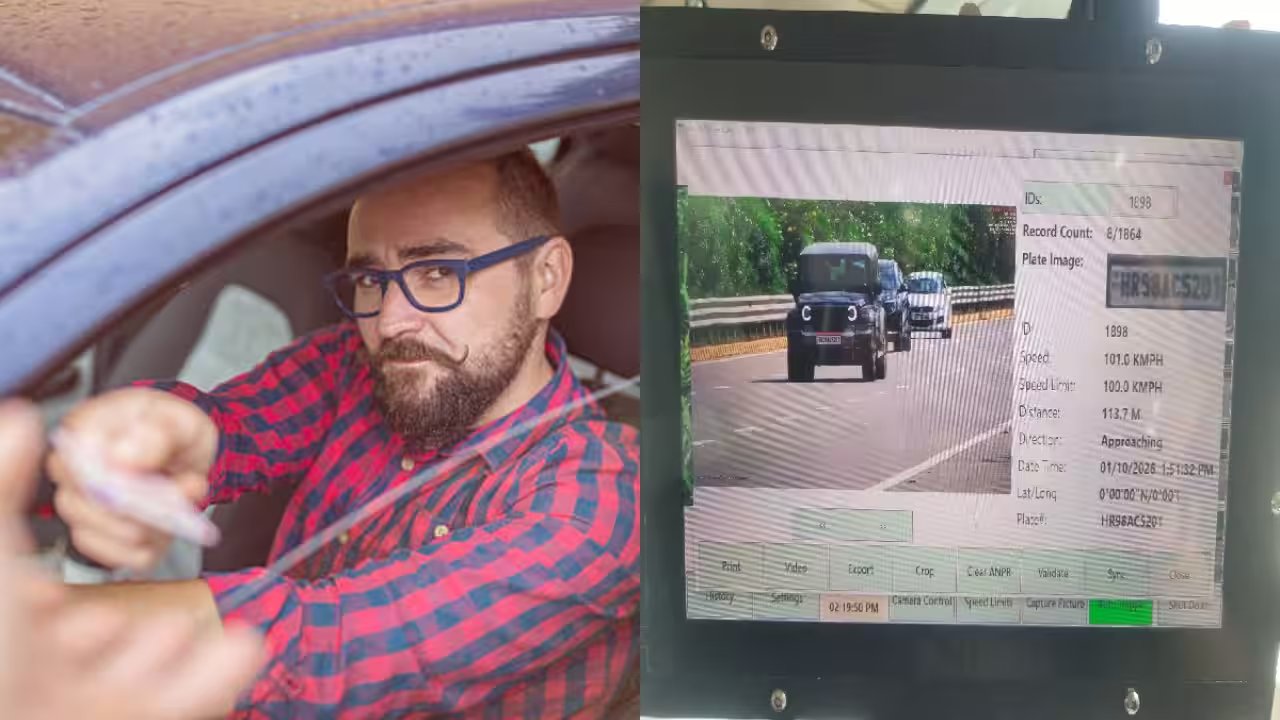
The ticket arrived with a staggering geographical impossibility. Anujeet Shivam was driving his black SUV along the Yamuna Expressway on the afternoon of January 10, 2026, when an automated camera clocked him at 101 kmph on a stretch capped at 100 kmph. For slipping just one solitary kilometre above the posted ceiling, the system slapped him with a ₹2,000 penalty. Yet the paperwork told a wilder story—pinning his vehicle thousands of kilometres away in the middle of open ocean waters.
The car had not left Indian soil. But the GPS metadata stamped across the official violation receipt listed coordinates 0°N and 0°E. That technical drop-point sits off the coast of West Africa, right where the Equator slices through the Prime Meridian.
Cartographers and software engineers call this imaginary patch of water Null Island. It serves as the standard software default when a tracking device, server, or camera sensor loses satellite sync and drops the ball on location metadata. Instead of throwing a fatal read error, the system outputs absolute zero.
Shivam refused to settle the bill quietly. Taking to social media platform X, he uploaded the challan sheet showing his vehicle registration, the 3:13 pm timestamp, the 1 kmph infraction, and the bizarre coordinates. Tagging both Noida Traffic Police and Uttar Pradesh Traffic Police, he challenged the enforcement machinery directly, questioning whether slipshod, corrupted records met legal standards for highway policing.
| Violation Parameter | Official Record Details |
|---|---|
| Vehicle Type | Black SUV |
| Violation Date & Time | January 10, 2026 at 3:13 pm |
| Logged Highway Stretch | Yamuna Expressway |
| Detected Speed | 101 kmph |
| Prescribed Speed Limit | 100 kmph |
| Financial Penalty | ₹2,000 |
| System GPS Coordinates | 0°N, 0°E (Gulf of Guinea / Null Island) |
Noida Traffic Police stepped into the thread as the post spread, directing Shivam to lodge a formal complaint through the department's e-challan helpline to review the camera log.
The disclosure ignited fierce debate among motorists over algorithmic highway policing. One faction argued that speed limits act as hard legal ceilings rather than targets, meaning any creep past 100 kmph breaks the law. Other drivers pushed back aggressively, citing standard optical and radar device tolerances that routinely allow a 5 kmph margin of error to account for equipment drift and tyre wear.
The incident coincides with Haryana Police rolling out upgraded Next-Gen E-Challan infrastructure designed to impose strict processing timelines for dispute resolution and notice delivery. Transport officials must now audit raw sensor captures from the Yamuna Expressway gantry to determine whether Shivam's ticket stands or faces cancellation over flawed telemetry.