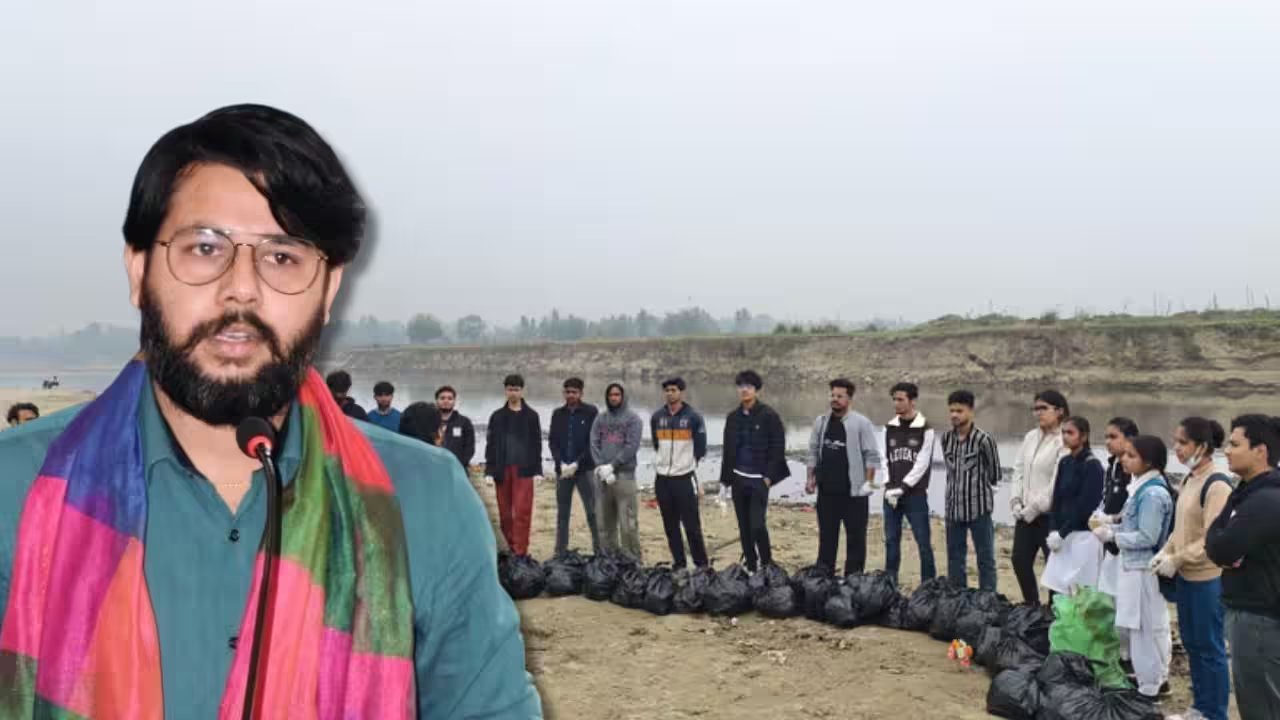
MORADABAD — Talk changed nothing along the riverbank. Every evening at sunset, Kapil Kumar watched plastic carry bags, rotten garlands, synthetic fabrics, and household garbage sink into the grey waters of the Ramganga. He tried speaking to the crowds tossing refuse off the ghats. They nodded, turned away, and dropped the next bag anyway. Real intervention required dirty hands, rubber boots, and relentless consistency.
Nearly a decade later, that realisation has grown into one of western Uttar Pradesh’s most persistent civilian river revivals. Kumar, a 35-year-old mechanical engineer, has steered his grassroots organisation, Parivartan 'The Change,' through more than 218 dedicated clean-up drives. His team has hauled over 1.2 lakh kilograms of waste out of the Ramganga basin, rallying more than 5,000 local citizens onto the muddy embankments of Moradabad.
Kumar graduated with a mechanical engineering degree in 2013, put in a year on an automobile assembly line, completed a postgraduate diploma in management, and sat for the civil services examination. Public work called him elsewhere. In 2016, during a routine visit to a dilapidated Moradabad state school, he began complaining about leaking classroom ceilings, broken desks, and unusable toilets. A veteran schoolteacher cut him off mid-sentence.
"Stop lecturing the system and fix one thing yourself," the teacher told him, pointing straight at a young student struggling with failing eyesight. Kumar took the challenge. He tracked down the district chief medical officer, arranged clinical treatment, and secured prescription glasses for the child. The encounter rewired his trajectory. In October 2016, Kumar and a circle of friends formed Parivartan, formally registering the non-profit trust in July 2017.
A riverside religious festival in November 2016 exposed him to the sheer volume of solid waste choking the Ramganga. The group began setting up organic collection points, urging devotees to drop marigolds and sacred offerings into composting pits instead of hurling them into the current. On Earth Day—April 22, 2018—Kumar formally launched the Clean Up Ram Ganga Campaign. An initial 10-week drive at Mokshdham Ramganga Vihar gathered 11,000 citizen petition signatures and inspired a 700-kilometre cycling campaign from Moradabad to Varanasi. But once the volunteers packed up, the trash drifted right back. Long-term habits refused to yield to short-term enthusiasm.
Pandemic restrictions brought mass gatherings to a halt in 2020. On World Environment Day—June 5, 2021—Kumar rebooted the operation with strict weekly discipline at Lalbagh Ghat. Rain or shine, the volunteers assemble every single Sunday morning at dawn.
A typical weekend drive scoops between 300 and 700 kilograms of solid detritus off the banks. Recovered religious idols are catalogued and safely stored out of the water. Decomposing organic flower waste goes straight into municipal compost beds. Non-biodegradable plastics, discarded synthetics, and packaging foil are bundled and handed over to Moradabad Municipal Corporation sanitation loaders. The operation runs on practical logistics: 3,000 registered volunteers back the initiative, anchored on the ground by six full-time staff members.
To fund the gloves, rakes, boots, and logistics, Parivartan launched an internal recovery project called SEHYOG. The group collects discarded newspapers, obsolete textbooks, and household scrap across Moradabad neighbourhoods, selling the sorting haul directly to authorized recyclers.
| Metric / Operational Milestone | Verified Campaign Figure |
|---|---|
| Clean-Up Operations Completed | 218+ Sunday drives |
| Total Solid Waste Removed | Over 1,20,000 kg (1.2 lakh kg) |
| Cumulative Volunteer Turnout | 5,000+ local citizens |
| India Book of Records Milestone | 100 weeks continuous cleaning (March 10, 2024) |
| Average Weekly Collection Haul | 300 kg to 700 kg per drive |
| Registered Volunteer Network | 3,000+ citizens |
The India Book of Records formally recognised the effort on March 10, 2024, logging Parivartan's 100th consecutive operational week after workers extracted their first 75,000 kilograms of riverbank waste.
Yet volunteer muscle cannot purify an industrial waterway alone. Kumar acknowledges that scooping trash off the shoreline tackles only the surface symptom of a massive regional crisis. Raw urban sewage and chemical discharge continue to overwhelm the tributary.
To force policy action, Parivartan submitted a comprehensive 10-point environmental action agenda alongside a 200-week operational campaign dossier to both the National Mission for Clean Ganga and the Uttar Pradesh State Mission for Clean Ganga. The memorandum demands the strict construction and regular auditing of sewage treatment plants along upstream drains before greywater spills into the riverbed. Kumar's volunteers will return to Lalbagh Ghat this coming Sunday at 6:00 AM—holding rakes in hand while the state machinery ponders the drains.
| Full-Time Operational Staff | 6 dedicated personnel |