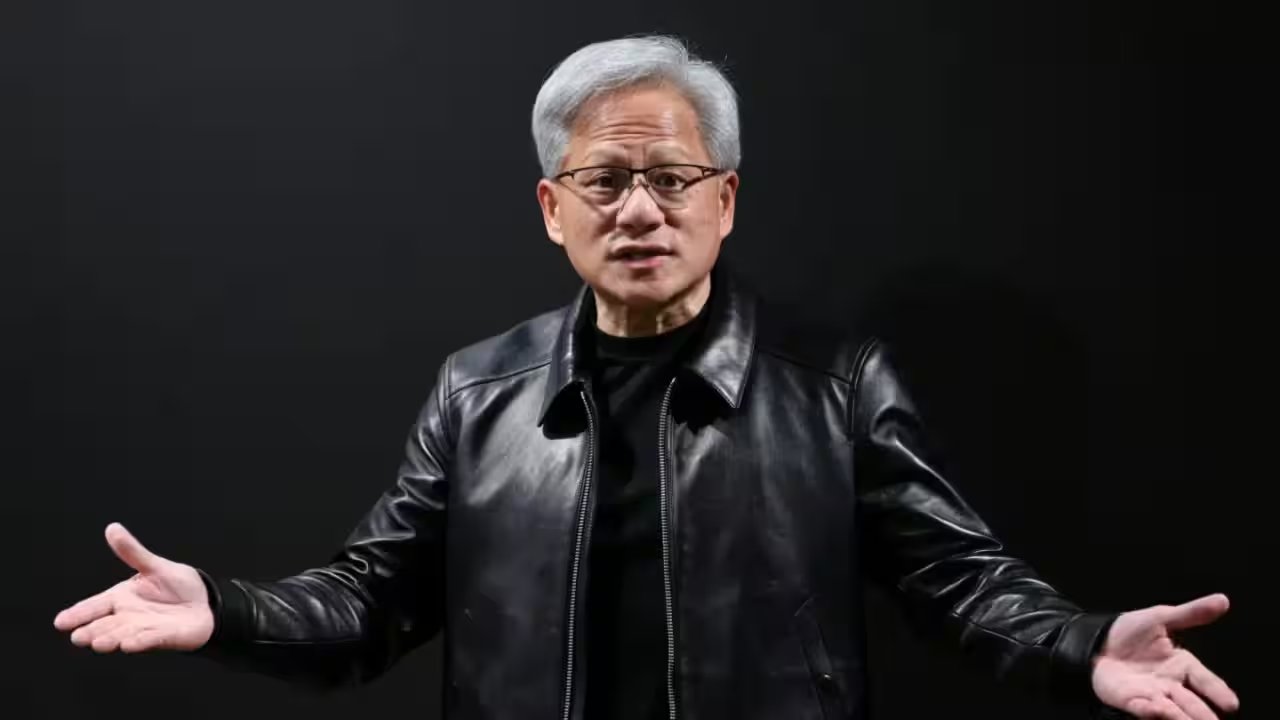
Nvidia founder Jensen Huang has stepped down from the helm of the semiconductor powerhouse, forfeiting approximately $108 million in unvested equity awards under company compensation bylaws.
The forfeiture marks a paper loss. Yet against Huang's staggering $144.5 billion fortune, the surrendered grants amount to a microscopic 0.07% dent in his wealth. His departure sent immediate shockwaves across Wall Street, knocking Nvidia's market capitalization below the $4 trillion threshold for the first time since 2025. Huang's personal net worth retreated by $2.8 billion, a 1.97% drop that edged him outside the global top-ten wealth bracket.
The forfeited $108 million stems directly from performance incentives that had not crossed vesting thresholds. Corporate equity guidelines mandate that departing executives surrender unvested restricted stock units upon resignation. Regulatory filings reveal Huang held roughly 346,000 unvested units alongside an anticipated allotment of 310,000 performance-linked shares, which lapsed the moment he stepped aside.
Fiscal disclosures show the former chief executive's earnings had already contracted ahead of his departure. According to Nvidia's proxy statement for fiscal year 2026, Huang collected $36,343,830 in total annual compensation—down sharply from the $49.87 million he pocketed the year prior.
That pay package broke down into precise tranches. Base salary accounted for roughly $1.5 million. Stock awards delivered approximately $24.8 million, bolstered by $6 million in non-equity incentive pay and an auxiliary balance classified as other direct executive compensation. Across each of the previous two fiscal cycles, his direct cash compensation averaged roughly $7.5 million.
| Financial Metric | Official Disclosure & Value |
|---|---|
| Forfeited Unvested Stock Awards | $108 million (~656,000 total share units) |
| Current Estimated Net Worth | $144.5 billion |
| Direct Nvidia Shareholding | 812 million shares (~$135 billion) |
| Company Voting Stake | ~3.5% (Single-class common stock) |
| Fiscal 2026 Total Compensation | $36,343,830 (down from $49.87M in FY25) |
| Historical Stock Liquidations | ~$3 billion ($713M in 2024, ~$1B in 2025) |
| Foundation Shareholding | 59 million shares (~$9+ billion) |
Huang built his colossal fortune almost entirely by holding equity across 33 years at the helm. He avoided stock options and exotic derivative packages, preferring direct common stock ownership.
Today, Huang controls around 812 million Nvidia shares valued at approximately $135 billion, establishing him as the silicon titan's largest individual shareholder. That holding accounts for nearly 97% of his personal net worth, split between direct personal portfolios, family trusts, and dedicated investment vehicles. A separate philanthropic trust established under his name holds another 59 million shares, commanding a valuation north of $9 billion.
Because Nvidia issues only a single class of common stock, Huang wields no super-voting privileges. His voting power stands at roughly 3.5%, directly mirroring his under-5% ownership stake.
Over his three decades leading the company following its 1999 initial public offering, Huang realized approximately $3 billion through planned divestments. For decades, those annual sales rarely exceeded nominal sums. But as artificial intelligence compute demands propelled Nvidia past successive $3 trillion and $5 trillion valuation milestones, his liquidations accelerated. Huang offloaded $713 million in shares throughout 2024, followed by another $1 billion through pre-arranged Rule 10b5-1 trading programs in 2025. Company records confirm he has executed zero share liquidations so far this year.
Cashing out the remaining $135 billion stake will prove legally hazardous. Huang cannot simply dump shares on the open market.
A formal scrutiny into Huang's personal conduct and business ties with an executive at an overseas enterprise client has introduced sharp headwinds. Analysts at investment bank William Blair confirmed the probe represents a "significant overhang on Nvidia shares in the near term," restricting his operational and financial mobility.
Federal insider trading statutes bar corporate officers from trading while in possession of non-public operational data, a freeze that persists even after handing over the corner office.
Huang can start selling as soon as any negative material non-public information he learned while CEO is disclosed. He is OK to sell knowing undisclosed positive information, because he can’t profit from that.
Jesse Fried, Corporate Governance Professor, Harvard Law School
Market Context: Nvidia's retreat below the $4 trillion valuation ceiling highlights the delicate balance facing enterprise chipmakers as board leadership fractures amid intense geopolitical friction. For institutional allocators, Huang's impending share dispositions represent a multi-billion-dollar liquidity overhang that could dictate semiconductor market sentiment for quarters.
Nvidia presents its latest quarterly financial results on Tuesday. That corporate earnings disclosure could eliminate undisclosed material information and open a statutory trading window for Huang—provided internal legal reviews conclude he holds no lingering non-public corporate liabilities.