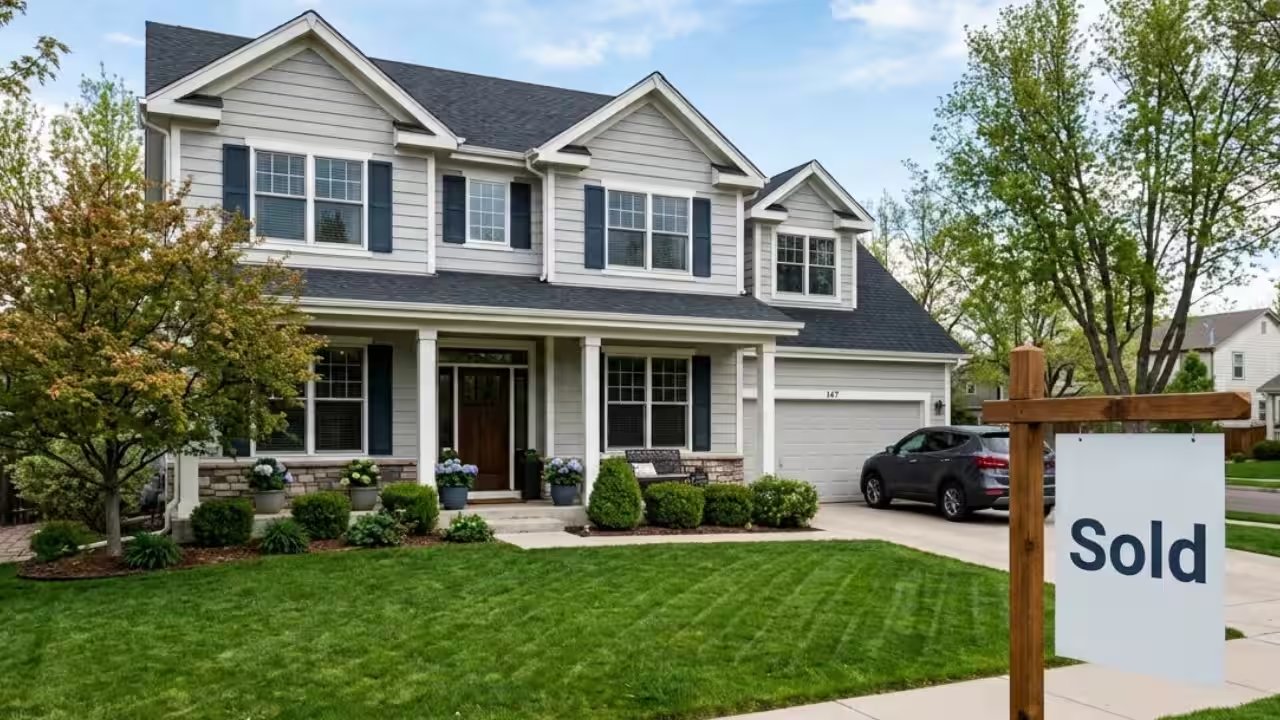
The Eleventh District Court of Appeals of Ohio threw out Randall W. Petersen's legal challenge over a real estate payout on November 9, slamming the door on his push to reclaim what he claimed was an unfair split.
Petersen walked away with just $23,161.36. His former co-owner, Andrea M. Mackey, secured $171,635. The ruling ended a multi-year legal duel over a residential parcel in Concord Township, Ohio. Petersen had insisted the trial court shortchanged him by ignoring his mortgage payments and direct equity contributions. But he made a fatal procedural misstep—he let the title company release the money before filing his appeal. The funds vanished from the escrow account. The judges declared the entire dispute dead.
The money was gone.
Legal hostility broke out in November 2023 when Mackey dragged Petersen into the Lake County Court of Common Pleas, filing a formal partition lawsuit to force the sale of their jointly held Concord Township real estate. She also named the Lake County Treasurer and Third Federal Savings and Loan Association of Cleveland as statutory defendants to account for tax and mortgage claims against the title. Three months later, in February 2024, Petersen fired back. He lodged a formal counterclaim accusing Mackey of conversion of personal property, asserting that she seized his belongings while exercising sole possession of the residence.
Both sides attempted to avert a full bench trial by hashing out a conditional agreement. In May 2025, the trial court ratified an agreed judgment entry and dismissed the underlying action, directing the title company to deposit all net proceeds into an escrow account until the parties settled on an exact split. The decree established distribution principles, but built in an emergency backstop: if the pair deadlocked, the court would convene a full evidentiary hearing and dictate the payouts directly.
The truce did not last.
Unable to resolve the split privately, both parties returned to the courtroom for a contested hearing on January 16, 2026. Weeks later, in February 2026, the trial court delivered its verdict, handing Mackey the lion's share of $171,635 while allotting Petersen just $23,161.36. The presiding judge instructed the escrow agent to disburse both checks immediately and shut the account.
Petersen scrambled to the Eleventh District Court of Appeals, demanding a forensic recalculation of the net equity. He argued the trial court committed reversible error by refusing him financial credits for sustained mortgage servicing and property maintenance that increased the home's resale value. Yet he never petitioned the lower bench for a stay of execution, nor did he post a supersedeas bond to freeze the cash in place. Mackey pounced on the oversight, lodging a motion to dismiss on grounds of mootness.
Presiding appellate judges agreed with Mackey. Writing for the panel, the court anchored its dismissal in the Ohio Supreme Court landmark ruling Blodgett v. Blodgett, which established that once a civil judgment is voluntarily satisfied and funds change hands, appellate jurisdiction terminates. Without an active stay order, the execution of the lower court's decree closed the legal door permanently.
| Case Parameter | Official Record |:---|:---|Court Docket | Eleventh District Court of Appeals of Ohio |Originating Court | Lake County Court of Common Pleas |Subject Property | Concord Township, Ohio |Andrea M. Mackey Award | $171,635.00 |Randall W. Petersen Award | $23,161.36 |Governing Precedent | Blodgett v. Blodgett (Ohio Supreme Court) |Appeal Status | Dismissed as Moot |