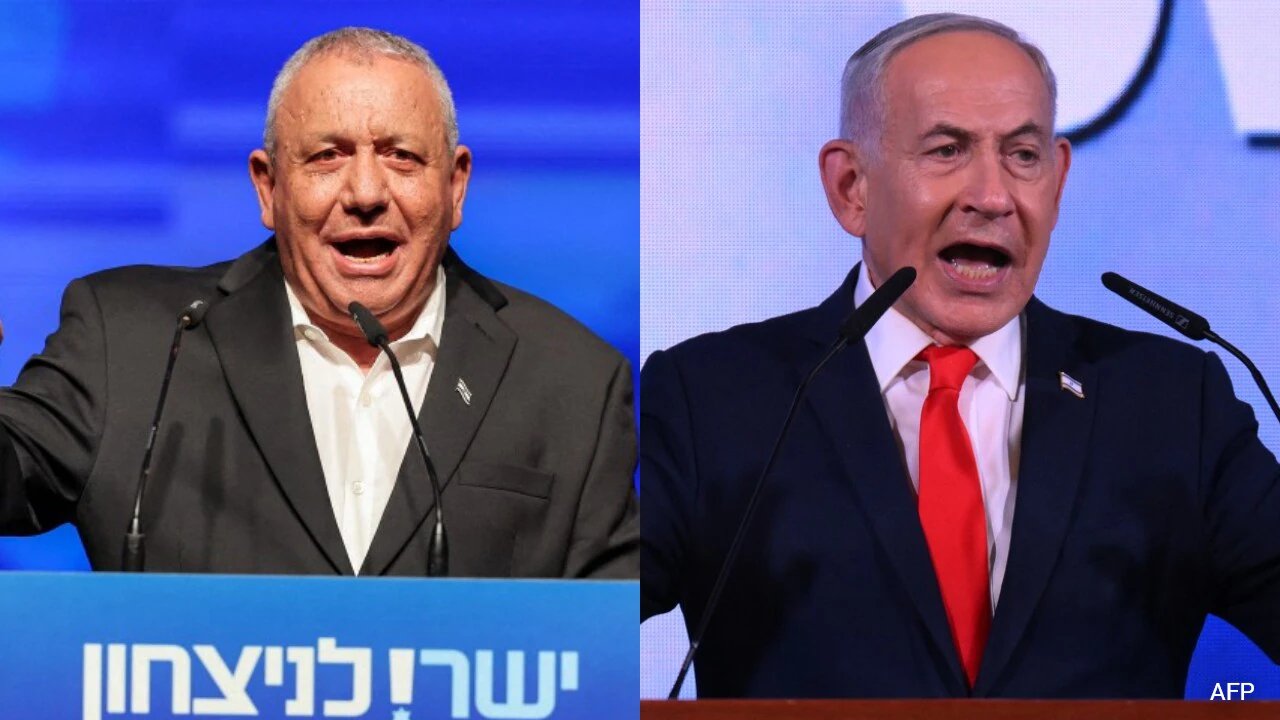
JERUSALEM — Former Israeli military chief Gadi Eisenkot locked down an agreement with four rival opposition leaders on Tuesday, parceling out the premier leadership posts in the 26th Knesset as he races to assemble a coalition and unseat Prime Minister Benjamin Netanyahu.
The pact binds together a fractured anti-Netanyahu front. Eisenkot forged the deal with former prime minister Naftali Bennett, Democrats leader Yair Golan, Yisrael Beytenu chairman Avigdor Lieberman, and Yesh Atid head Yair Lapid.
The alliance picked former minister Matan Kahana as its candidate for Speaker of the Knesset.
Eisenkot made his play directly before taking the parliamentary oath of office in Jerusalem. "I am committed in this complex situation to form a national-emergency government as quickly as possible," Eisenkot said as lawmakers gathered for the swearing-in ceremony.
Control of the parliamentary machinery gives Eisenkot a tactical launchpad to box out Netanyahu's loyalists before a formal cabinet takes shape. Under the signed terms, former lawmaker Roy Folkman will take the helm of the pivotal House Committee, which dictates legislative scheduling and procedural rules. Avigdor Lieberman, who previously served as defence minister, claims the chairmanship of the Foreign Affairs and Defence Committee. Meanwhile, designated lawmaker Liran Avisar Ben-Horrin takes the top seat on the Finance Committee.
Eisenkot took to X on November 10 to spell out the appointments directly to the public.
I have reached an agreement with my partners, the leaders of the change and reform parties
Naftali Bennett, Yair Golan, Avigdor Lieberman, and Yair Lapid—on the prospective candidates for key positions in the 26th Knesset during the period for forming a government." — Gadi Eisenkot, Yashar Party Chairman
The parties plan to establish additional specialized panels as negotiations advance. Lapid confirmed the tactical alignment shortly afterward, noting that he held direct strategy sessions with Eisenkot to coordinate their legislative push and lock in an emergency government immediately.
President Isaac Herzog formally handed Eisenkot the prime ministerial mandate on November 8, following an inconclusive national election on October 27 that left both major blocs short of a governing majority.
The numbers expose a volatile balance of power:
| Political Bloc / Faction | Knesset Seat Count | Official Mandate Alignment |
|---|---|---|
| Eisenkot Core Alliance (Yashar, Yesh Atid, Yisrael Beytenu, Democrats) | 48 seats | Nominated Eisenkot for Prime Minister |
| Total Lawmakers Recommending Eisenkot (Including Arab-led parties) | 67 seats | Supported Eisenkot's bid to President Herzog |
| Netanyahu Religious-Nationalist Bloc | 53 seats | Opposes Eisenkot coalition |
| Likud Party (Netanyahu) | 27 seats | Backed Netanyahu (46 total recommendations) |
Under Israel's Basic Law: The Government, Eisenkot holds a strict 28-day window to cobble together a stable 61-seat majority. President Herzog retains the legal authority to grant a single 14-day extension if talks progress. Yet securing the mandate guarantees nothing.
Eisenkot's own Yashar party holds 21 seats, making it the second-largest party in the legislature behind Likud's 27. His core four-party bloc controls just 48 seats. To clear the 61-seat threshold, Eisenkot must rely on external leverage from two Arab-led parties, whose combined delegations recommended him to Herzog after securing record seat numbers fueled by voter backlash against Netanyahu's coalition.
The House Committee meets throughout the week to settle committee assignments before submitting the full leadership slate to the Knesset plenum for a formal floor vote on Wednesday.
| Non-Recommending Faction | 7 seats | Unaligned |