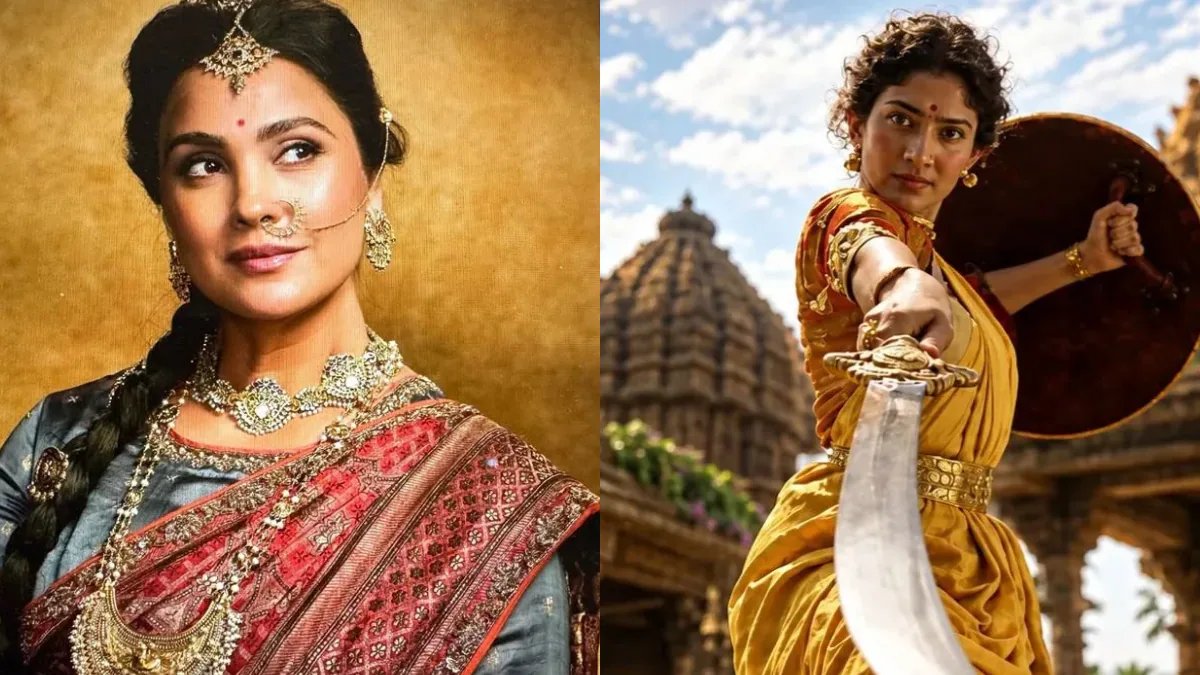
The internet's hostility toward Sai Pallavi did not start with the twin swords.
Long before Nitesh Tiwari’s mythological epic hit the screen, critics fixated on her appearance. They claimed her features lacked divine poise. They picked apart her hair texture. They bristled at her accent. Yet seven days after the film's theatrical debut, the outrage has shifted entirely to the script's physical choreography—specifically, an armed Sita standing her ground in the wild.
Lara Dutta has heard enough.
"You have to stop being so small-minded, you know, and also embrace the cinematic experience," Dutta said, pushing back against the digital chatter targeting her co-star. She refused to yield ground to purists who demand ancient heroines remain passive decorative figures.
Tiwari strips Sita of the customary damsel-in-distress framing. In this production, backed by producer Namit Malhotra, she runs state farming initiatives and drills local youths in combat arts. When the pivotal 14-year forest exile unfolds alongside Ram and Lakshman, she does not retreat to the sidelines. She draws twin swords, notches arrows, and physically battles forest demons.
That creative choice ignited the current firestorm. Dutta countered that history and mythology are far more layered than modern orthodoxies suggest.
There are so many versions of the Ramayana as well. And if you really looked at the way culture was in those times, boys and girls who were born into royal families, they were all, at some level, provided with training in arts and weaponry.
Royal upbringing meant self-defense, regardless of gender. For Dutta, an exiled queen surviving over a decade in uncharted wilderness without survival instincts simply makes no dramatic or practical sense.
"When you're put into a situation like that also as a woman, you're not going to be a helpless woman," Dutta argued. A character with the spine to accept forest banishment will naturally defend her own life. At some point, she stressed, such a woman picks up a weapon.
Dutta's perspective is anchored in her own assignment on set: Kaikeyi, the third consort of King Dasharatha and mother of Bharata. Tradition routinely reduces Kaikeyi to an irredeemable palace schemer, the catalyst who demanded the two fateful boons that banished Rama to the woods and cleared Bharata's path to the throne of Ayodhya.
Yet behind the manipulation orchestrated by her maid Manthara lay an internal fracture—remorse, duty, and tragic resolve. More fundamentally, Dutta points out, Kaikeyi was forged on the battlefield long before she reached Ayodhya's inner chambers.
| Character | Portrayed By | Combat & Operational Skills | Narrative Function in Tiwari's Slate |
|---|---|---|---|
| Sita | Sai Pallavi | Twin swords, archery, agricultural leadership, youth martial training | Co-combatant defending camp during the 14-year forest exile |
| Kaikeyi | Lara Dutta | Mountain warfare, advanced archery, master equestrian riding | Secures Dasharatha's two boons under Manthara's manipulation |
"Kaikeyi came from the kingdom of Kekaya and Kekaya was known for its horses," Dutta explained, detailing the character's lineage. "It was highland, you know, sort of country, rocky, mountainous country, and they were known for their mountain horses. She was an excellent horse rider. She was an excellent archer. She grew up a girl among boys. You know, she had only brothers."
The Analytical Verdict: Tiwari and Malhotra are banking on audiences engaging with royal women who possess tactical agency rather than muted domesticity. Whether traditionalists approve of Sai Pallavi trading devotional passivity for edged steel, the production refuses to water down its martial interpretation seven days into its high-stakes run.