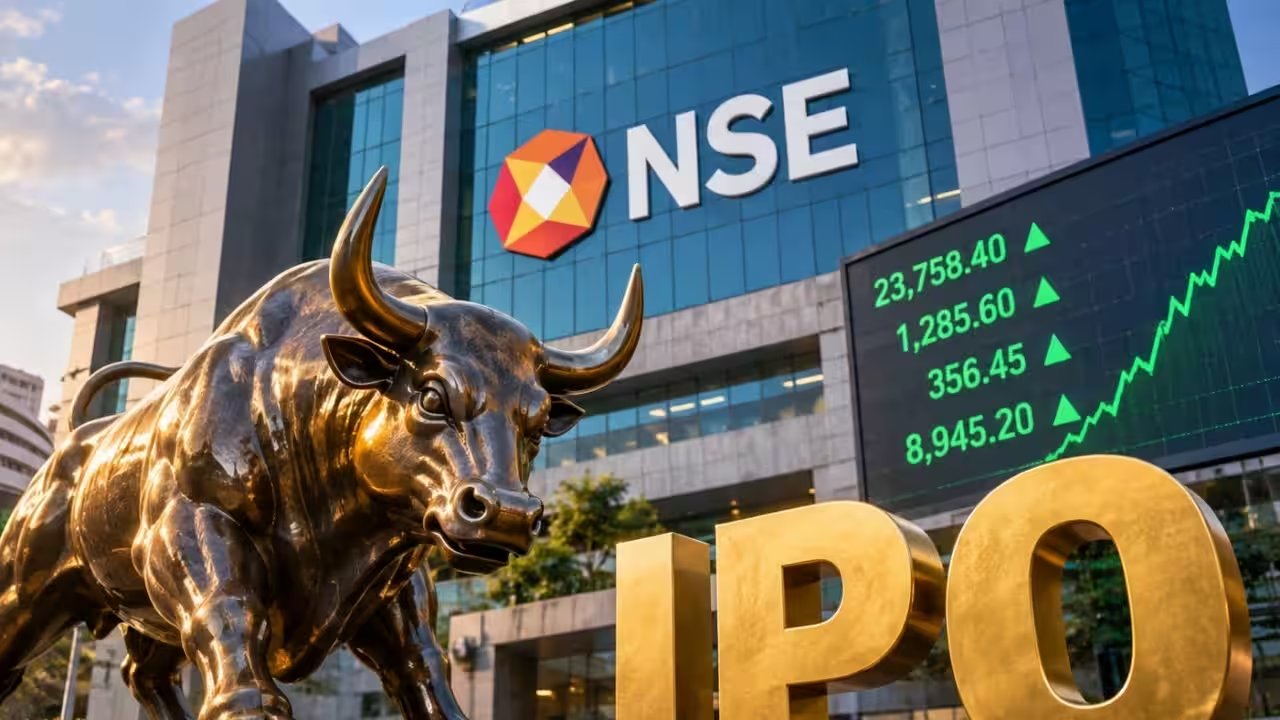
The National Stock Exchange of India (NSE) has finally opened its doors to the public, launching what is now the second-largest IPO in Indian history. The offer-for-sale (OFS) aims to raise up to ₹22,569 crore, a figure that tops LIC’s 2022 issue but remains well below the record set by Hyundai Motor India last year. Since this is a pure OFS, every rupee raised goes directly to existing shareholders—like SBI and the Canada Pension Plan—rather than expanding NSE’s own coffers.
The pricing structure sets the tone for a premium listing. With a band of ₹1,700 to ₹1,785 per share, the exchange is valued at ₹4.42 lakh crore at the top end. Retail investors need just ₹14,280 to bid for the minimum 8 shares. Notably, the post-issue P/E multiple of 42.9 sits comfortably below BSE’s 53, suggesting the market is pricing in risk-adjusted returns for the country’s dominant cash and derivatives player.
The numbers behind the listing are a mixed bag of dominance and recent headwinds. NSE controls nearly 93% of the cash market and 99.7% of equity futures turnover, yet FY26 revenue dipped 3% to ₹16,601 crore. This contraction stems from a 4% drop in transaction charges as regulatory tweaks cooled off derivatives activity. Despite the revenue wobble, the business model remains fortress-like: debt-free, with an Ebitda margin of 66.9% that outperforms BSE’s 64%.
Institutional interest was palpable even before the public window opened. NSE secured ₹6,746 crore from anchor investors, a list that reads like a who’s who of global capital: LIC, Goldman Sachs, Fidelity, GIC Singapore, and ADIA all took positions. The 23 sellers include heavyweights like SBI and Bank of Baroda, signaling that long-term institutional holders are confident enough to diversify their holdings.
For the forward-looking investor, the risk-reward calculus hinges on retail participation. While transaction volumes have moderated, NSE’s 132.4 million unique registered users provide a massive base. The exchange’s diversification into data, colocation, and index licensing grew 9.5% YoY to ₹1,955.9 crore, offering a buffer against pure volume dependence. With high entry barriers protecting its moat, the listing offers a rare shot at owning a piece of India’s financial infrastructure plumbing.