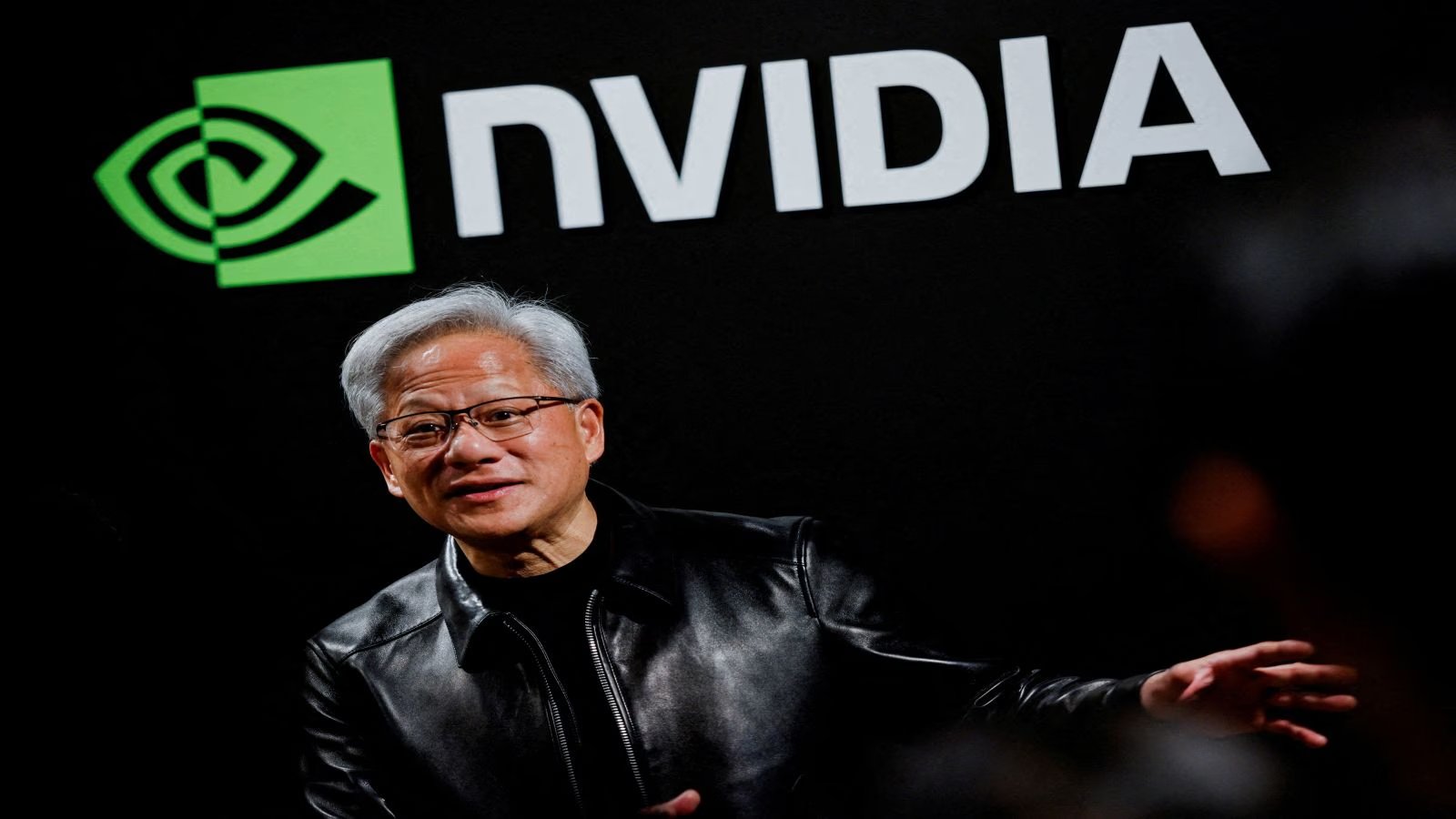
Nvidia shares plunged more than 14% in early Thursday trading. The sell-off was violent.
Panic swept trading desks after the silicon giant announced that co-founder Jensen Huang had resigned as president and chief executive officer with immediate effect. Huang stepped aside under intense pressure following disclosures regarding personal relationships, severing the leadership that steered Nvidia into the epicenter of the artificial intelligence boom. While buyers stepped in later in the session to pare losses to an 8% drop, the structural damage to the company's valuation was immediate.
The drop wiped out approximately $2.2 trillion in shareholder value from the company's October peak of $239.24 per share. At that zenith, Nvidia commanded a record $5.8 trillion market capitalisation. Thursday's rout pushed the stock down 35% from that record high, reducing its overall valuation to $3.6 trillion and terminating its reign as the world's most valuable listed company.
Thursday's tumble marked Nvidia's steepest single-day slump since January 27, 2025. On that day, the stock surrendered nearly 17% after Chinese artificial intelligence startup DeepSeek demonstrated advanced reasoning models on dramatically lower hardware budgets, igniting market anxiety over future data center capital expenditures.
| Company | Global Rank | Current Market Cap | Peak Market Cap |
|---|---|---|---|
| Apple Inc. | 1 | $5.2 Trillion | $5.2 Trillion |
| Microsoft Corp. | 2 | $3.9 Trillion | $3.9 Trillion |
| Nvidia Corp. | 3 | $3.6 Trillion | $5.8 Trillion |
The sell-off completely rearranged the hierarchy of global megacap equities.
Apple retained its crown as the world's most valuable enterprise, sitting comfortably at a market capitalisation of $5.2 trillion. Microsoft bypassed Nvidia to reclaim the second spot, boasting a $3.9 trillion valuation. Nvidia, which had only weeks ago broken past the $5 trillion threshold, slid into third place at $3.6 trillion.
Market Context: Market dominance shifted overnight. Institutional desks that treated Nvidia as an indispensable portfolio anchor reallocated exposure across large-cap tech peers as governance risks collided with high baseline expectations.
The governance rupture was swift.
Nvidia's board of directors installed Chief Financial Officer Colette Kress as interim chief executive while keeping her existing financial responsibilities. Kress takes operational control at a moment of acute volatility.
Huang faced mounting pressure beginning Sunday following revelations concerning undisclosed relationships. Huang admitted to a romantic liaison with Alice Huang, a former executive at Singapore-based data center operator Megaspeed International. Further disclosures confirmed he had also engaged in an undisclosed relationship with an internal Nvidia executive.
Wall Street pulled back its endorsements.
At least seven brokerages downgraded Nvidia stock, directly citing operational and leadership uncertainty created by Huang's departure. Baird slashed its recommendation to Neutral. Bernstein downgraded the equity to Market Perform from Outperform, cautioning that the governance fallout may not have fully settled.
Our gut tells us that we probably haven't yet fully probed the depths of what might be found here. We've had enough, and prefer to watch from the sidelines." >
Bernstein Research, Client Note
William Blair similarly downgraded the chipmaker. Morgan Stanley removed Nvidia from its preferred Top Pick list, though the bank retained its Overweight rating.
Yet broader analyst consensus remains heavily skewed toward accumulation despite the institutional retreat. Out of 82 equity analysts actively covering Nvidia across global brokerages, 70 maintain Buy recommendations, 11 advise a Hold, and only one analyst recommends an outright Sell.
Attention now shifts to Kress and the board of directors as they face immediate demands to provide clarity on permanent succession plans, client retention, and stability in data center hardware shipments.