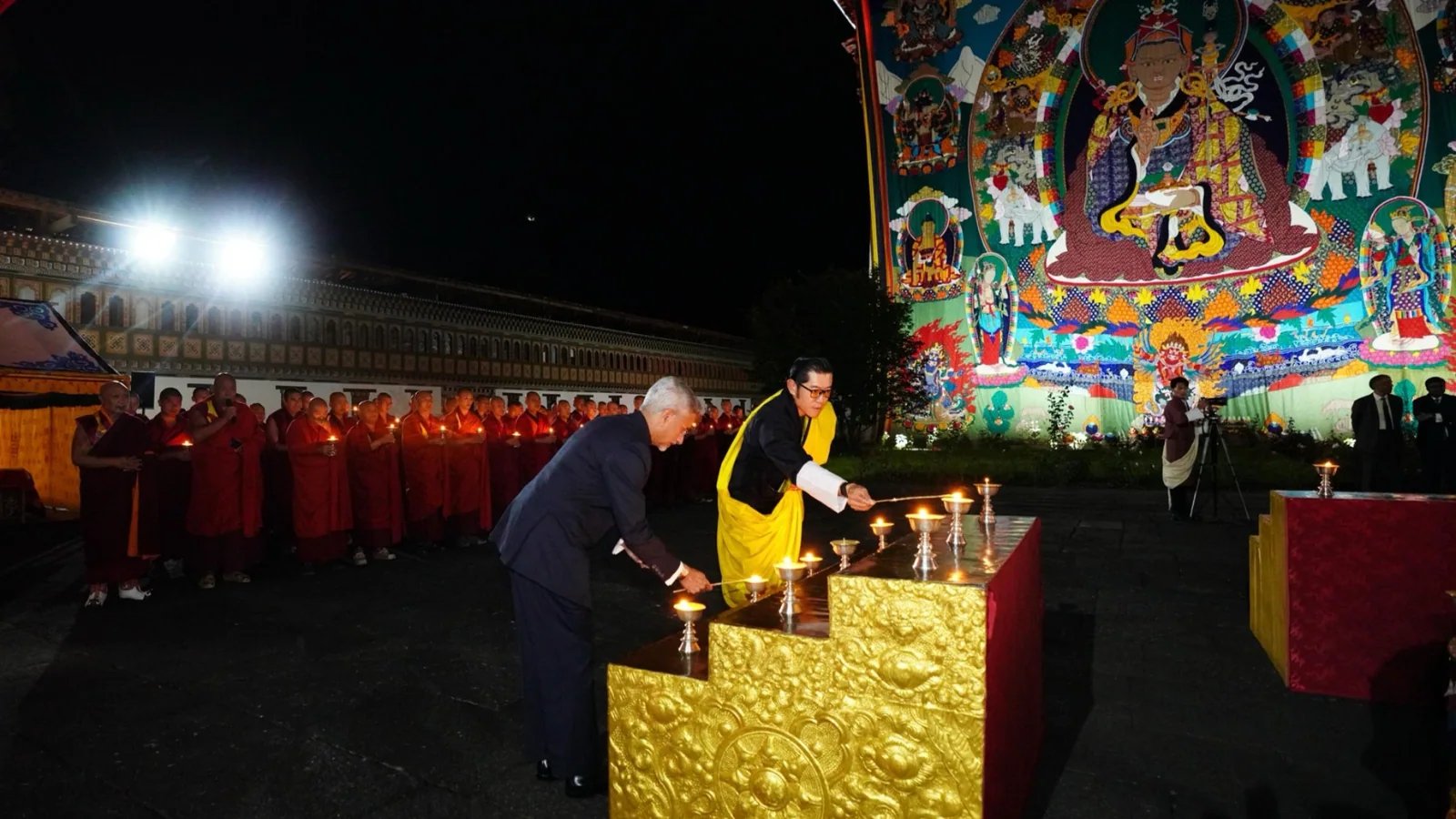
India’s External Affairs Minister S Jaishankar landed in Thimphu on September 16, 2024, and concluded a high‑level visit that included a prayer ceremony at Tashichhodzong where he lit butter lamps in honour of the enduring friendship between the two countries. He met King Jigme Khesar Namgyel Wangchuck and Prime Minister Tshering Tobgay, conveying Narendra Modi’s warm greetings and reaffirming India’s commitment to Bhutan’s progress.
At the same time, Jaishankar cut the ribbon for the 500‑kW Lunana Hydropower Project in Gasa, marking the first time the northern district will receive electricity. He also opened a 65‑bed Gyaltsuen Jetsun Pema Mother‑and‑Child Hospital in Mongar, and inaugurated the 80‑metre Jaganathan Bridge in Samdrup Jongkhar, a joint venture that will shorten travel time between Trashigang and Samdrup Jongkhar by over 30 km.
The minister launched the second phase of India’s Unified Payments Interface (UPI) in Bhutan, signing a Memorandum of Understanding with Prime Minister Tobgay that will allow Bhutanese residents to make digital payments in India. The MoU renews a 2009 scholarship program and follows earlier renewals in 2014 and 2020.
In a separate ceremony, Jaishankar handed over 54 Mahindra electric vehicles to the National Council in Thimphu, a step up from the 45‑vehicle handover in July under the PTA project. The total vehicle procurement budget sits at 900 million Bhutanese Ngultrum, with plans to acquire 45 electric buses in the coming months.
Finally, the minister visited the National Cattle Breeding Centre in Bumthang, where 43 purebred Jersey cows were transferred from India to support a dairy‑cattle breeding programme that will benefit roughly 40,000 Bhutanese farmers. The handover was met with cheers from local farmers who expect higher milk yields.
With UPI now operational and a new fleet of electric vehicles on the road, Bhutan is set to modernise its payments and transport sectors while the dairy programme promises to raise rural incomes. The next phase will see the rollout of UPI payments to the broader Bhutanese population and the deployment of the electric buses in the capital.