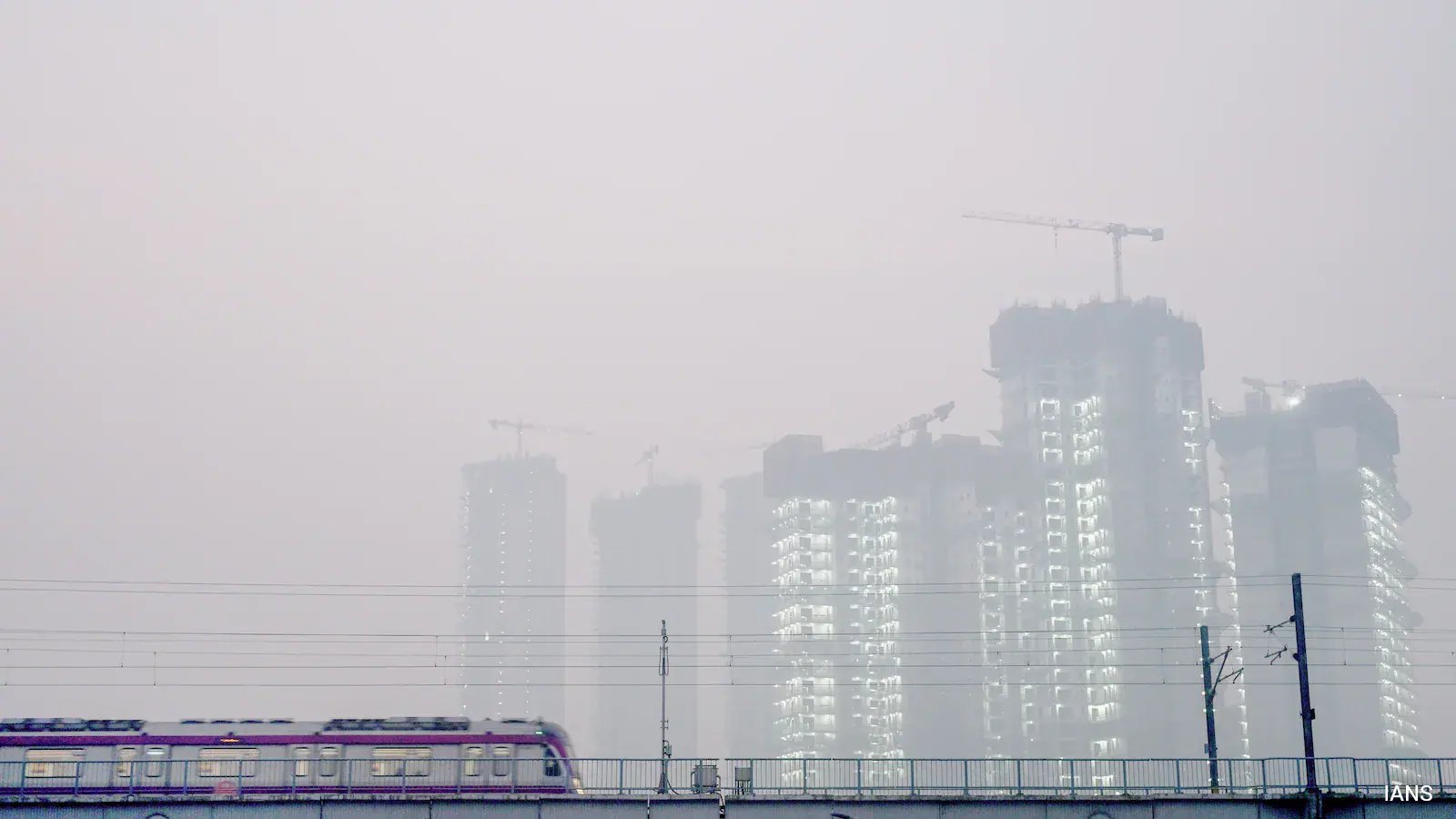
Delhi ordered half its Secretariat workforce home on Friday as toxic smog smothered the capital and air quality plunged into the 'severe' zone.
Pollution levels spiked sharply at daybreak. Delhi’s Air Quality Index touched 403 on Friday morning before easing marginally to 373 by 4 pm—a figure that still holds the city in the 'very poor' band. Smog continued to choke several monitoring stations into Saturday morning, keeping readings in critical territory. Confronting the spike, Environment Minister Manjinder Singh Sirsa and Transport Minister Pankaj Singh stepped in, directing 50 percent of personnel across their ministerial portfolios to transition to remote work immediately to curb vehicular congestion.
The mandate carries surgical boundaries. It applies exclusively to officers and staff stationed inside the Delhi Secretariat, leaving frontline operations untouched. Mr Sirsa oversees environment, food and civil supplies, industries, and forest and wildlife. Mr Singh runs transport, information technology, and health and family welfare.
Yes, this order is only for employees and officers working at the Secretariat, not for the Health Department. All personnel working in hospitals fall under essential services.
Delhi Government Official
Hospitals will not thin their ranks. Government officials confirmed that medical personnel, paramedical teams, and healthcare administrators remain on mandatory on-site duty across state-run facilities.
Emergency operations will stay fully staffed. Under statutory guidelines from the Commission for Air Quality Management, agencies cannot enforce remote rosters wherever doing so jeopardizes public stability. That carve-out shields fire services, electricity distribution, municipal water networks, sanitation squads, and public transit operations.
The ministerial orders feed into a broader administrative crackdown triggered on October 30. Under that Commission for Air Quality Management directive, public and private offices across Delhi and five adjoining National Capital Region districts must cap in-office headcounts at 50 percent between November 5 and November 20. The mandate extends across Gurugram, Faridabad, Sonipat, Ghaziabad, and Gautam Buddha Nagar, exempting only industrial plants and critical utility networks.
| Jurisdiction & Administrative Framework | Mandated Measure | Operative Timeline | Exemption Coverage |
|---|---|---|---|
| Delhi Secretariat (6 Departments) | 50% Work-From-Home Roster | Immediate / Active | Hospital personnel & field staff |
| Delhi & 5 NCR Districts (CAQM Order) | 50% Maximum Physical Attendance | Nov 5 to Nov 20 | Industries & essential utilities |
| Delhi Winter Action Plan | Rotational Remote Attendance | Enacted Nov 1 | HoDs & emergency responders |
Capital administrators are operating under twin emergency frameworks. The Delhi government's Winter Action Plan, enforced on November 1, requires Administrative Secretaries and Heads of Departments to report to office daily while limiting subordinate staff desks to 50 percent. Department heads hold discretionary authority to recall additional personnel if critical service delivery slips.
Then came the regional trigger. Air authorities invoked Stage III of the Graded Response Action Plan across Delhi-NCR on November 6, legally compelling state governments throughout the capital belt to curb physical office operations.
Compliance teams will monitor Secretariat turnstiles through November 20, when the Commission for Air Quality Management's current regional operational window expires.
| GRAP Stage III Framework |
| Inter-State Remote Office Curbs |
| Invoked Nov 6 |
| Core infrastructure services |