Typecasting in Indian cinema can be an unbreakable curse. For Arun Govil, it proved an absolute commercial wall. The veteran actor cautioned filmmakers against tampering with his divine screen currency three decades ago, but the producers brushed off his warnings. They paid for it at ticket counters nationwide within hours.
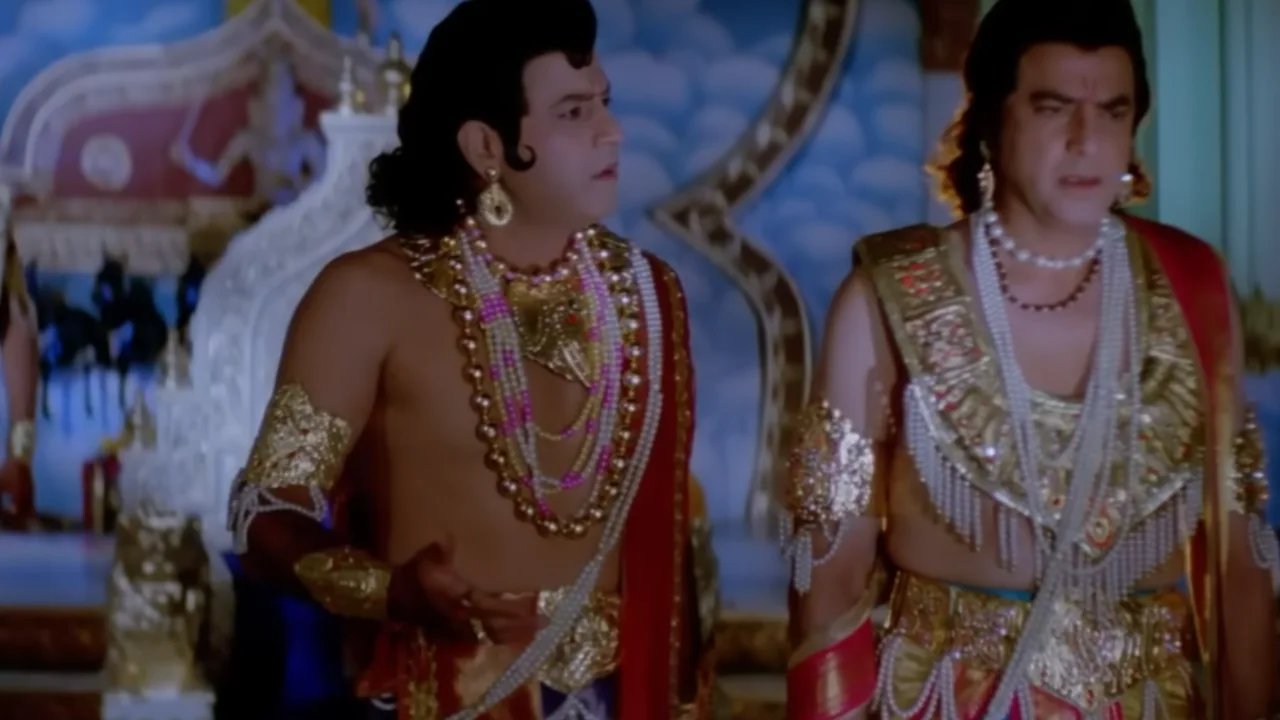
Lav Kush arrived in theatres in 1997 with grand ambitions and an ensemble of screen royalty. Yet audiences rejected the film instantly. The central friction lay in an unthinkable visual demotion: Govil, worshipped across living rooms as Lord Ram in Ramanand Sagar's historic 1987–1988 television series Ramayan, stood framed on screen as Lakshman, Ram's younger brother. Jeetendra took the crown as Lord Ram. Ticket buyers stayed away in droves.
Directed by V. Madhusudhana Rao and produced by Dilip Kanikaria under the Devyank Arts banner, Lav Kush attempted to assemble an unassailable mythological roster. Jaya Prada stepped in as Sita. The legendary Dara Singh reprised his familiar mantle as Hanuman, while veteran actor Pran took on the sage Valmiki. On paper, Kanikaria assembled a formidable lineup. On screen, the psychological dissonance for the Indian audience proved fatal.
Govil had recognized the hazard long before cameras started rolling. He pleaded with the producers to rethink the casting equation, knowing millions of households could never accept him standing one step behind another actor playing Ram.
In the film Lav Kush, where Jeetendra played Ram, they wanted me as Lakshman. I had told the producer it's not right; don't make me play the character of Lakshman, but they did not listen. They wanted me. I said, 'Okay, let's do it.' But then, look what happened. The film didn't even run for one day. Nobody knows about that film.
Audiences had turned the television actor into a living sanctum during the late 1980s. When Ramanand Sagar's Sunday morning serial gripped the country between 1987 and 1988, streets emptied out and families greeted the television screen with folded hands and burning incense. Swapping that aura for a supporting role in an uninspired 1997 feature proved an unmitigated disaster.
| Lav Kush (1997) Character | Actor Cast | Legacy Role Context |
| :--- | :--- | :--- |
|---|---|---|
| Lord Ram | Jeetendra | Veteran Hindi screen lead |
| Sita | Jaya Prada | Acclaimed lead star |
| Lakshman | Arun Govil | Ramanand Sagar's original 1987–1988 Ram |
| Hanuman | Dara Singh | Original TV Hanuman |
| Sage Valmiki | Pran |
Popular perception never parted with that 1987 incarnation. Govil transitioned from the soundstages of Mumbai into the corridors of power, winning a seat in Parliament from the Meerut Lok Sabha constituency. Even on the campaign trail and across administrative desks, the deity's identity still precedes the politician.
Public memory refuses to fade. Decades later, constituents approach the parliamentarian seeking interventions not merely from a lawmaker, but from the persona they canonized on Doordarshan.
Even today, people see me as Lord Ram. They even call me Ramji. They don't call me Arun Govil. Even today, in my constituency, all the people address me as Ramji. And they also come with the thought: 'You are Ramji, you tell us what to do.' Even in the political field, whoever I meet, they believe, 'We have come to you, now our work will get done.'
Now, Govil enters the Ayodhya epic for a third time, but on fundamentally altered terms. Director Nitesh Tiwari has brought the 66-year-old actor into his lavish, multi-part feature film adaptation Ramayana. This time, Govil climbs up the ancestral line rather than stepping down, taking on the pivotal role of King Dashrath, Lord Ram's father.
Produced jointly by Yash and Namit Malhotra, Tiwari's high-stakes retelling features Ranbir Kapoor stepping into the titular mantle of Lord Ram. Sai Pallavi stars opposite him as Sita, Kannada star Yash plays the antagonistic demon king Ravana, and Ravie Dubey takes on Lakshman — the very role that derailed Govil's 1997 outing. Having lived through both the zenith of Sagar's television triumph and the crash of Kanikaria's ill-conceived feature, Govil's return brings poetic symmetry to Hindi cinema's most ambitious mythological enterprise yet.
| Cinema icon |
| Director | V. Madhusudhana Rao | Producer: Dilip Kanikaria (Devyank Arts) |