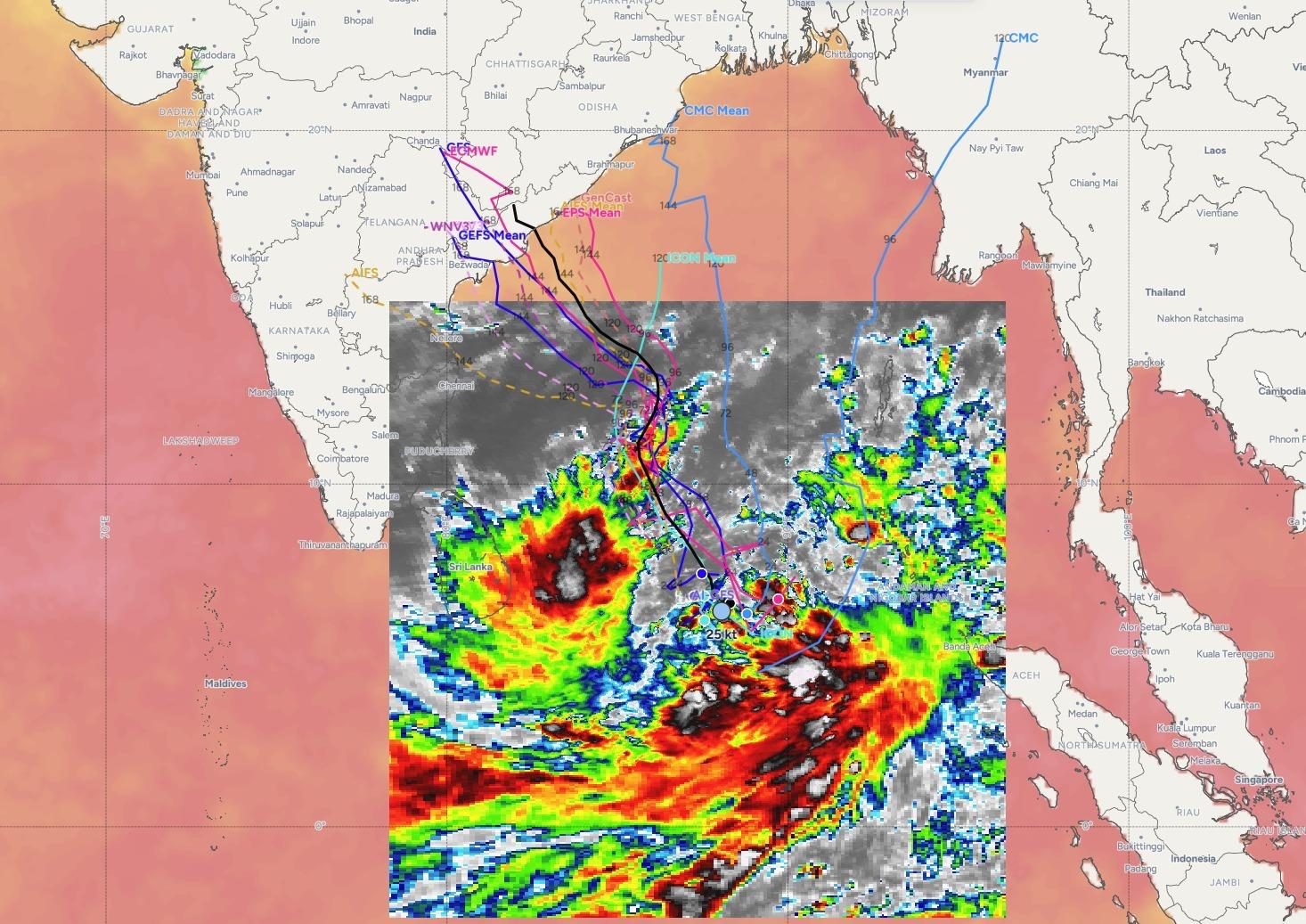
A fresh cyclonic storm brewing over the Bay of Bengal threatens to batter peninsular India's eastern seaboard early next week.
The India Meteorological Department confirmed that an upper-air cyclonic circulation coalesced into a low-pressure area over the Southeast Bay of Bengal on Friday. The system is gaining steam. Forecasters project it will push northwestwards, churning into a well-marked low-pressure zone by Saturday before consolidating into a depression over the same waters by Sunday morning. By Monday evening, meteorologists expect the vortex to strengthen into a named cyclonic storm—christened 'Senyar'—over the central Bay of Bengal.
Current atmospheric models track the storm northwestward toward north Tamil Nadu and coastal Andhra Pradesh. Landfall dynamics remain unpredictable. While satellite data confirms rapid cloud consolidation, forecasters stress that atmospheric steering currents could still alter the storm's final punch and precise landfall coordinates along the coastline.
The sea is turning volatile. The Andhra Pradesh State Disaster Management Authority activated round-the-clock monitoring, issuing urgent real-time advisories to district collectors across vulnerable maritime zones. Authorities instructed artisanal and mechanised fishermen to stay off the waters starting Sunday, ordering all crews currently operating in deep seas to turn back immediately.
| Storm Progression Phase | Projected Timeline | Target Location |
|---|---|---|
| Low-Pressure Formation | Friday | Southeast Bay of Bengal |
| Well-Marked Low System | Saturday | Southeast Bay of Bengal |
| Depression Stage | Sunday Morning | Southeast Bay of Bengal |
| Cyclonic Storm 'Senyar' | Monday Evening | Central Bay of Bengal |
| Coastal Approach | Early Next Week | North Tamil Nadu & Andhra Coasts |
Coastal communities face this fresh threat while still clearing the debris left by Cyclone Arnab just fourteen days ago. Arnab slammed the eastern coast as a "very severe" cyclonic storm—the third-highest classification on the meteorological scale—leaving eight people dead across two states.
Five people perished in Andhra Pradesh alone, crushed by falling trees or electrocuted by snapped overhead power cables across Visakhapatnam, Anakapalle, Kakinada, Konaseema, and West Godavari. In Odisha's Kandhamal district, rain-triggered mud tore through a hillside settlement, triggering a landslide that buried three members of a single family, including a nine-month-old infant.
State control rooms across Chennai, Amaravati, and coastal district headquarters remain on high alert, awaiting updated coordinate tracks from radar stations across the Bay of Bengal ahead of Sunday morning's depression milestone.