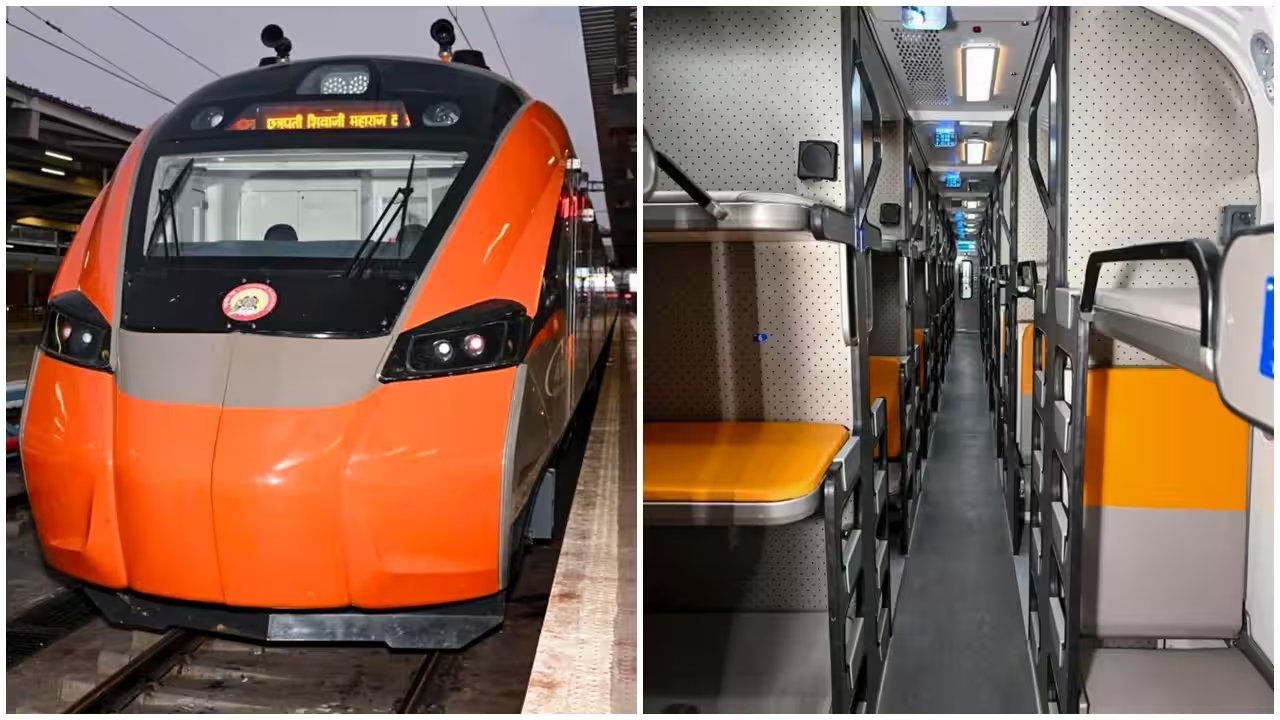
NEW DELHI — Indian Railways pushed its high-speed overnight ambitions into active service this month, locking in three commercial corridors for its flagship Vande Bharat sleeper trains.
The long-distance network expanded in rapid succession. Following the inaugural run between Howrah and Guwahati earlier this year, railway authorities flagged off services linking Delhi to Varanasi and Mumbai to Bengaluru. The fully air-conditioned rakes are engineered to outpace the legacy Rajdhani Express network by slashing travel runtimes with faster acceleration while upgrading overnight passenger comfort.
More rakes are coming down the line. State-run engineering firm BEML holds the opening manufacturing contract for 10 Vande Bharat sleeper rakes. Six already sit on railway tracks. The remaining four are taking shape at factory bays, with railway officials confirming two units will roll out before the end of the month and the final two within sixty days.
Procurement has also begun for an additional three rakes assigned to BEML. Yet the state-owned manufacturer’s assembly floor carries an even heavier mandate. Workers at the plant are currently fabricating India’s first high-speed trainsets for the Mumbai-Ahmedabad bullet train corridor, where railway authorities plan to launch commercial runs on an initial section in the second half of 2027.
The 13 trainsets commissioned at BEML represent only the leading edge of a sweeping overhaul of India's long-distance passenger fleet.
Railways procurement authorities have dispersed manufacturing contracts to build more than 250 additional sleeper trainsets. Chennai’s Integral Coach Factory (ICF) holds orders to construct 50 higher-capacity Vande Bharat sleeper rakes. Meanwhile, an industrial consortium comprising Kinet and Titagarh Wagons is tasked with fabricating approximately 200 16-coach sleeper trainsets, anchoring long-term fleet renewals.
| Fleet & Technical Parameters | Official Specification |
|---|---|
| Active Corridors | Howrah-Guwahati, Delhi-Varanasi, Mumbai-Bengaluru |
| Operational Testing Speed | 180 kmph (Cleared for 160 kmph) |
| Primary BEML Order | 10 Rakes (6 built, 4 in assembly) |
| Additional Production Contracts | ICF (50 rakes), Kinet & Titagarh Wagons (~200 rakes) |
| Structural & Crash Compliance | EN15227 Austenitic Stainless Steel |
| Fire Safety Standard | EN45545 HL3 Grade with End-Wall Fire Barriers |
| Propulsion System |
The sleeper trainsets run on an under-slung propulsion layout coupled with regenerative braking to recycle power during deceleration. The aerodynamic nose cone and structural shell are sculpted from austenitic stainless steel, engineered to absorb impacts under European EN15227 crashworthiness norms.
The trains are mechanically rated for speeds up to 180 kmph. Official operations remain capped at a cleared limit of 160 kmph, calibrated against local sectional track geometry and signalling clearance.
Passengers enter through centrally operated, single-leaf automatic sliding plug doors that seal against the car body once the train moves. Inter-coach movement relies on fully sealed flexible gangways fitted with quick-release mechanisms, sealing off exterior dust and track noise. Inside, sensor-operated partition doors separate passenger saloons from vestibules, lit by a mix of direct and concealed LED lighting.
Security systems inside the rakes incorporate the indigenous Train Collision Avoidance System (TCAS), backup disaster lighting, smoke and fire detection modules (FDS), and networked CCTV surveillance covering common areas. Emergency push buttons allow passengers to signal the crew immediately.
Individual berths integrate three-pin electrical sockets alongside Type-A and Type-C USB charging ports. First AC coaches feature hot water showers. Restrooms run on an odour-free vacuum evacuation setup, accompanied by dedicated accessible berths and wider lavatories for passengers with disabilities. Up front, locomotive pilots operate from an air-conditioned cabin equipped with a dedicated crew toilet and a Passenger Information and Public Address System (PAPIS) linking drivers, guards, and commuters.
Track readiness checks and speed certification trials will determine which trunk routes receive the next four BEML trainsets as they leave the factory floor this quarter.
| Under-slung layout with regenerative braking |