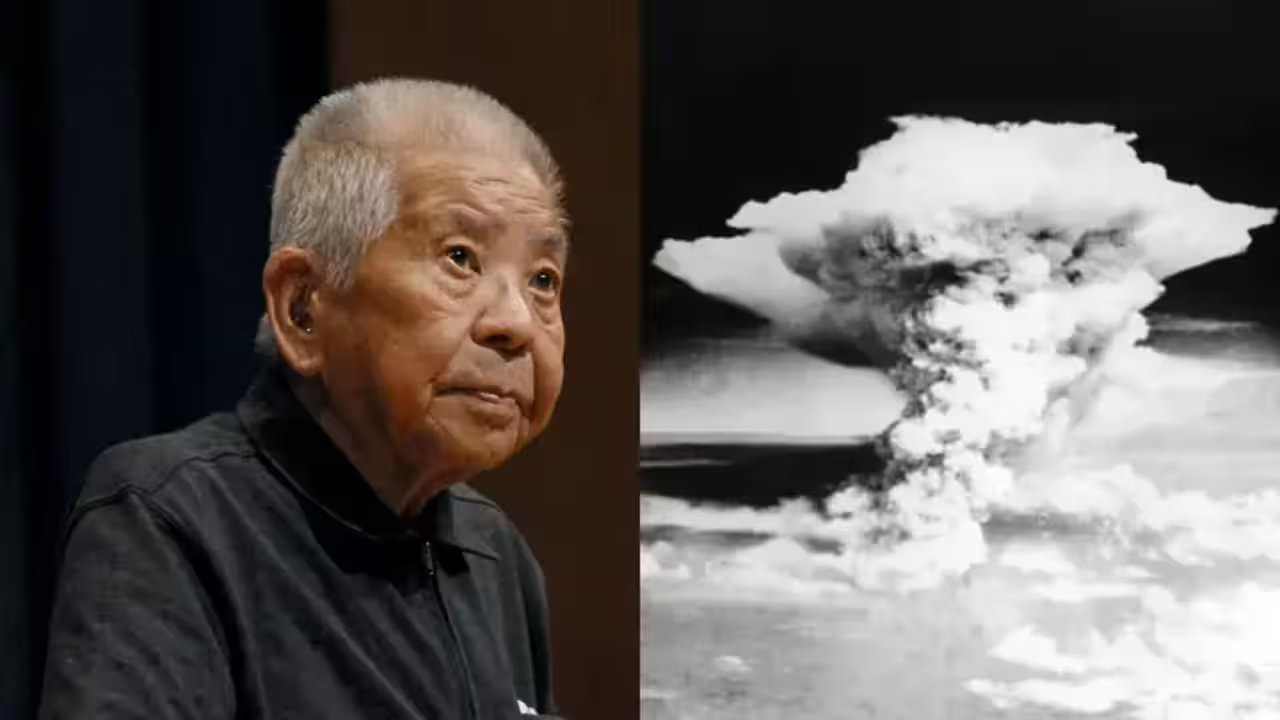
Tsutomu Yamaguchi, a 29-year-old engineer for Mitsubishi Heavy Industries, stood three kilometres from ground zero in Hiroshima on the morning of August 6, 1945, when the US dropped Little Boy. The explosion at 8:15 am threw him into the air, instantly blinding him and scorching his upper body. He wandered through the smoking ruins, eventually reaching a railway station to spend the night before fleeing back to his home city of Nagasaki. By the time he reunited with his wife, Hisako, and infant son, he was a man who had seen the end of the world.
He returned to his office the next morning, bandaged and exhausted, attempting to explain the devastation to his colleagues. At 11:02 am on August 9, 1945, the Fat Man bomb detonated over Nagasaki. Yamaguchi was again three kilometres from the epicentre. "I thought the mushroom cloud had followed me from Hiroshima," he later told ABC News. His wife and son survived the second blast, but the physical toll on Yamaguchi was permanent, leaving him with severe hearing loss in his left ear and lingering radiation sickness.
For sixty years, Yamaguchi kept his story buried. He worked as an interpreter for US occupation forces, taught English, and returned to engineering at Mitsubishi, all while hiding his double exposure. His daughter, Toshiko Yamasaki, explained that the family feared his relatively healthy appearance would lead people to underestimate the deadly nature of radiation. The silence finally broke around 2005, after his second son, who had survived the war as an infant, died of cancer. That personal tragedy transformed his private grief into a public mission.
In March 2009, at age 93, Japanese authorities finally updated his official record to recognize him as a survivor of both attacks. He became the only person to hold this specific certification. "My double radiation exposure is now an official government record. It can tell the younger generation the horrifying history of the atomic bombings even after I die," Yamaguchi told The Japan Times. Historians estimate roughly 165 people were in both cities that week, but Yamaguchi remained the only one to receive the state’s unique acknowledgment.
Yamaguchi carried his testimony to the United Nations in 2006, demanding a world free of nuclear weapons. He did not want to be remembered as a statistical anomaly; he wanted to be a warning. His life’s work bridged the gap between historical trauma and modern policy, ensuring that the horror of August 1945 remained a living threat to human security rather than a footnote in history books.