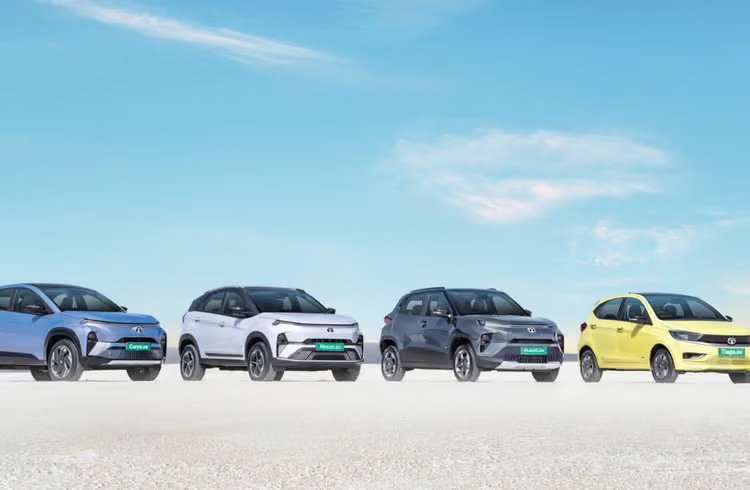
Car buyers eyeing a new Tata driveway addition are running on borrowed time. Showroom price tags have held steady only because Tata Motors Passenger Vehicles is taking the brunt of surging metal prices directly on its chin. The automaker absorbed roughly 60% of the recent jump in commodity input costs, passing on only 40% through calibrated retail adjustments and internal efficiencies. But that buffer is wearing thin. With steel, rubber, and copper prices chewing up operational profits, company executives have put buyers on notice: steeper sticker-price hikes are under review for the fourth quarter.
The cost crunch arrived right in the middle of a sales boom. TMPV racked up its highest-ever quarterly revenue of ₹20,423 crore in the second quarter of FY27—a 50.9% surge year-on-year. Showrooms moved over 200,000 cars, trucks, and SUVs during the three-month stretch, up 40% from the same period last year. Yet beneath the record topline, profitability shrank. Operating EBITDA margin dropped 180 basis points to 4%, while EBIT margin dipped 50 basis points into negative territory at minus 0.3%. Profit before tax and exceptional items crashed to ₹25 crore, down from ₹156 crore logged in Q2 FY26.
Of the commodity hit that we've seen, 40% we've been able to offset through the calibrated price increases and cost actions that we've taken. The balance, we continue to absorb in our P&L,” said Dhiman Gupta, Chief Financial Officer of Tata Motors Passenger Vehicles.
| Financial & Operational Metric | Q2 FY27 | Q2 FY26 / Prior Period | Year-on-Year Shift |
|---|---|---|---|
| Revenue | ₹20,423 crore | ₹13,534 crore (approx) | +50.9% |
| Total Vehicle Volume | >200,000 units | ~143,000 units | +40.0% |
| EBITDA Margin | 4.0% | 5.8% | -180 bps |
| EBIT Margin | -0.3% | 0.2% | -50 bps |
| Profit Before Tax (Pre-exceptional) | ₹25 crore | ₹156 crore |
Market Context: Automakers face a precarious balancing act between preserving retail demand and protecting operational margins. By absorbing three-fifths of raw material shocks, Tata Motors protected foot traffic during high-stakes festive buying. But sustained negative EBIT margins make subsequent showroom price corrections inevitable.
If you are shopping for an electric vehicle, patience remains a prerequisite. TMPV is meeting only 60% to 65% of overall electric vehicle consumer demand. Showroom lots are starved for stock, sitting on a razor-thin 10 days of dealership inventory while customer booking lists pile up.
Factories are already pushed past normal limits. Assembly lines run seven days a week in select facilities to push finished cars out the door. Monthly EV production expanded from 9,000 units in March-April to 16,000 units. Management aims to push that threshold to 20,000 units within three months. While assembly lines can shift capacity between traditional combustion engines and battery packs, supply bottlenecks outside factory gates continue to strangle delivery schedules.
Shailesh Chandra, Managing Director and Chief Executive Officer of TMPV, outlined the factory floor realities:
All our factories are running at full capacity, if not more, with some plants operating for additional days. In terms of meeting demand, we are currently able to serve only about 60
65% of the total demand for EVs, which is why dealership inventory levels remain very lean. We have significantly ramped up supplies from around 9,000 units a month in March — April to 16,000 units currently, and hope to get closer to 20,000 units a month over the next two to three months. However, demand continues to exceed supply. While our in-house capacity is fungible and we can shift capacity from ICE vehicles to EVs, we are closely working with suppliers on around 26 critical parts to further ramp up supplies.”
Electronic components and microcontrollers remain a constant headache. Chandra confirmed the company is paying premium spot prices to secure semiconductors and avoid assembly line stoppages.
The sales charts tell an unmistakable story: Indian motorists are walking away from standalone petrol engines. Electric vehicles and twin-cylinder CNG variants now generate more than half of Tata's total passenger vehicle dispatches.
TMPV's pure electric lineup delivered its strongest quarter to date, clearing more than 47,000 units—a 90% jump over the previous year. That pushed Tata’s domestic electric market share up 380 basis points sequentially to 43%, keeping competitors at arm's length despite an influx of rival battery models. Within Tata's own portfolio, electric penetration climbed to 23% in Q2, up sharply from 14% at the close of last year.
The broader domestic market mirrors the trend. Across all brands, the Indian passenger vehicle sector grew 29% year-on-year to roughly 1.36 million units in Q2 FY27. Alternative powertrains made up nearly a third of all national registrations. CNG captured roughly 25% of the market, while electric cars grabbed an 8% slice. Combined green powertrains now control 32% to 33% of overall industry volume—up from 20% to 22% in FY25. Petrol bore the entire brunt of that customer migration, while diesel engines held steady at a 17% to 18% share.
Tata Motors consolidated its position as the country's second-largest passenger car maker with a 14.3% domestic market share in Q2, swelling to 14.8% during an August blitz that saw 75,000 deliveries. Festive retail billing grew nearly 10% on top of an already massive previous baseline.
Buyers hoping for year-end dealer discounts will find thin pickings. Management reiterated it will not slash prices or compromise margins just to inflate delivery tallies. For those waiting on backordered electric cars or planning a purchase before the fiscal year ends, current pricing windows are closing fast. With suppliers untangling 26 critical EV components and tighter Corporate Average Fuel Economy (CAFE III) targets approaching, higher dealer invoices in early 2025 look all but guaranteed.
| -84.0% |
| EV Sales Volume | >47,000 units | ~24,700 units | +90.0% |
| Domestic Market Share | 14.3% | — | India No. 2 PV Maker |