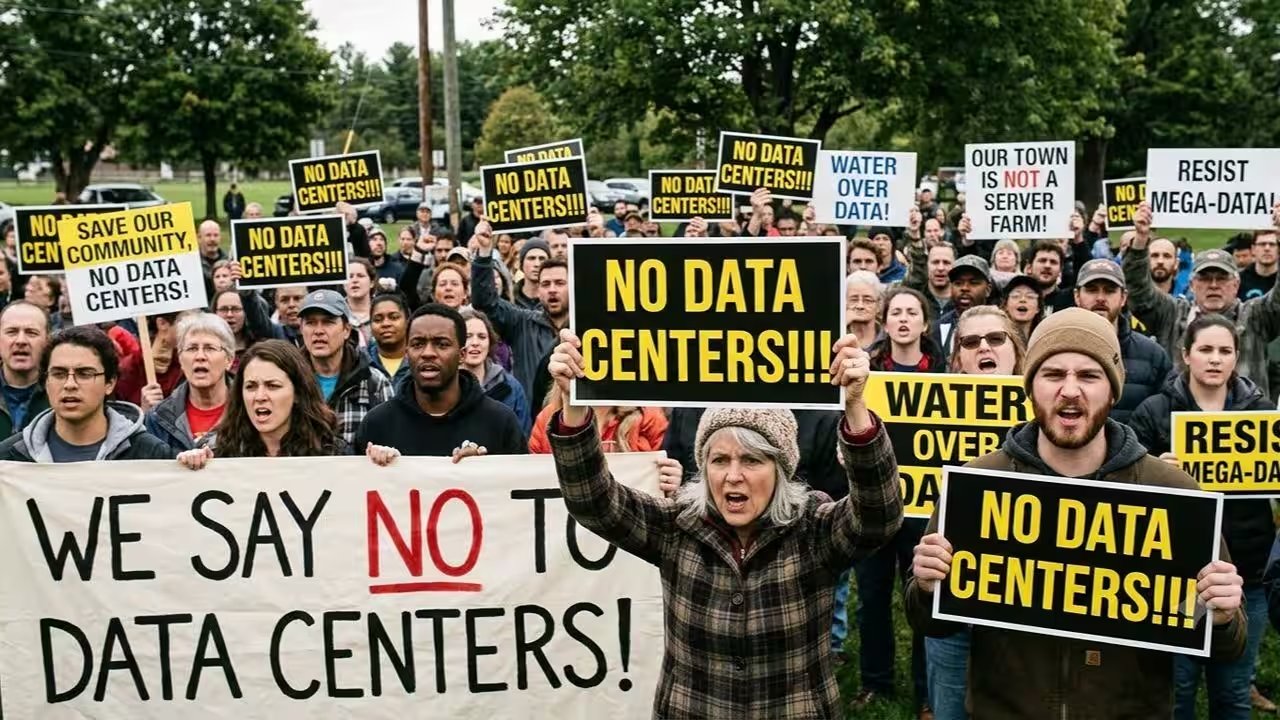
Across the United States, a growing coalition of residents and community groups has united to oppose the rapid roll‑out of data centres. Since June, 2023, activists have formed 220 new organisations, with a total of approximately 640,000 people mobilising in states such as Virginia, Minnesota, Pennsylvania and Indiana. The push centres on concerns over noise, electricity demand, water usage and the speed of approvals.
In Sterling, Virginia, neighbours of a natural‑gas‑powered facility report constant whirring that has disrupted sleep and raised health fears. Data centres themselves consume 100–200 megawatts of power and can draw up to 10,000 gallons of water per day for cooling, according to a Brookings study. Yet the industry claims the projects create only 100–200 permanent jobs per site, a figure that many residents argue is insufficient to justify the resource drain.
The bipartisan backlash has forced elected officials to reassess their positions. Democratic leaders in Loudoun County have called for a moratorium on further expansion, while Republican‑led Arizona now suspends new tax incentives for three years. In Maryland’s Frederick County, officials have halted new developments pending a state‑wide cost‑benefit analysis, signalling a shift toward more public scrutiny.
Nationally, the issue has seeped into federal politics. President Donald Trump has championed AI growth, but both Democratic and Republican lawmakers are being pressed to outline regulatory frameworks. The growing push has already prompted the U.S. Senate to schedule a hearing on data‑centre regulation for September 12, 2024, where industry representatives and civil‑rights advocates will present their cases.