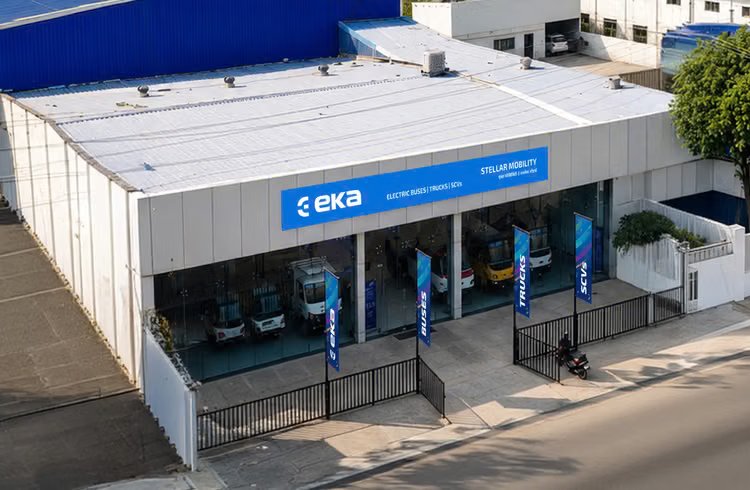
EKA Mobility has opened its equity cap table to every single worker on its payroll. In an official communication to staff, founder and chairman Sudhir Mehta confirmed the electric commercial vehicle maker extended its employee stock option plan across 100% of the company, instantly turning over 1,000 staff members into equity holders. The move cuts straight through conventional factory hierarchy, handing identical ownership rights to shop-floor fitters, battery assembly technicians, and field service crews alongside senior corporate executives.
Typically, automotive manufacturing equity stays locked inside boardroom suites. EKA broke that convention. The expanded programme covers personnel across daily manufacturing, software development, vehicle maintenance, and regional fleet operations. The objective is direct: give workers a tangible financial stake in the enterprise valuation as the company expands electric bus output across Indian municipal and private routes.
Mehta tied the equity roll-out directly to assembly-line discipline and build quality. In commercial vehicle operations, reliability is everything. Fleet buyers cannot afford stalled buses or faulty pack wiring. Mehta called on employees to take personal responsibility for product quality, operational bottlenecks, and vehicle uptime—urging line workers to flag assembly defects before chassis leave factory gates.
Building commercial electric vehicles is a relentless, low-margin grind. EKA Mobility is pushing hard into India's public and private electric transport segment, where transit operators demand commercial vehicles capable of heavy daily duty cycles to replace diesel fleets. The company expanded its lineup with a 9-metre electric school bus unveiled at Prawaas 5.0, taking aim at institutional transport operators seeking to bypass diesel price swings and curb tailpipe emissions.
Fleet deployment now shifts toward factory execution. With government transit contracts pushing for accelerated municipal fleet conversion, EKA Mobility is betting that shop-floor equity incentives will translate directly into tighter build tolerances, faster turnaround times, and lower warranty costs on Indian roads.