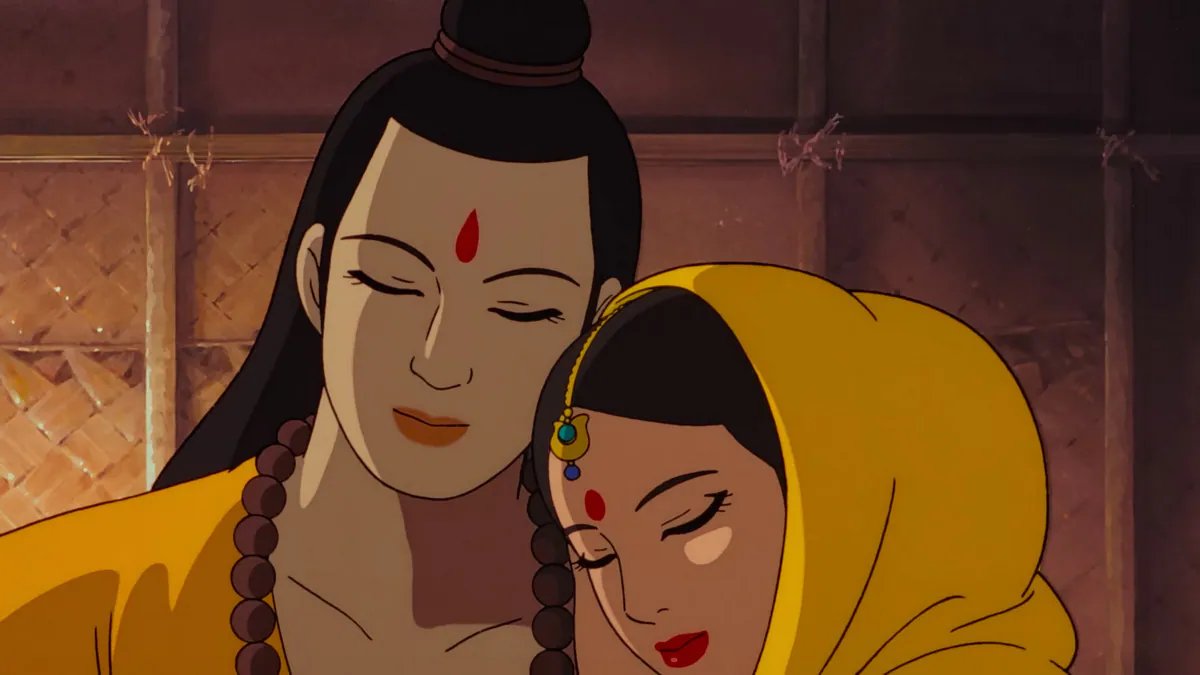
Modern mythmaking has succumbed to digital bloat. Audiences now endure ₹4,000-crore cinematic universe pitches, sterile green screens, and plastic computer-generated imagery disguised as grandeur. Yet the definitive screen retelling of India's foundational epic remains a 1992 Indo-Japanese anime drawn entirely by hand. On January 24, 2025, Ramayana: The Legend of Prince Rama finally secured the wide, nationwide theatrical rollout denied to it for 32 years—arriving in a meticulously restored 4K format that puts contemporary digital spectacles to shame.
It was a long, bruising road to cinema halls. Co-directed by Japanese visionary Yugo Sako alongside animation pioneer Ram Mohan and Koichi Sasaki, the production wrapped in December 1992 before premiering at the International Film Festival of India (IFFI) in January 1993. A proper commercial run never materialized back then. An aborted, limited release fluttered through theatres in 1997 before the feature retreated to cable syndication—becoming a fixture of early-2000s Cartoon Network broadcasts. But television sets never did justice to its scale. Restored on the big screen, the sheer physical labour of its creation demands immediate respect.
The production numbers alone dwarf modern automated pipelines. The directors marshalled approximately 450 Indian and Japanese animators across years of painstaking cross-border labour. They worked without the safety net of high-speed digital transfers, cloud servers, or video calls. Physical parcels traversed the Indian Ocean. Over 100,000 hand-painted animation cels were inked, coloured, and layered by human hands. That tactile friction lives in every single frame.
| :--- | :--- | :--- | :--- | :--- |
|---|---|---|---|---|
| Original Completion Date | December 1992 | Directed by Yugo Sako, Ram Mohan & Koichi Sasaki | ||
| First Festival Screening | January 1993 | International Film Festival of India (IFFI) | ||
| Wide Indian Theatrical Run | January 24, 2025 | Digitally remastered in 4K resolution | ||
| Production Workforce | ~450 Artists | Cross-continental Japanese and Indian teams | ||
| Animation Technique | 100,000+ Cels | Traditional hand-drawn and hand-painted acetate | ||
| Musical Score | Orchestral & Choral |
The craft speaks for itself. The world-building in Ayodhya, the dense Dandakaranya wilderness, and the craggy coastlines of Lanka avoid the sterile geometry of digital rendering. Instead, they carry a lush, painterly warmth. Vanraj Bhatia's commanding score underpins the shifting tones, moving from pastoral flute arrangements in the forest exile to thunderous brass during the climactic siege.
The film condenses an astronomical epic into a taut, cohesive two-and-a-half-hour feature. It charts Prince Rama's 14-year exile triggered by Kaikeyi's palace intrigue, Sita's abduction by Ravana, the tactical forest alliance with Sugriva's vanara army, Hanuman's daring leap to Lanka, the assembly of the Ram Setu bridge, and the final war. The storytelling moves with astonishing economy. It never stumbles into the trap of episodic television anthologies.
Yet the narrative choice remains resolutely classical. The film presents Rama not as a morally conflicted mortal, but as the quintessential ideal prince—stoic, compassionate, and unwavering in duty. Sita is drawn with regal grace and dignified vulnerability, though her narrative utility remains largely tethered to her abduction and rescue. And modern anime viewers will notice technical rough edges: character locomotion can occasionally feel stiff, facial expressions carry limited variation, and certain skirmishes lack modern vector fluidity. But these minor artifacts pale against the film's visual soul.
With its wide 4K theatrical run now under way across India, the restored feature bridges two generations of audiences—offering Gen Z cinephiles a masterclass in classical animation while giving older viewers the panoramic big-screen exhibition this transatlantic triumph always deserved.
| Composed by Vanraj Bhatia |