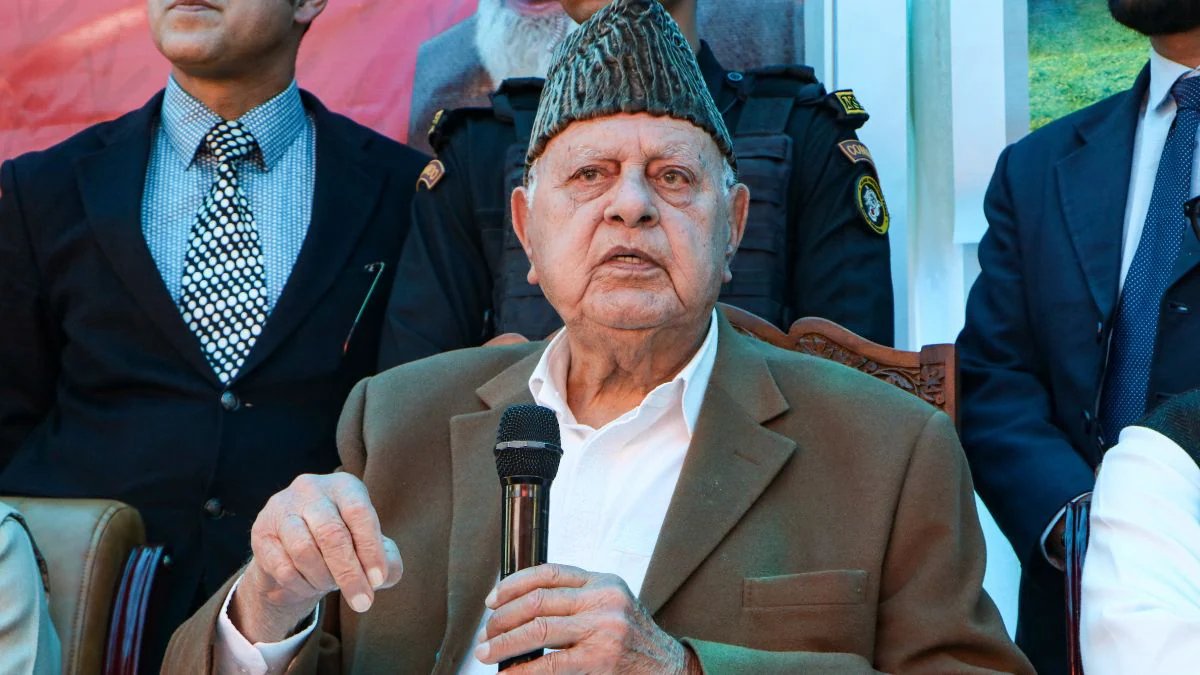
National Conference President Farooq Abdullah struck a warning chord on reservation policy in Jammu and Kashmir, arguing that unchecked quota expansions are eroding merit-based opportunities. He stated that without immediate corrective action, the general category—constituting 70 percent of the state's population but receiving less than 40 percent of jobs—will be pushed into the same socioeconomic position as Scheduled Castes were in 1947. “We have to make an effort to address this injustice somehow,” Abdullah said, highlighting that open-merit students are increasingly being displaced by those benefiting from expanded reserved categories.
The tension stems from structural changes since J&K lost Article 370 status in 2019. In March 2024, the Centre granted Scheduled Tribe status to Pahari-speaking groups, doubling the ST reservation quota from 10 percent to 20 percent. When combined with quotas for Scheduled Castes, OBCs, EWS, Line of Control, and Resident Backwards Areas, over 60 percent of jobs now go to reserved categories. Abdullah pointed to a glaring disparity: students scoring above 80 percent in professional exams are denied admission, while candidates from reserved categories secure seats with scores as low as 45 percent.
Omar Abdullah’s government approved a revised reservation policy in December 2024, aiming to restore 50 percent of jobs to open merit. However, ten months later, the policy remains stalled because the BJP-led Centre has not cleared it. This bureaucratic limbo has intensified anger among general category applicants who feel their hard-earned rankings are being nullified by administrative gridlock. The delay has turned reservation policy from a policy debate into a live political flashpoint.
Compounding the issue is a regional imbalance in Economically Weaker Sections (EWS) certificates. J&K Assembly Speaker Abdul Rahim Rather directed the state government to examine this disparity, noting that 37.71 lakh Priority Household ration cardholders exist in the Kashmir Valley compared to 29.81 lakh in Jammu. Yet, political leaders allege that 92 percent of EWS certificates have been issued in the Jammu region, despite Kashmir having a 55 percent below-poverty-line population. Sajad Lone, President of the Peoples Conference, presented assembly data showing only 8 percent of EWS certificates went to the Valley, fueling accusations of regional bias in favor of Jammu. The Centre’s response to the stalled 50 percent open merit policy and the EWS certificate audit will determine whether this administrative deadlock escalates into a broader political crisis.