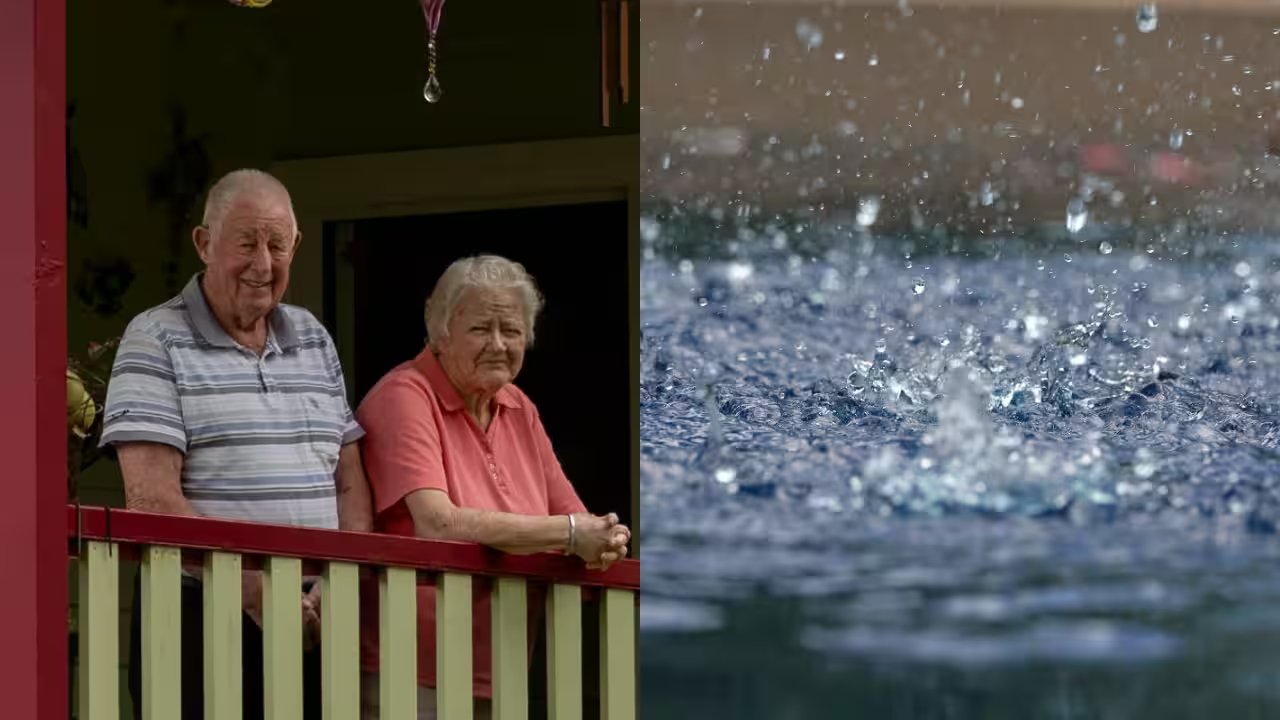
MITTA MITTA VALLEY, Australia — For sixty-three years, Ernie and Merrillyn Cole scanned the dawn skies over north-east Victoria before doing anything else. Rain or frost, the logbook opened. Now aged 86 and 82, the couple want to hand their daily vigil over to microchips and satellite uplinks so they can finally pack their bags and travel.
But the transition remains stalled. The Coles have appealed directly to Australia's Bureau of Meteorology to install an automatic weather station at their homestead in the Mitta Mitta Valley, an area where alpine terrain churns unpredictable weather pockets. The couple want their sixty-three-year observational baseline preserved without demanding their physical presence at the rain gauge every morning. Federal weather officials have made no promises.
Ernie Cole first arrived in the valley in 1963, dispatched as a state forestry officer with official instructions to report daily atmospheric conditions to the bureau. When early shift work pulled Ernie away at dawn, Merrillyn stepped up. She took charge of the station, monitoring measuring cylinders and thermometers with young children balancing on her hips.
She kept the ledger without interruption.
Yet the historical chain stretches far deeper than 1963. When Ernie took custody of the post, he inherited hand-kept observational logs from Mitta Mitta's retired postmistress, anchoring the property's archival data all the way back to 1915. Moving the collection point even a few paddocks away, Ernie warns, would rupture an irreplaceable climate record.
Measurements must continue from precisely the same location to ensure that future readings remain comparable with historical data.
Ernie Cole, Longtime Observer
The bureau's operational demands have already shifted around them. For decades, bureau staff rang Merrillyn daily for detailed readings on temperature, wind force, fog, and frost. Roughly twelve months ago, the agency ended routine calls, instructing her to phone in rainfall numbers only during severe downpours.
Neighbouring grazier Russell Kelly—a retired aviation pilot known locally as Ned Kelly who manages the district airfield—has joined the push for automation. Topography in the Mitta Mitta Valley divides weather fronts with razor precision. Rainfall tallies routinely swing by 300 millimetres between properties separated by just 10 kilometres.
Kelly monitors these disparities daily. Over the past century, local tallies show a gradual drop in cumulative precipitation, placing severe pressure on pasture management and cattle stocking rates. Without ultra-local telemetry, regional farmers work in the dark.
| Station Parameter | Current Valley Metric |
|---|---|
| Observation Baseline | Continuous since 1963 (Archival roots to 1915) |
| Primary Observers | Ernie Cole (86) and Merrillyn Cole (82) |
| Local Rainfall Variance | Up to 300 mm difference across 10 km |
| Nearest BOM Automated Stations | Two units at ~39 km; rain gauge at 6 km |
| National BOM Network Balance | 650+ Automated Stations; ~3,000 Manual Sites |
Australia's weather-monitoring network has marched toward full automation since the 1980s. The bureau currently manages more than 650 automated stations alongside roughly 3,000 manual volunteer observers nationwide. Installing dedicated automated hardware at private rural homesteads requires capital allocation and ongoing maintenance budgets that the agency rations tightly.
Bureau officials pointed out that the Mitta Mitta district already sits inside a broader monitoring matrix. Two operational automated weather stations stand approximately 39 kilometres away, supplemented by a solitary automated rain gauge six kilometres outside the town. Agency administrators confirmed that volunteer observations in Mitta Mitta remain active for now, with no immediate plans to scrap the site.
But volunteer hands will not last forever. When the Coles take short trips, Kelly steps in to log the precipitation himself, even postponing his own travel plans to keep the ledger unbroken. The couple plan to measure every drop by hand for as long as their legs carry them to the post, waiting for the bureau to decide whether sixty-three years of loyalty warrants a permanent digital replacement.