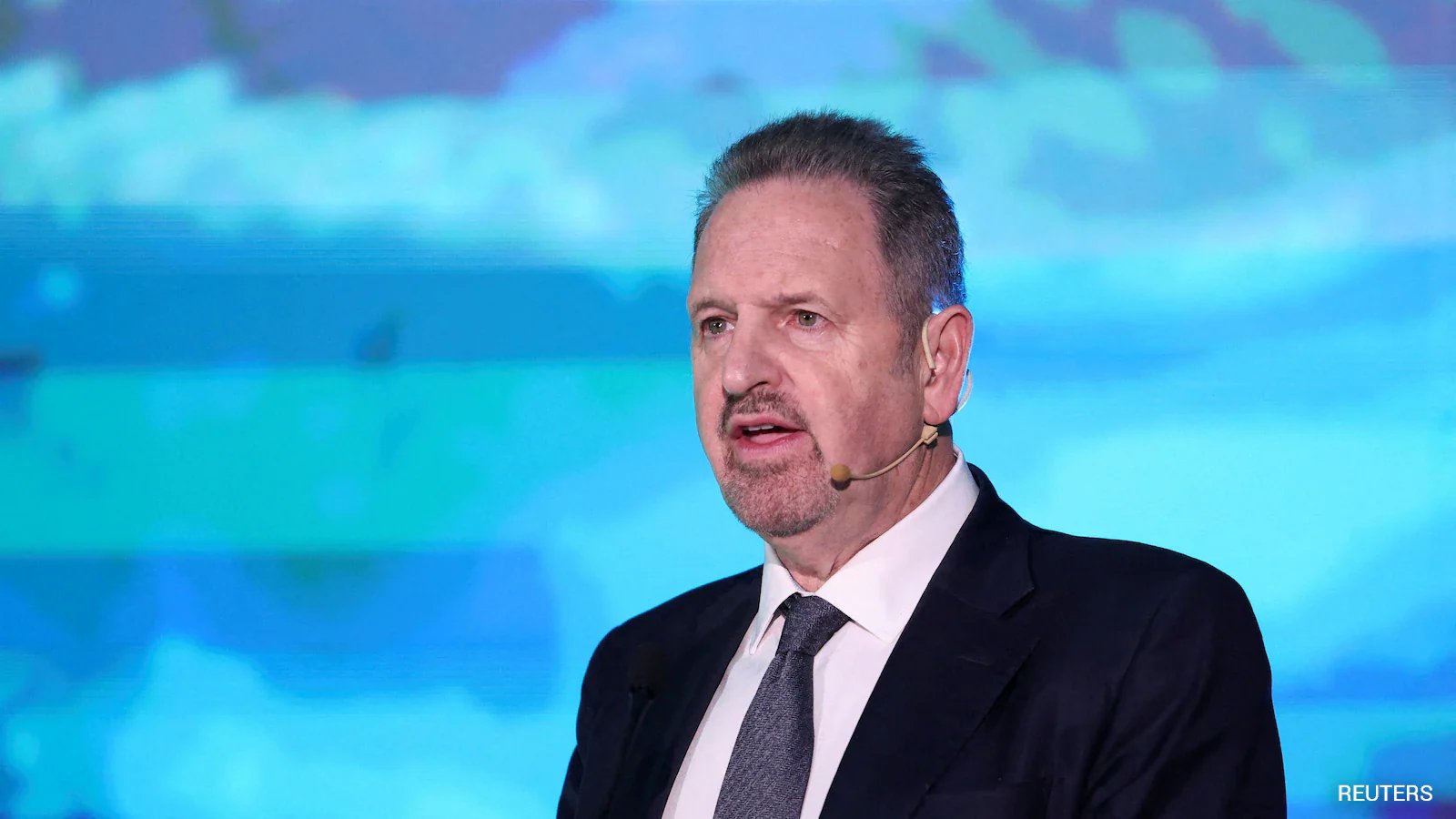
Nvidia's board of directors approached British chipmaker Arm Holdings Chief Executive Rene Haas to take over the helm following the sudden ouster of co-founder Jensen Huang.
Huang stepped down on Thursday after disclosures of extramarital relationships—including one linked to a suspected Chinese intelligence operative—upended the world's most valuable chipmaker and triggered a $573 billion wipeout in market capitalisation over five trading sessions. Haas, who led Nvidia's computing products division during a seven-year stint before jumping to Arm in 2013, emerged at the top of an emergency succession shortlist. Arm’s US-listed shares slumped 5% on the disclosure, while Nvidia slid another 2%.
The boardroom search remains unsettled.
Nvidia’s board insisted it has not formally engaged candidates as it vets executive search firms. "Any speculation regarding individual candidates, whether internal or external, is premature," the board said in an official statement, while interim Chief Executive Colette Kress assumed day-to-day operations to stabilize executive ranks.
Inside Nvidia’s Santa Clara headquarters, shock gave way to open defiance.
A veteran engineer published an internal appeal urging the board to measure workforce sentiment before picking a replacement, igniting a thread that drew more than 1,600 comments within hours across the company's 42,000-member global workforce. Numerous staff members demanded Huang’s immediate reinstatement. The sentiment spilled into Silicon Valley power circles when billionaire Elon Musk announced on X that a public petition was circulating to restore Huang to his post and that he intended to sign it. Both Nvidia and Arm declined to address the internal communications or Musk’s intervention.
Haas brings rare institutional literacy. He took Arm’s corner office in 2022 and steered its blockbuster Nasdaq public listing in 2023, expanding the Cambridge-based firm from mobile architecture into data centres and personal computing.
Rene is one of few external candidates who wouldn’t need to be brought up to speed on Nvidia. Rene's understanding of the company’s culture alongside his experience running Arm was a combination you don’t find very often.
Shay Boloor, Chief Market Strategist, Futurum Equities
The leadership vacancy threatens the singular command structure that defined Nvidia across three decades. Huang acted as Chief Conductor, personally directing engineering roadmaps, multi-billion-dollar investments, and tense geopolitical discussions over Washington’s tightening semiconductor export caps to Beijing.
| Succession Candidate | Current Executive Role | Core Institutional Alignment | Status Under Review |:--- |:--- |:--- |:--- |Rene Haas | CEO, Arm Holdings | Former VP & GM, Nvidia Computing Products | Approached by Board |Colette Kress | Interim CEO & CFO, Nvidia | Guided balance sheet through AI infrastructure boom | Active Interim Chief |Ian Buck | VP of Hyperscale & HPC, Nvidia | Architect of proprietary CUDA software ecosystem | Top Internal Candidate |Lisa Su | CEO, Advanced Micro Devices | Deep semiconductor supply chain & China footprint | Industry Prospect |Sanjay Mehrotra | CEO, Micron Technology | Key supplier of high-bandwidth memory for AI racks | Industry Prospect |Johny Srouji | SVP of Hardware Technologies, Apple | Architect of Apple Silicon silicon rollout | External Speculation |Matt Murphy | CEO, Marvell Technology | Cloud data infrastructure & semiconductor leader | External Speculation |Tim Cook | Former CEO, Apple | Floated publicly by US President Donald Trump | External Political Prospect |
A growing faction inside the company favours CUDA software architect Ian Buck, whose programming environment locks millions of developers into Nvidia's silicon architecture. Meanwhile, political figures have weighed in publicly, with US President Donald Trump floating former Apple chief executive Tim Cook as a prospective stabilizing hand.
Nvidia’s board will finalize its selection of a global executive recruitment agency in the coming days to formally vet candidates while navigating bipartisan congressional pressure to clamp tighter export restrictions on advanced processors destined for mainland China.