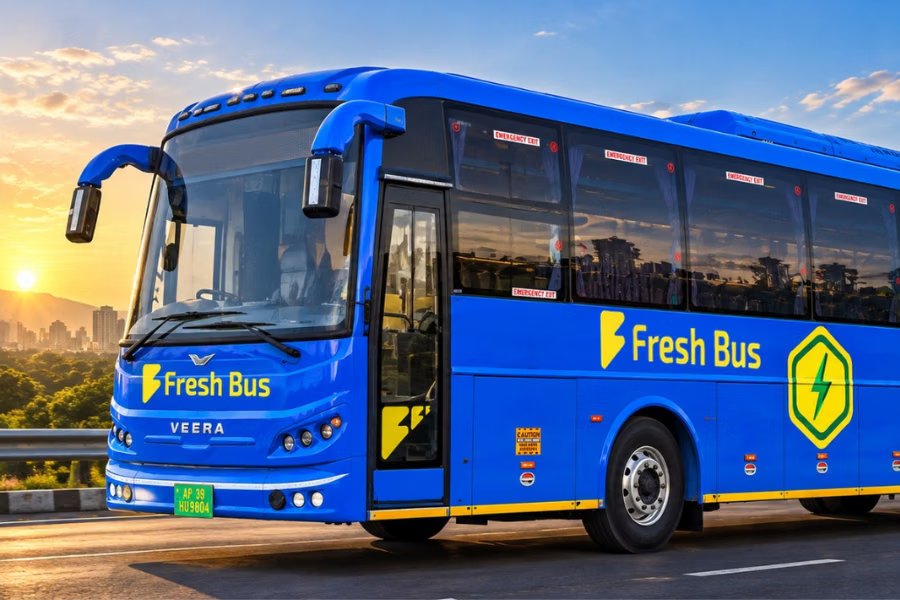
A 13.5‑metre, all‑AC electric bus roars onto the 600‑km Bengaluru–Hyderabad corridor, carrying 39 sleepers. For the average commuter, that means a full night’s rest in a climate‑controlled cabin, complete with reading lights and personal charging points.
The journey is punctuated by ultra‑fast charging halts, a first for intercity electric buses in India. While diesel coaches would refuel in a few minutes, the Fresh Bus can plug in and be back on the road in under ten, keeping the travel time competitive.
Passengers receive a snack box, water bottle, and a full set of bedsheets, pillows and blankets. Safety is baked in with fire extinguishers, CCTV, speed governors and even alcohol checks for drivers, giving a feel of a hotel‑on‑wheels.
In a market dominated by diesel operators like State Transport and private players, Fresh Bus is carving out a niche by offering a cleaner, quieter alternative. The government’s push for electric public transport and rising fuel costs make this an attractive proposition for budget‑conscious, eco‑aware travellers.
The service is already live, with tickets sold via the Fresh Bus app, website and major OTAs. Fresh Bus plans to add more Bengaluru–Hyderabad runs and expand to other high‑traffic corridors by early 2027, keeping an eye on opportunities like Chennai–Bangalore and Pune–Nagpur.