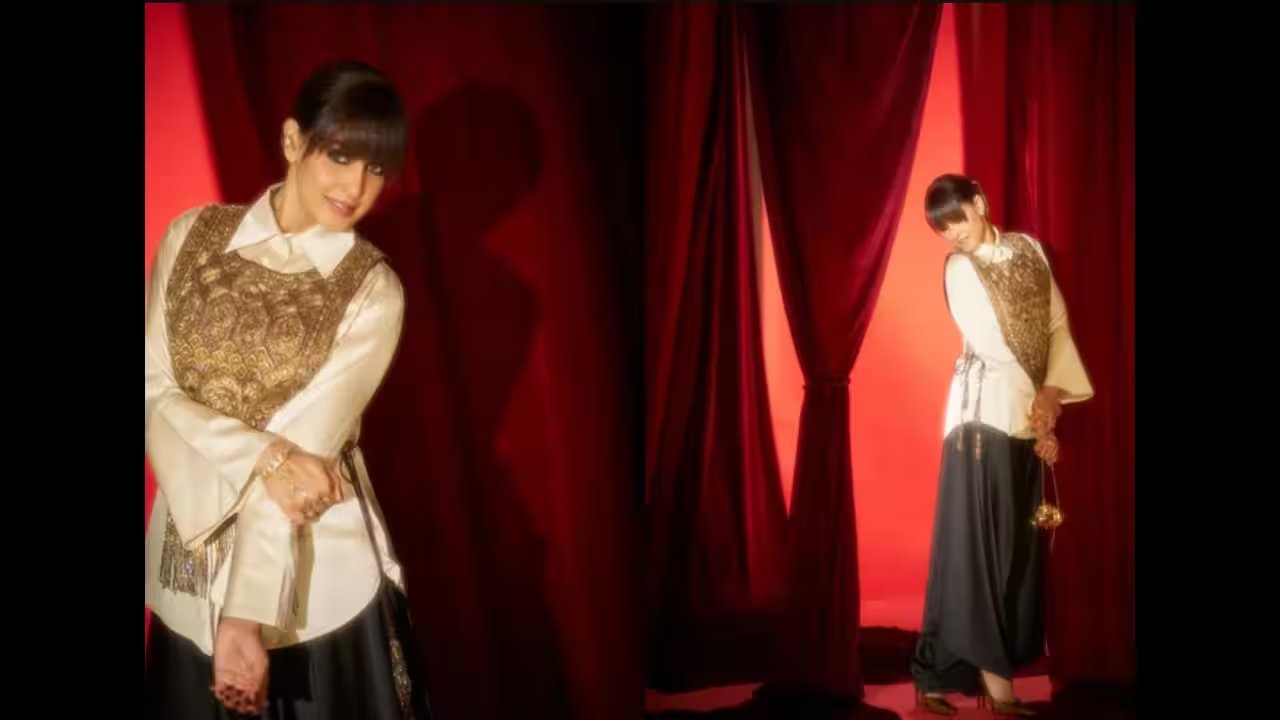
Genelia Deshmukh just offered the ultimate masterclass in festive dressing, ditching predictable six-yard drapes and heavy lehengas for three sharp pieces. She paired a crisp ivory button-down shirt and relaxed black cowl pants with an intricate, jewel-encrusted bib. It stopped social feeds in their tracks.
Yet the real showstopper rests in the craftsmanship beneath the surface. Artisans clocked over 850 hours of meticulous needlework to create the accessory. Conceived by Delhi designer Sanya Dhir for her label Divani, the piece comes straight out of the brand’s Heirloom Separates collection—a lineup designed to pull historic Indian handwork out of bridal trunks and drop it directly into modern closets.
But the garment does far more than look regal. Side tie-up cords pull the silhouette taut, creating a sharp, corset-style structure that sits flat against tailored cotton. Drawing direct inspiration from 17th-century waistcoats, Dhir packed the canvas with traditional Mughal motifs, aged antique metal finishes, and bezel-set semi-precious stones. It commands attention. You do not need heavy gold neckpieces or sweeping dupattas when an accessory carries this much weight on its own.
Instead of relying on modern machine short-cuts, the atelier deployed four distinct schools of heritage hand embroidery to build tactile depth across the fabric. Karigars layered fine motichoor zardozi—a granular technique named for its pearl-like resemblance—alongside spiraled dapka wire, polished naqshi threads, and textured khiccha work.
Even the hemlines skipped industrial assembly. Women artisans hand-knotted every single fringe drop using a delicate single-needle technique, ensuring the borders sway fluidly rather than hanging stiffly. Weeks of physical strain and unyielding hand-eye coordination sit inside those seams.
| Design Element | Technical Specification | Artisan Technique |
|---|---|---|
| Artisan Labor | 850+ hours of dedicated handwork | Manual single-needle hand-knotting |
| Label & Line | Divani by Sanya Dhir | Heirloom Separates collection |
| Historical Era | 17th-century imperial silhouettes | Court waistcoat tailoring with side tie-up corsetry |
| Primary Embroidery | Zardozi with semi-precious stones | Motichoor, dapka, naqshi, and khiccha needlework |
| Styling Foundation |
Separates work because they refuse to dictate the rest of your outfit. If you want to take a statement bib or embroidered harness for a spin, leave the matchy-matchy sets behind and lean into high-contrast layering.
Pair a structured embroidered vest over a starch-pressed white poplin shirt and straight-leg indigo denim for an effortless gallery opening or family dinner. If you prefer a traditional route, slip it right over a flared cotton peshwa or an unadorned chiffon saree to bring instant edge to soft drapes. And for late evening plans, style the piece over a minimalist plunge bralette and a floor-skimming silk column skirt. The base clothes stay quiet; the embroidery does all the shouting.
Genelia’s outing proves that personal style does not require drowning in tulle or spending entire evenings fighting pinned dupattas. One exceptionally crafted, high-impact piece anchored against dependable basics can completely redefine festive wear.
| Modern western basics |
| Crisp ivory shirt with draped black cowl trousers |