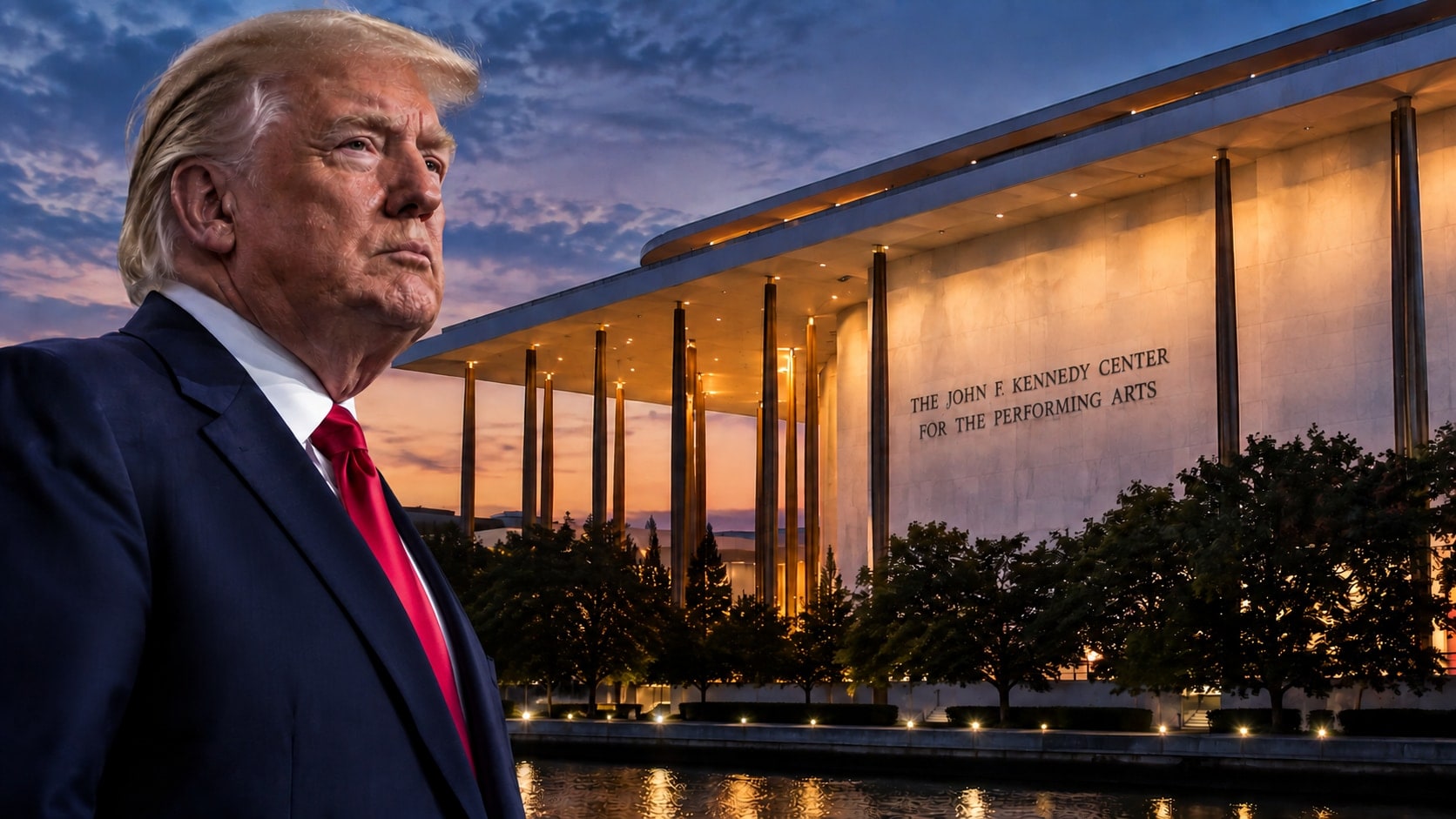
President Donald Trump has issued an ultimatum: if the US Supreme Court does not overturn the federal court ban on renaming the Kennedy Center, the institution will remain closed permanently. The President posted the threat on Truth Social on Tuesday, hours after the board of directors voted to shut the venue down for 'emergency renovations.'
The legal battle centers on Judge Christopher Cooper’s ruling that the board cannot add Trump’s name to the exterior without congressional approval. Cooper explicitly stated that the board 'cannot install memorials for President Trump or anyone or anything else at the Kennedy Center without Congress’s blessing.' Trump’s administration had previously installed signage reading 'Trump-Kennedy' in December, a move annulled by the court. Workers removed the name in June, but the building has been draped in scaffolding and tarps ever since, obscuring the facade of the structure built in the 1960s.
Trump claims the building is in a state of 'dangerous disrepair,' citing a recent incident where a piece of the ceiling fell during a storm. 'If the Building were open, innocent people would have been killed,' he wrote. However, the board’s decision to close the venue immediately after the court ruling has drawn sharp criticism. CNN reported that Trump personally called into the board meeting to berate a Democratic congresswoman who serves on the board and filed the lawsuit blocking the rename.
The closure is not merely a safety measure; it is part of a broader effort to stamp Trump’s brand on Washington. The administration has also pursued a triumphal arch and a half-billion dollar White House ballroom. Meanwhile, the cultural fallout is severe. A host of artists have canceled concerts, and ticket sales have plummeted. The Kennedy Center, named in honor of President John F. Kennedy, whom Trump installed as chairman of the board at the start of his second term, now stands as a frozen monument to a political standoff.
The Supreme Court has not yet indicated when it will hear the appeal. Until then, the Kennedy Center remains dark, its doors shut to the public, and its future hanging on a judicial decision that could reshape the landscape of American cultural institutions.