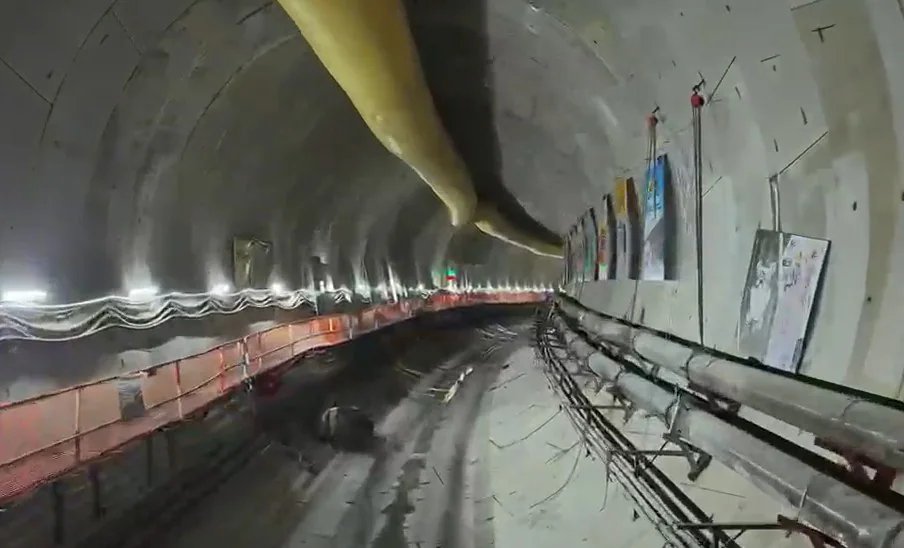
The drill bit stopped. One kilometre of solid Mumbai rock now lies behind the MMRDA’s heavy machinery. This is the first concrete step for the Orange Gate to Marine Drive tunnel, a Rs 8,056-crore bet on moving the city’s pulse faster.
Prime Minister Narendra Modi laid the foundation stone in January 2024, but the physical digging only began in December 2025. The target is aggressive: full completion by December 2028. MMRDA officials confirm the pace has picked up significantly since the launch, with the 1km mark serving as the critical validation for the rest of the 7-kilometre stretch.
The engineering is as deep as it is expensive. The twin tunnels will plunge 52 metres below the surface, with the lowest point near Lamington Road hitting 50 metres. They will cross the Harbour Line near Old Elphinstone Bridge, dive under Western Railway near Charni Road, and slip beneath Metro Lines 11 and 3 before emerging near Bal Bhavan on Netaji Subhash Chandra Bose Road. Safety isn’t an afterthought; cross-passages every 300 metres and AI-enabled traffic management systems are baked into the design.
For the 14,650 vehicles MMRDA estimates will use the tunnel daily by 2029, the change is personal. Currently, navigating from Orange Gate to Marine Drive during peak hours takes 30 minutes. The tunnel promises to slash that to five. It’s a small number, but for a commuter stuck in traffic on CST Road, it’s the difference between a stressful morning and a manageable one.
The next phase involves excavating the remaining 6 kilometres, a task that will require navigating complex underground utilities and maintaining zero disruption to the surface traffic. MMRDA has scheduled a review of the excavation timeline for Q2 2026 to ensure the December 2028 deadline holds.