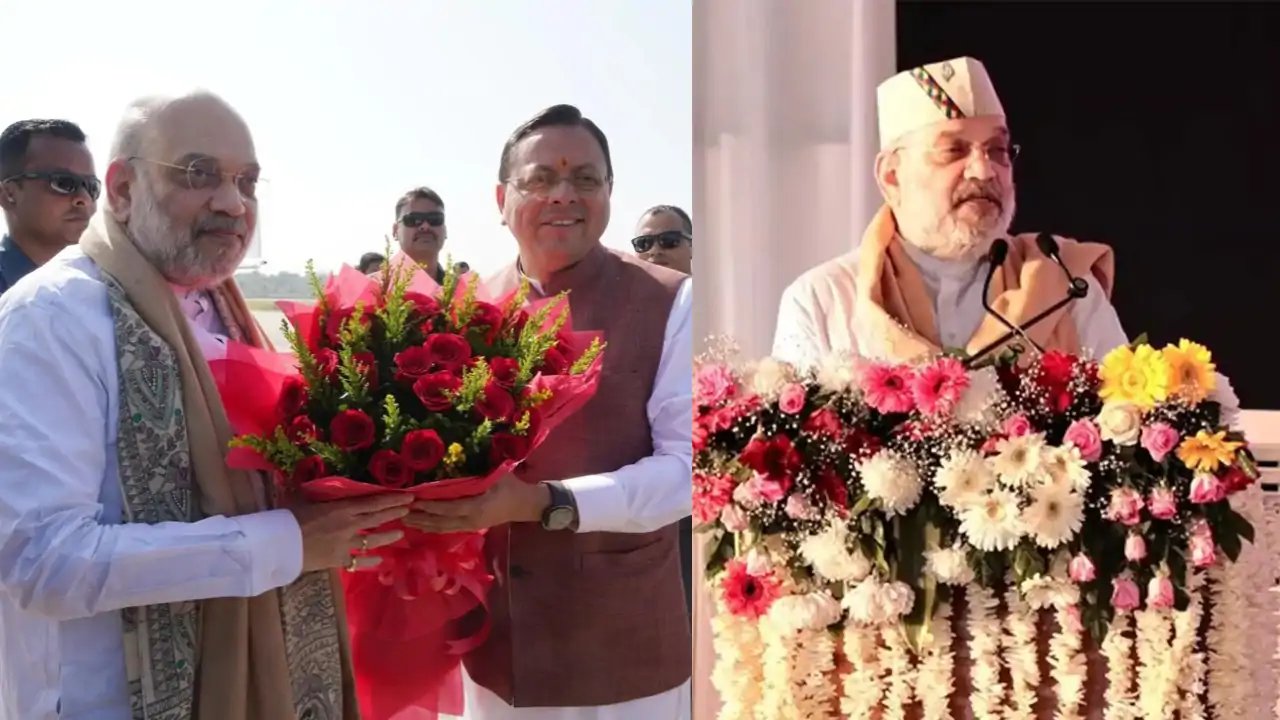
DEHRADUN — Union Home Minister Amit Shah fired the starting gun on the Bharatiya Janata Party's bid for a historic third consecutive term in Uttarakhand on Friday, ordering cadre to seize more than 65 seats in the 70-member assembly. The mandate must be absolute. Speaking at a packed public rally marking the state's 26th Foundation Day in Dehradun, Shah bypassed bureaucratic talking points to deliver a muscular, polarising campaign pitch, taking direct aim at Congress leader Rahul Gandhi and framing the upcoming election as a civilisational contest for the Himalayan border state.
“The voice of Uttarakhand should reach Rahul Gandhi,” Shah told the crowd, drawing a stark line between BJP governance and past Congress administrations. He accused the opposition of pandering to minority interests by once advocating for a Muslim university in the state. In contrast, Shah asserted, Chief Minister Pushkar Singh Dhami’s administration has spent its tenure systematically reclaiming encroached government tracts. State authorities have cleared illegal shrines and unrecognised madrasas across the state—a drive Shah cited as central to transforming 'Devbhoomi' into the cultural bedrock of the republic.
Central to Shah's pitch was Uttarakhand’s pioneering rollout of the Uniform Civil Code, which the Home Minister presented as a national model already triggering legislative action across 15 other states. He framed the contentious statute in sharp, uncompromising language: polygamy and instant divorce are officially finished inside the state's borders. “No one can have four marriages in Uttarakhand,” Shah declared. “No woman can be insulted through triple talaq in Uttarakhand.” By weaponising the code as an unshakeable standard of legal equality, the party leadership is daring the opposition to contest a reform that has polarized regional politics while consolidating the BJP's urban and upper-caste core.
The Home Minister paired identity politics with a defense of northern border security and economic engineering. Uttarakhand's fragile hill districts have bled working-age population for decades—a crisis known locally as palayan, where ghost villages line strategic ridges facing China. Shah insisted the administration has halted that exodus by ditching the state's traditional “money-order economy” in favor of direct industrial expansion, backed by an alleged 380 percent surge in tourism arrivals. He ridiculed earlier Congress security doctrine that discouraged paving roads along the frontier out of fear that external forces would exploit them, arguing that completed military-grade transit corridors now guard the border against hostile incursions.
The gauntlet is down. By locking the assembly target at 65-plus, Shah has denied his state unit room for tactical retreats, raising the stakes for local leadership as national opposition figures prepare their counter-offensive.