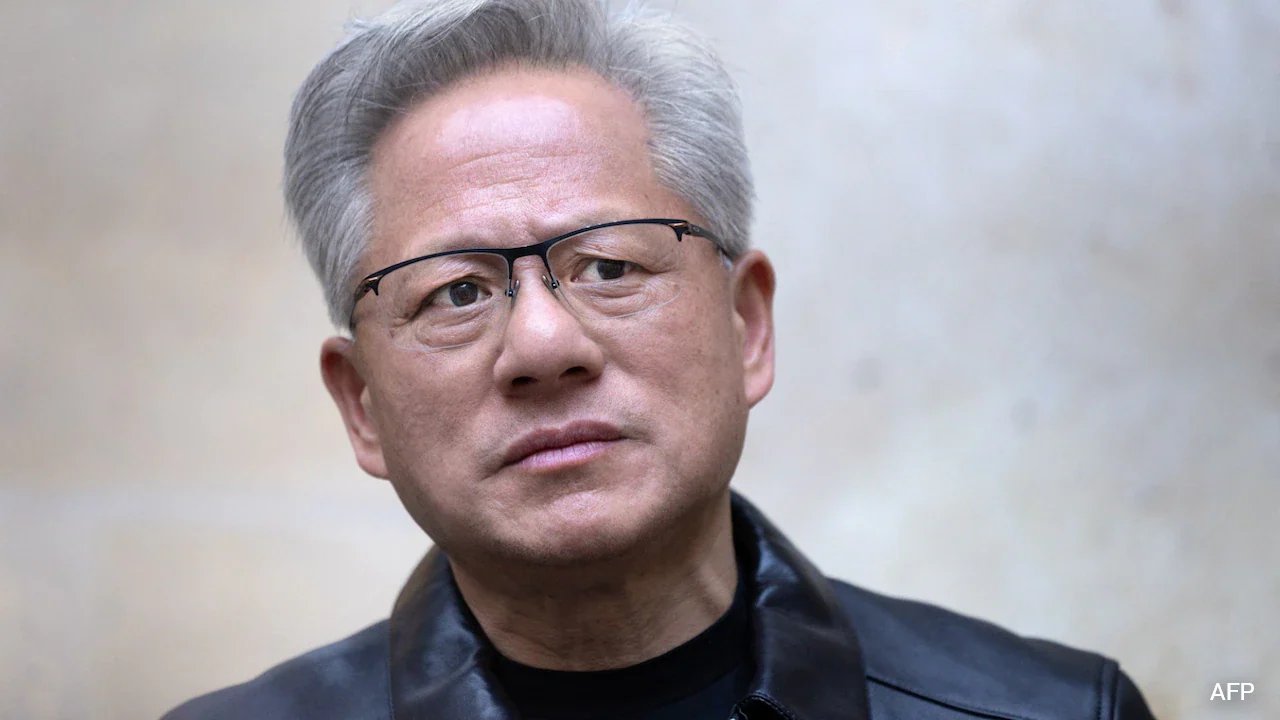
Nvidia’s board of directors must now investigate its own creator. Jensen Huang, the 63-year-old chief executive who transformed a 1993 graphics startup into a $4.5 trillion computational juggernaut, admitted on Sunday to an extramarital affair with a businesswoman identified by US intelligence agencies as an operative for Beijing.
The disclosure shattered decades of unchecked authority at Silicon Valley’s most valuable enterprise.
Discontent turned litigious within twenty-four hours. Investors hit Nvidia and Huang with a class-action shareholder lawsuit on Monday in the US District Court for the Northern District of California, targeting corporate governance failures and fiduciary lapses. Huang built Nvidia in his exact image across three decades. Now, the enterprise faces an existential structural reckoning.
The mandate to scrutinize Huang falls upon a 10-member board of directors that has rarely pushed back against him. Together, its directors hold 161 cumulative years of service at the firm. They are early venture backers, former software executives, and longtime allies whose personal fortunes grew in lockstep with Huang’s ascent.
Former company executives confirmed that Huang long handled board meetings as routine administrative checkpoints rather than forums for strategic dissent. He ran the company unhindered.
A company spokesperson confirmed the board will appoint independent outside legal counsel to direct the investigation. Huang will hold no role in selecting the investigators. Yet he will not step aside during the inquiry. He continues to run daily operations.
| Board Member / Insider | Initial Link & Role | Financial Stake / Valuation | Governance Impact |
|---|---|---|---|
| Jensen Huang | Co-Founder & CEO (1993–Present) | 3.56% of Nvidia equity | 60+ direct reports; under active board inquiry |
| Mark A. Stevens | Joined 1993 (Sequoia Capital partner) | $6.22 billion stake (as of Sept sale) | Second-largest individual insider shareholder |
| Tench Coxe | Joined 1993 (Sutter Hill Ventures partner) | $5.62 billion stake (as of Nov transfer) | Major voting stakeholder; early venture backer |
| Harvey C. Jones & A. Brooke Seawell | Joined 1990s (Ex-Synopsys leadership) | $1.86 billion combined (as of June) | Core audit and compensation oversight figures |
Huang concentrated operational power within his own office. More than 60 corporate vice presidents and unit chiefs report directly to him, bypassing standard corporate management tiers. The flattened structure sped up product iterations, but it also eliminated any institutional buffer.
There is no designated successor.
Succession debates surfaced repeatedly inside Nvidia over two decades, only to be dismissed by Huang himself.
He didn't like the idea. He felt it would create competition among executives and be divisive.
Rene Haas, Chief Executive of Arm Holdings and former Nvidia executive (2006 — 2013)
Huang openly projected absolute permanence. In 2023, he told confidants he intended to lead the chip designer for another three or four decades. That refusal to establish an executive bench now leaves institutional investors without an alternative leadership path if federal scrutiny or board findings force his departure.
Nvidia’s governance vulnerabilities extend into family lines. Three of Huang's relatives hold pivotal operational positions across high-growth units. His son, Spencer Huang, serves as director of product management, guiding key initiatives in the company's robotics division. His daughter, Madison Huang, operates as senior director of product marketing, overseeing product messaging and robotics communications. Her husband, Nico Caprez, works within business development.
While company insiders questioned whether Huang was positioning his children to eventually inherit control, Huang downplayed dynastic succession in an interview last month. Asked whether Madison could lead the firm, he answered bluntly: "I don't wish the job on her."
Market Context: Early venture backers turned modest seed bets into unmatched wealth. In 1993, Sequoia Capital and Sutter Hill Ventures anchored a $2 million financing round that sent Mark A. Stevens and Tench Coxe onto Nvidia's board. Stevens cashed in portions of a stake valued at $6.22 billion in September, while Coxe oversaw holdings worth $5.62 billion in November. Their financial alignment with Huang complicates their fiduciary obligation to discipline him.
The Northern District of California court will process initial filings on the class-action petition in the coming weeks, while the board’s independent counsel formalizes terms for the executive inquiry.