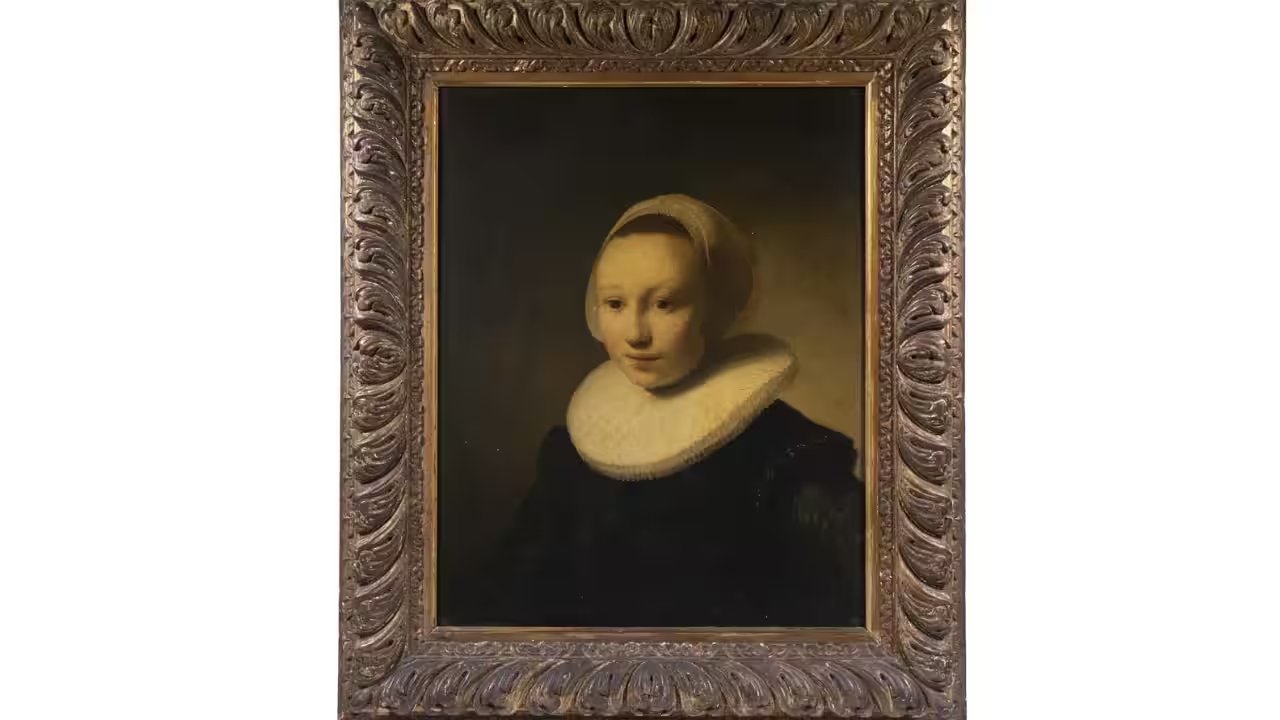
Kaja Veilleux, auctioneer at Thomaston Place Auction Galleries, stumbled upon a 17th‑century portrait in a Camden, Maine attic while inspecting a wealthy family's estate. The canvas, a young girl in a black dress with a white ruffled collar, sits on an oak panel and is framed in a hand‑carved Dutch gold frame. Veilleux told reporters she recognized Rembrandt’s style the moment she saw the work, noting the absence of a signature was not unusual for the master.
The auction, held in August 2024, attracted nine bidders before a European collector secured the portrait for $1.41 million. The piece had originally been appraised at only $10,000 to $15,000, a disparity that shocked both buyers and experts. “You don’t expect a $15,000 estimate to turn into a $1.4 million haul,” Veilleux said, her voice tinged with disbelief.
A label on the back of the frame claimed the portrait had been displayed at the Philadelphia Museum of Art in 1970, a claim the museum’s spokeswoman, Maggie Fairs, acknowledged but could not verify. “We investigated the claim but the passage of time makes it difficult to confirm whether or when the portrait was exhibited,” Fairs wrote to The New York Times.
Mark Winter, a two‑decade‑old Rembrandt appraiser, told The New York Times the portrait could command as much as $15 million if its provenance is substantiated. Winter added that the young girl bears a resemblance to other women in Rembrandt’s oeuvre, but he cautioned that the work’s attribution remains tentative. “The buyer already got a great bargain, but the real value could be far higher,” he said.
The painting’s ownership trail is murky: it reportedly entered private hands in the 1920s, but how it migrated from a Dutch studio to a Maine farmhouse remains unknown. The lack of a documented chain complicates authentication and market positioning.
The Philadelphia Museum of Art has launched a review of its archives to confirm the 1970 exhibition claim, and collectors will await the outcome before reassessing the portrait’s market value. The museum’s findings could either cement the work’s status as a bona fide Rembrandt or leave it relegated to the realm of a highly valuable copy.}