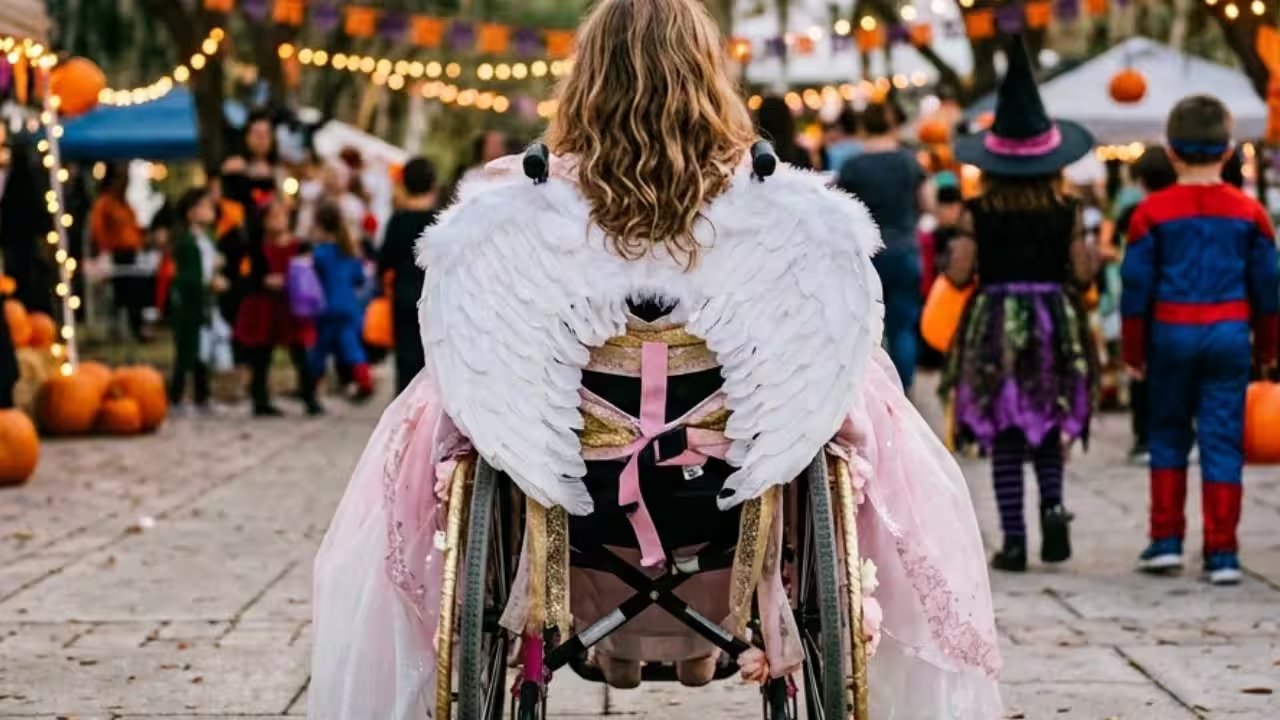
At Babcock Neighborhood School’s annual Trunk‑or‑Treat on October 10, the eighth‑grade cohort unveiled a custom‑built throne that incorporated a wheelchair into a princess‑angel ensemble. The design, completed in time for the school’s fall celebration, allowed Kaelyn to participate exactly as she had imagined.
Kaelyn Goodman, 9, suffers from congenital myasthenic syndrome, a rare genetic disorder that weakens muscle control. She uses a wheelchair when fatigue sets in, yet her parents say it keeps her independent. “I want to be part of normal childhood experiences,” her mother, Kathryn Goodman, told the press.
The students, all eighth‑graders in STEM, received the task as part of the school’s Project‑Based Learning program. They had to translate the girl’s vision of a “princess angel” into a functional costume that accommodated her mobility needs. “We had to learn new skills—sewing, structural design, and inclusive thinking,” said senior student Maya Patel.
STEM director Lori McLain, who oversaw the project, remarked, “The students didn’t just build a costume; they engineered a throne that respects the user’s body and identity.” The initiative prompted several students to forgo recess to work alongside Kaelyn, who actively contributed ideas about color and form.
School executive director Shannon Treece praised the experience as evidence of education’s power to make tangible differences. “When students see how their knowledge can transform a peer’s life, the learning becomes profoundly personal,” she said. The project has already sparked interest from neighboring schools looking to adopt similar inclusive STEM assignments.
Following the event, Kaelyn’s parents expressed gratitude for the students’ empathy and creativity. “It was more than a costume; it was a statement that disability is not a barrier to participation,” Jabori Goodman said. The project may inspire other schools to incorporate adaptive design into their curricula, potentially reshaping how students approach accessibility.