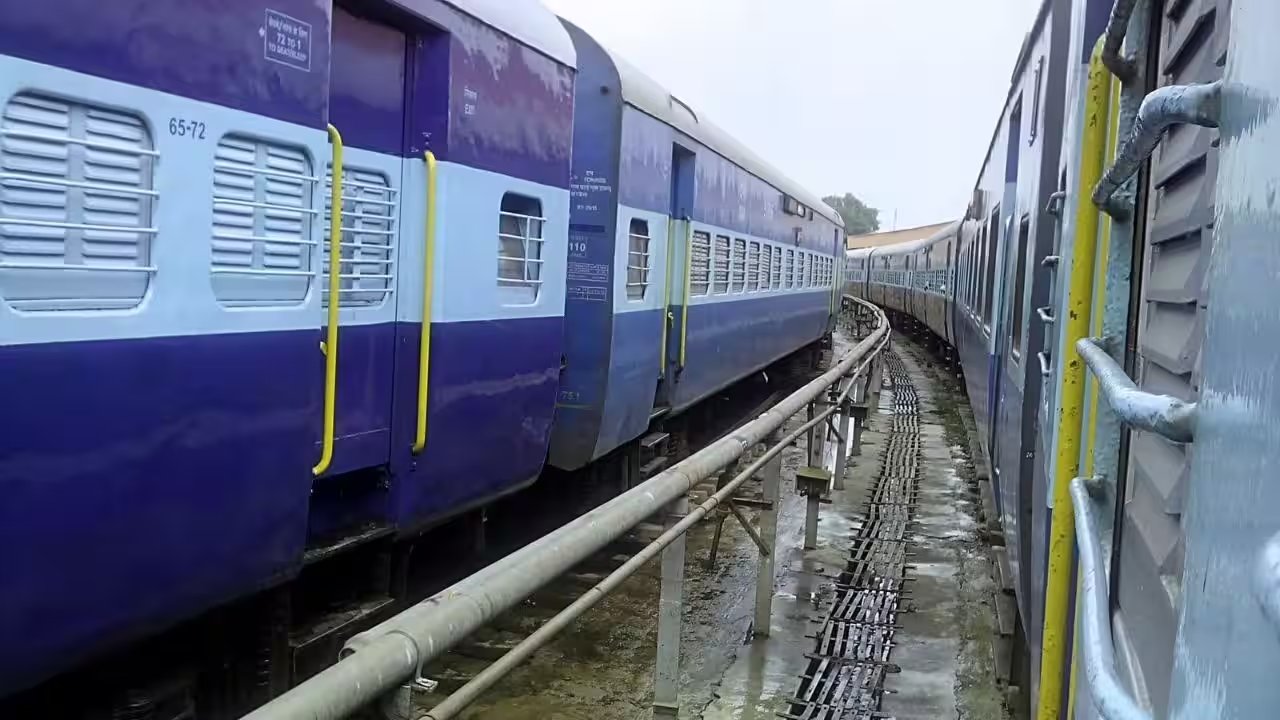
Sharing a train berth on an overnight journey may soon end.
Indian Railways is examining a proposal to scrap its decades-old Reservation Against Cancellation (RAC) facility, targeting an arrangement that forces two paying travellers to split a single sleeping berth. Under the review, railway authorities are evaluating whether the longstanding system compromises basic passenger comfort while unfairly demanding full ticket fares for half the space.
The review strikes at a system ingrained in rail transit since the 1980s.
For four decades, RAC has functioned as an intermediate tier between a confirmed berth and a waitlist slip. Passengers who hold an RAC status secure valid boarding rights and guaranteed daytime seating accommodation. Yet come nightfall, the compromise begins. Two strangers find themselves sharing one narrow side-lower berth, wedged head-to-toe across hundreds of miles of rail line.
The math behind the reservation rule has triggered growing friction among commuters. Under current railway pricing rules, both RAC ticket holders pay the exact same fare as a passenger who enjoys a full, private sleeper or air-conditioned berth.
Two passengers. One berth. Double the revenue collected on a single piece of train real estate.
Railway officials confirm that this pricing mismatch sits at the center of the ongoing policy reassessment. The arrangement routinely sparks discomfort on long-haul routes, particularly during overnight runs where privacy vanishes. The situation turns acutely awkward when reservation algorithms assign unrelated travelers—such as a man and an unaccompanied woman—to share the exact same side-lower cushion.
| Reservation Tier | Boarding Rights | Berth Allocation | Fare Charged |
|---|---|---|---|
| Confirmed (CNF) | Guaranteed | Full individual sleeping berth | 100% full ticket fare |
| Reservation Against Cancellation (RAC) | Guaranteed | Half of side-lower berth (shared) | 100% full ticket fare |
| Waitlisted (WL, post-charting e-ticket) | Barred | No berth or seat permitted | Refunded automatically |
The push to overhaul the system gained sharp institutional momentum from Parliament. The Public Accounts Committee (PAC) zeroed in on the practice in its 36th Report, titled 'Punctuality and Travel Time in Train Operations in Indian Railways', which lawmakers tabled on February 4, 2026.
The committee directly challenged the Ministry of Railways over the justification for collecting full ticket amounts from travelers who never receive a private sleeping berth.
Instead of continuing business as usual, the PAC recommended that railway authorities develop an automated mechanism to credit partial refunds to passengers who remain stuck in the RAC pool after the preparation of reservation charts. If a passenger gets half the sleeping space, the committee argued, the ticketing system cannot fairly pocket the entire fare.
The daily friction spills heavily onto train ticket examiners (TTEs). On crowded express trains, ticket examiners operate with almost no cushion to shuffle passengers when unreserved coaches fill and confirmed cancellations dry up. When vacant berths fail to materialize, examiners face angry passengers demanding the individual space they paid for at booking windows.
Under existing railway rules, an RAC ticket can still upgrade to confirmed status during the run if a traveler fails to show or cancels mid-journey. That upgrade distinction keeps RAC vastly distinct from waitlisted tickets. Passengers holding unconfirmed waitlisted electronic tickets cannot legally board the train once charts go up, whereas RAC travelers carry full legal boarding authority.
Railway authorities caution that discussions remain internal. The Ministry of Railways has not released an official notification or issued an executive order confirming the outright abolition of the RAC facility.
For now, the reservation algorithms will continue assigning two travelers to a single side-lower berth. But with parliamentary pressure mounting and the board reconsidering pricing equity, the forty-year practice of splitting berths is facing its most serious test yet.