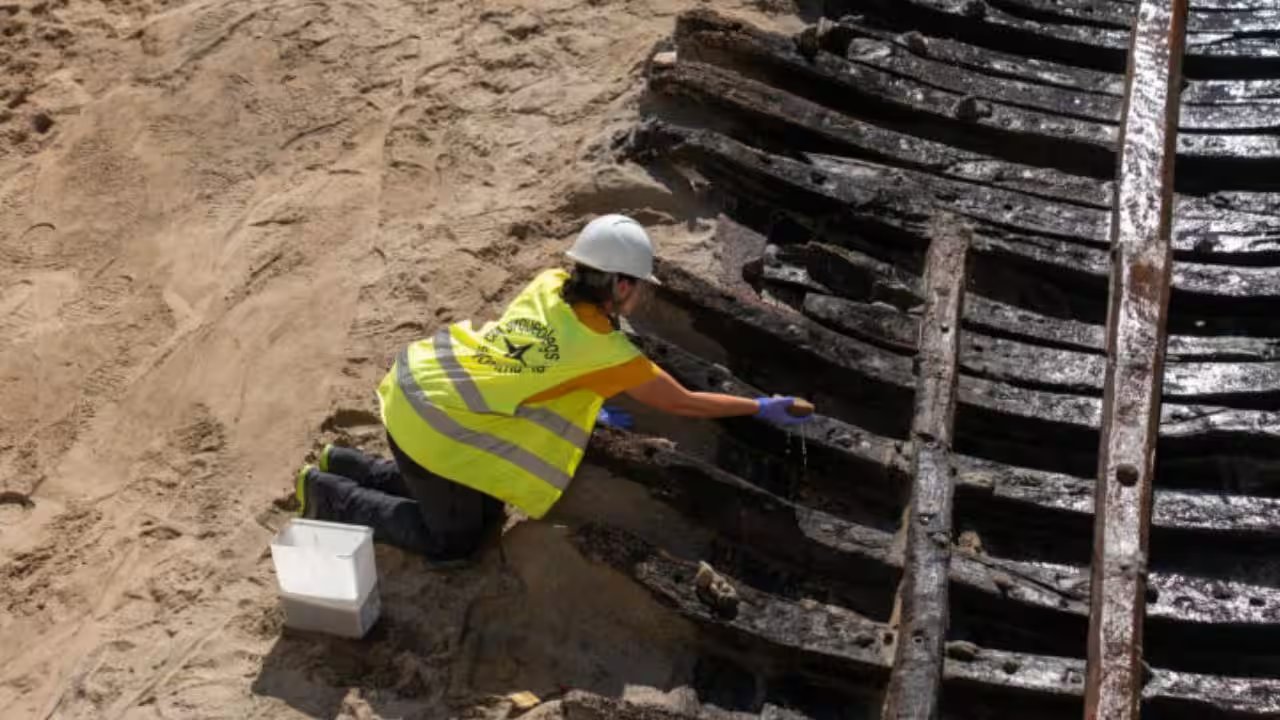
The discovery came while workers were excavating a new 7,000‑square‑metre car park on the site of the old Mercat del Peix. The vessel, provisionally dubbed Ciutadella I, measured roughly 10 metres long and just over 3 metres wide, with a framework of about 30 wooden ribs and at least seven planks forming the hull.
Barcelona City Council warned that the waterlogged timber had been buried under years of sediment and was in a fragile state of conservation as of 2025. The Barcelona Archaeology Service, with guidance from the Museu d’Arqueologia de Catalunya’s Underwater Archaeology Centre (CASC), began immediate documentation and preservation to stop further decay.
The first stage of conservation involved detailed three‑dimensional scanning, labeling each component, sampling wood for analysis, and preparing the wreck for transfer into specialised water‑filled containers. Once inside, the ship will undergo desalination and be impregnated with a water‑soluble wax to strengthen the structure and lock in moisture.
Historians say the find fills a gap in knowledge about Barcelona’s maritime past, complementing the 2008 discovery of the similar Barceloneta I ship near Estació de França. The data will help scholars map the city’s 15th‑ and 16th‑century ship‑building techniques and trading routes.
The excavation is part of a broader Ciutadella del Coneixement initiative that also saw 40,000 cubic metres of subsoil sand repurposed to rebuild Sant Sebastià beach. The car park itself will serve as a sustainable mobility hub for the upcoming Barcelona Biomedical Research complex and Pompeu Fabra University.