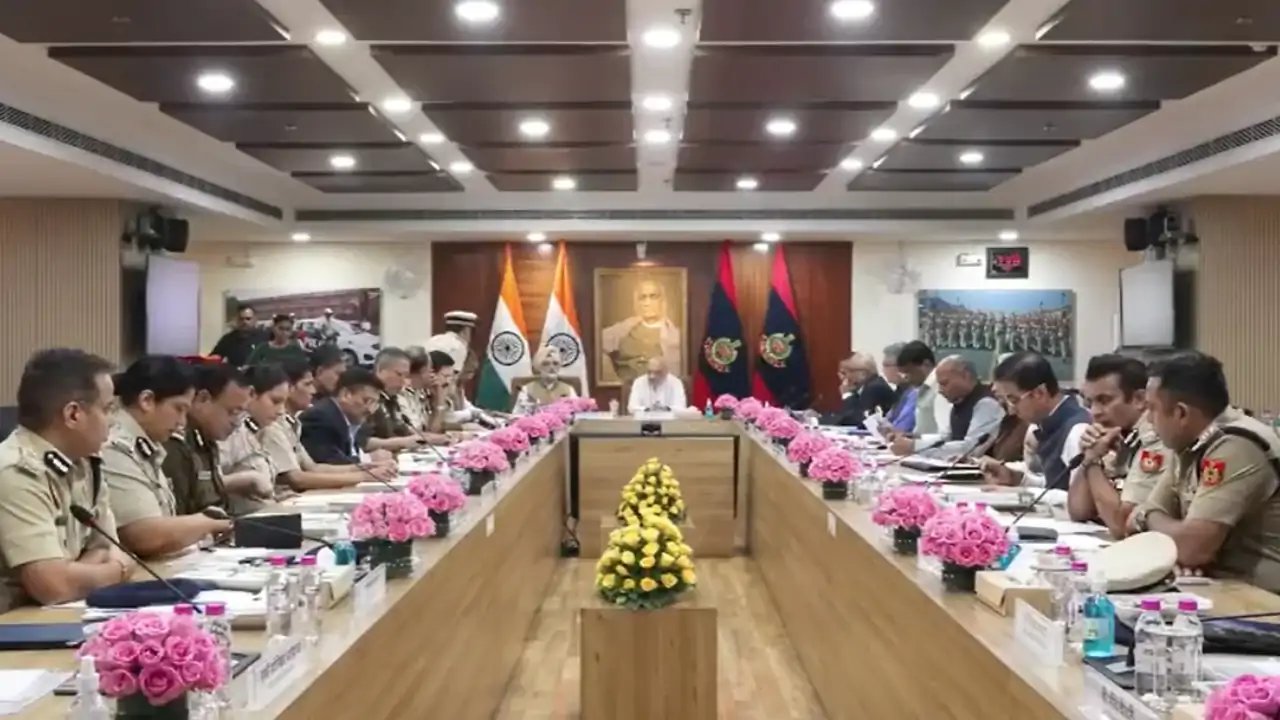
Union Home Minister Amit Shah marched into the Delhi Police Headquarters on Thursday to run a sharp security audit on the capital's law and order machinery. Flanked by Lieutenant Governor Taranjit Singh Sandhu and the force's senior leadership, Shah demanded decisive results. Time was short. Street crime remained stubborn.
The high-level gathering served as an aggressive follow-up to an initial operational review Shah convened on October 24. While that earlier meeting set broad strategy, Thursday's session tackled unfinished business. Shah pressed commanders on concrete deliverables, zeroing in on organised crime cartels, illicit arms trafficking networks, drug syndicates, and the safety of women across Delhi's vulnerable corridors.
Police brass faced direct questioning on intelligence gaps and unresolved operational directives. During the October 24 review—attended by Chief Minister Rekha Gupta and Police Commissioner Anurag Kumar—the Home Ministry mapped out comprehensive plans to police massive public gatherings, sharpen field intelligence collection, and enforce seamless tactical coordination between district units. Yet gaps persisted.
Shah made the ministry's priorities unmistakably clear to the room. The illicit weapons pipeline feeding local street gangs must be dismantled at the border. Narcotics syndicates operating in the city must face asset seizures and relentless enforcement.
The capital requires an airtight policing grid capable of neutralizing cross-border criminal networks while maintaining absolute street vigilance.
Senior Home Ministry Official
Delhi's policing mandate has expanded well beyond conventional beat patrols, shifting toward preemptive deterrence against increasingly sophisticated underworld cartels.
| Security Review Parameter | Operational Mandate & Focus Area |
|---|---|
| Primary Focus | Women's safety, dismantling arms smuggling, and narcotics syndicates |
| Leadership Present | Home Minister Amit Shah, LG Taranjit Singh Sandhu, Senior Police Brass |
| Preceding Review | October 24 session with CM Rekha Gupta and Police Commissioner Anurag Kumar |
| Strategic Imperatives | Intelligence gathering, crowd management, inter-unit rapid coordination |
Shah's urgent summons to the police headquarters did not occur in a vacuum. Security agencies across North India are on high alert following violent shocks along the capital's periphery.
JUST a day earlier in Jammu and Kashmir's Kulgam district, suspected terrorists opened fire on a security checkpoint near Mir Bazar. The ambush wounded three Central Reserve Police Force personnel, leaving one critically injured. And closer to Delhi, an explosion tore through the Vasundhara police outpost in Ghaziabad on November 6, injuring a food delivery worker and blowing apart portions of the post. Multiple agencies, including the Uttar Pradesh Anti-Terrorism Squad, moved in to probe suspected terror links.
Both incidents injected visible urgency into Thursday's deliberations. Criminal and terror syndicates routinely exploit inter-state borders. Shah instructed Delhi Police commanders to ramp up surveillance at all capital entry points, seal transit corridors used by arms runners, and tighten multi-agency coordination ahead of the winter session of Parliament.