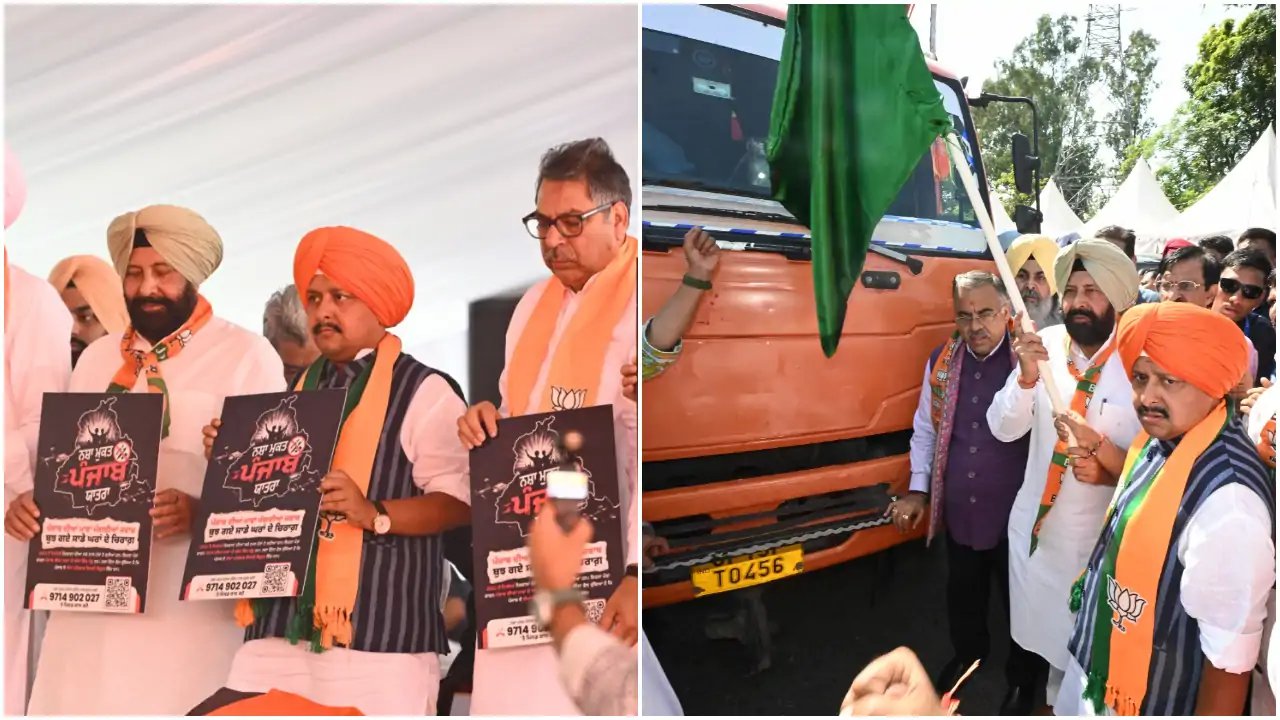
Nitin Nabin, the BJP president, kicked off the 13‑day Nasha Mukt Punjab Yatra at Ekta Sthal in Pathankot’s Madhopur on Friday, 18 September. The ceremony unfolded beside the memorial of Syama Prasad Mookerjee, the founder of the Bharatiya Jana Sangh, underscoring the campaign’s historical weight. Before the launch, Nabin met with a cluster of about 50 families who had lost relatives to drug abuse, vowing the party’s support for those grappling with addiction.
He unveiled a five‑point blueprint that the BJP claims will steer the state’s drug‑fighting strategy. The plan calls for sharp action against traffickers, dismantling interstate and international supply chains, seizing assets tied to the drug trade, scaling up medical and psychological rehabilitation, and rallying doctors, teachers, athletes, and community leaders to the cause.
Nabin slammed the AAP‑led government for its perceived impotence, accusing it of political patronage and corruption that let illicit drug networks thrive. He chastised the administration for ‘tarikh pe tarikh’—repeated delays in decisive action—while citing the recent attack on Union Minister Ravneet Singh Bittu’s convoy in Batala as evidence of mounting insecurity.
AAP spokesperson Baltej Pannu dismissed the yatra as mere ‘political nautanki,’ questioning why the BJP, which governed Punjab from 2007 to 2017 during the rise of synthetic‑drug menace, remains silent on drug‑affected states like Haryana. He demanded the party address its own record before launching a new campaign.
The campaign will span more than 4,000 kilometres, covering all 117 assembly constituencies along four separate routes. After the Pathankot launch, the first leg will depart from Fatehgarh Sahib on 19 September, followed by routes through the Sadqi border in Fazilka on 20 September and Takht Sri Damdama Sahib in Bathinda on 21 September.
The BJP says the yatra will conclude on 30 September with a final rally in Chandigarh, aiming to galvanise voters ahead of the upcoming state elections. Observers note that the move could reshape Punjab’s political landscape as parties vie for control of a state that has long struggled with drug‑related violence.