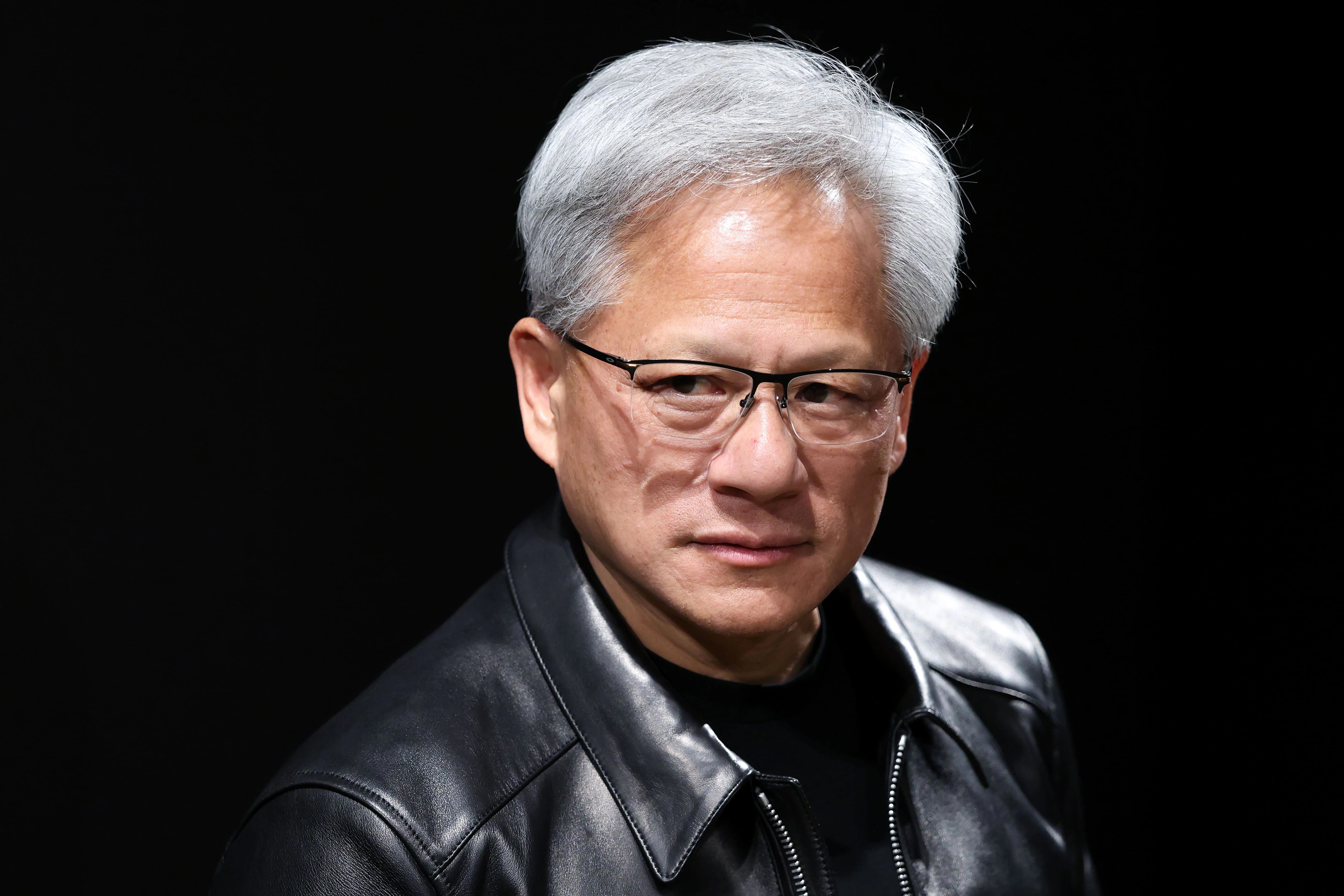
WASHINGTON — Former Nvidia chief executive Jensen Huang has agreed to testify under oath before US congressional committees probing national security risks surrounding his ties to a woman suspected of links to Chinese intelligence.
House Republican committee leaders are now hammering out terms for a closed-door deposition that could convene as early as next week. The high-stakes hearing follows Huang's abrupt resignation on Thursday, ending a 33-year reign at the semiconductor behemoth he co-founded in 1993.
The capitulation came under severe pressure. House Foreign Affairs Committee Chairman Brian Mast confirmed Huang tentatively agreed to appear before lawmakers on Wednesday night, hours before stepping down from the world's premier artificial intelligence chipmaker. House investigators had already drawn their battle lines on November 4, dispatching a formal demand for testimony signed jointly by Mast, House Select Committee on the Chinese Communist Party Chairman John Moolenaar, and House Permanent Select Committee on Intelligence Chairman Rick Crawford.
Mast warned that Capitol Hill will not tolerate delay. Lawmakers stand ready to compel his physical appearance through a formal subpoena if Huang reneges on his commitment to testify before Thanksgiving.
"Under oath and transcribed and video recorded," Mast said, setting the mandatory baseline for the proceeding.
House committees are widening their lens well beyond Huang himself. Investigators are moving to question other senior executives across the company's hierarchy, targeting operational units that functioned parallel to the chief executive's office to assess internal security protocols.
Capitol Hill's scrutiny centers on Huang's reported association with Alice Huang, a Chinese businesswoman suspected by US intelligence agencies of operating on behalf of Beijing's espionage apparatus. Huang previously admitted to marital infidelity in an internal memorandum sent to Nvidia staff, expressing regret for violating his wife's trust. But lawmakers say personal contrition cannot resolve geopolitical liabilities.
Nvidia's board of directors has commissioned its own internal inquiry to determine whether confidential proprietary assets, export strategies, or strategic technologies were exposed during the relationship.
Representative John Moolenaar emphasized that Huang's exit from corporate leadership does not shield him from congressional oversight.
I think it's important that we understand Chinese intelligence, how they worked in this situation, and what information and what privileged information they had access to, as well as what advocacy they had for certain policy positions.
Rep. John Moolenaar, Chairman, House Select Committee on the Chinese Communist Party
Huang's testimony lands directly in the crosshairs of an intense legislative struggle over American technological supremacy. For years, Huang stood as Silicon Valley's most vocal critic of stringent federal export controls, lobbying against tightened restrictions on shipping high-performance graphic processing units to mainland China. Lawmakers now intend to dissect whether hostile intelligence operatives sought to leverage personal access to soften Washington's tech embargo.
| Investigation Parameter | Official Congressional Status |
|---|---|
| Primary Witness | Jensen Huang, Former CEO of Nvidia |
| Requesting Committees | Foreign Affairs, Intelligence, and Select Committee on the CCP |
| Formal Demand Date | November 4 |
| Format Mandate | Under oath, transcribed, video-recorded |
| Subpoena Posture | Prepared for immediate issuance if witness defaults |
| Corporate Action | Nvidia Board internal security review initiated |
Congressional staff and Nvidia legal representatives are finalizing the procedural rules for the closed-door deposition, with committee leaders targeting an appearance date prior to the Thanksgiving legislative recess.