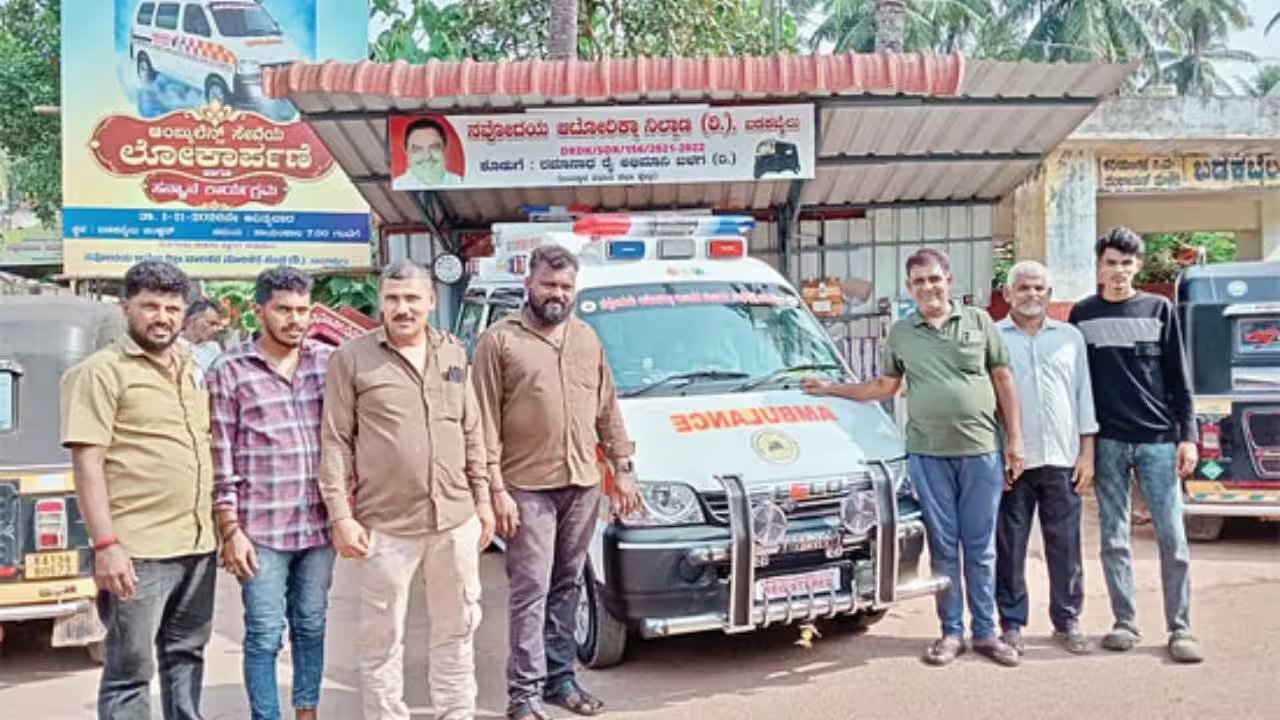
When medical crises struck Kariyangala and Ammunje, help rarely came with sirens. Families had to squeeze critically ill relatives into three-wheeled auto-rickshaws, praying the bumpy ride would not worsen their condition before reaching a hospital ward. Those frantic journeys took an emotional toll on the drivers steering them through Bantwal taluk. So the drivers stepped up.
Twenty-six drivers stationed at the Badakabail stand near Polali decided to end the crisis themselves. Rather than waiting for external agencies or state departments to allocate funds, the Navodaya Auto-rickshaw Drivers and Owners Association launched a grassroots collection drive. They set aside small sums from their daily fares, approached local residents, and secured contributions from sympathetic donors. That collective discipline bought a fully functioning ambulance worth roughly ₹12 lakh.
Now, those same three-wheeler operators take turns behind the ambulance wheel—offering emergency rides completely free of charge.
The financial strategy avoided reliance on wealthy benefactors. The association relied on disciplined, bite-sized contributions from men who earn modest daily wages on rural routes. Daily collections from drivers and vehicle owners accumulated over months, reinforced by cash handed over by villagers who understood the life-or-death stakes.
The purchase required a two-stage financial commitment. First, the group bought the base vehicle for approximately ₹10 lakh. They then dispatched the vehicle to Mysuru, spending another ₹2 lakh to fit oxygen mounts, stretcher systems, and critical medical hardware, bringing the total outlay to ₹12 lakh.
| Project Parameter | Verified Detail |
|---|---|
| Base Vehicle Cost | Approximately ₹10 lakh |
| Mysuru Medical Outfitting | Approximately ₹2 lakh |
| Total Capital Invested | Approximately ₹12 lakh |
| Operational Base | Badakabail auto-rickshaw stand, Kariyangala |
| Stand Fleet Size | 26 auto-rickshaws |
| Primary Beneficiary Areas | Kariyangala and Ammunje villages |
| Transport Service Fee | Completely free of cost |
| Monthly Welfare Levy Per Driver | ₹100 |
Operating the vehicle required a structured operational plan. The association parks the ambulance directly beside the Badakabail auto-rickshaw stand, ensuring immediate dispatch access at any hour of the day or night.
There is no separate payroll. The 26 auto drivers operating from the stand run the vehicle on a rotating schedule. Because they know every rut, turn, and narrow alley across Kariyangala and Ammunje, response times drop dramatically. Families grappling with an emergency no longer have to negotiate fares, scramble for change, or figure out how to strap an immobile patient onto an auto-rickshaw's passenger bench.
This purchase did not happen in a vacuum. The drivers had spent years running a structured internal safety net before taking on the ambulance project. Under their established welfare framework, each driver at the Badakabail stand deposits ₹100 every month into a dedicated community chest.
That continuous micro-contribution pool has generated more than ₹4 lakh over the years. The association directed those funds into relief packages, medical aid, and emergency cash assistance for struggling families across the taluk. The ambulance project simply scaled up a culture of mutual aid already deeply ingrained on the Badakabail stand.
With the keys in hand and the Mysuru equipment secured, the drivers are maintaining the free service across Kariyangala and Ammunje, ensuring no resident faces an emergency alone.
| Historical Welfare Fund Raised | Exceeding ₹4 lakh |