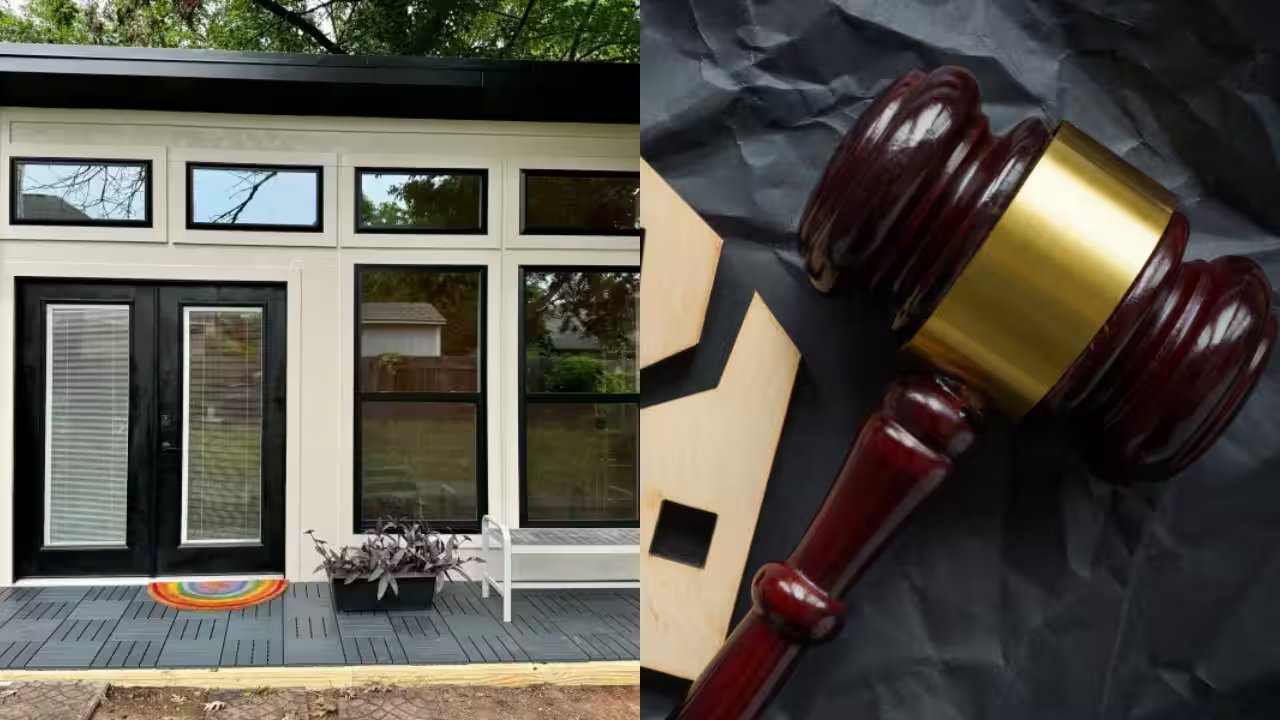
A Texas appellate court slammed a Williamson County homeowners' association with a $100,000 legal tab after the board spent years attempting to block a resident from setting up a standalone workspace in her own yard.
Yet the governing documents never forbade it. The Texas Third Court of Appeals affirmed the six-figure attorney fee award against the Davis Spring Property Owners' Association and its board president, Amanda Mock, ruling that the entity overreached its authority and left Davis to foot an unnecessary courtroom defense. The ruling settled a dispute that dragged on for six years.
Davis launched her project in 2020. Seeking dedicated workspace, she formally applied to erect an accessory structure behind her residence in the Davis Spring subdivision. The association pushed back immediately. Board members categorized the planned workspace as an unapproved shed or shed-like structure, and the community's Architectural Review Committee rejected the application outright. The committee asserted that the structure violated neighborhood standards because it exceeded permissible heights and rose above the main home's roofline.
Davis refused to back down. She scrutinized the recorded declaration of covenants along with the neighborhood's enforceable architectural standards. The restrictions simply did not exist. Davis filed suit in Williamson County against the Davis Spring Property Owners' Association and Mock, seeking declaratory relief against the committee's arbitrary veto.
During trial proceedings, the court reviewed the governing 2002 Design Guidelines—the only architectural rules formally recorded when Davis submitted her proposal. The bench concluded that those guidelines contained zero height restrictions that barred her accessory building. Because no covenant prohibited the structure as submitted, the court ruled that the architectural committee possessed no legal basis to derail the build.
Court battles extract steep costs. Davis's original lawsuit included broader claims alleging breach of fiduciary duty and fair housing violations. Those ancillary claims were dismissed along the way, but the primary fight over the restrictive covenants remained active for more than four years.
| Litigation Parameter | Case Metric / Status |
|---|---|
| Case Venue | Texas Third Court of Appeals (Williamson County origin) |
| Plaintiff | Masha Davis |
| Defendants | Davis Spring Property Owners' Association & Amanda Mock |
| Contested Project | Accessory backyard home office |
| Governing Document Examined | 2002 Design Guidelines |
| Billed Legal Labor | ~300 attorney hours, 37 paralegal hours |
By the time the covenant dispute concluded, Davis's legal counsel had logged roughly 300 hours of attorney time and 37 hours of paralegal work. The defense team submitted a fee application seeking $149,680.25, maintaining that the dismissed claims were inextricably linked to the core covenant litigation. The trial court adjusted the request downward, awarding Davis an even $100,000 in incurred fees alongside contingent allowances to cover future appellate defenses.
The association and Mock fought the judgment. In their petition to the Texas Third Court of Appeals, the defendants argued that Davis could not recover expenses under Texas Property Code Section 5.006 and contended that her lawyers had failed to parse and segregate billable hours between surviving and dismissed claims.
Both arguments crumbled under judicial scrutiny. Writing for the appellate panel, the court noted that the association failed to preserve its statutory challenge under Section 5.006 during the original proceedings. The justices further determined that Davis's legal counsel had presented ample evidence establishing that the legal arguments were too intertwined to demand line-by-line fee segregation. The appellate bench affirmed the $100,000 judgment on September 29, 2026.
Following the affirmation of the trial court's order, the association faces the immediate enforcement of the $100,000 fee judgment alongside the contingent appellate penalties established during initial proceedings.
| Total Legal Fees Requested |
| $149,680.25 |
| Final Affirmed Fee Award | $100,000 (plus contingent appellate fees) |
| Appellate Affirmation Date | September 29, 2026 |