FranceProtestsMacronPoliceUnrest
Macron Condemns Violent Weekend, Orders Curfews After Limoges City Hall Burns
Published: October 20, 2026
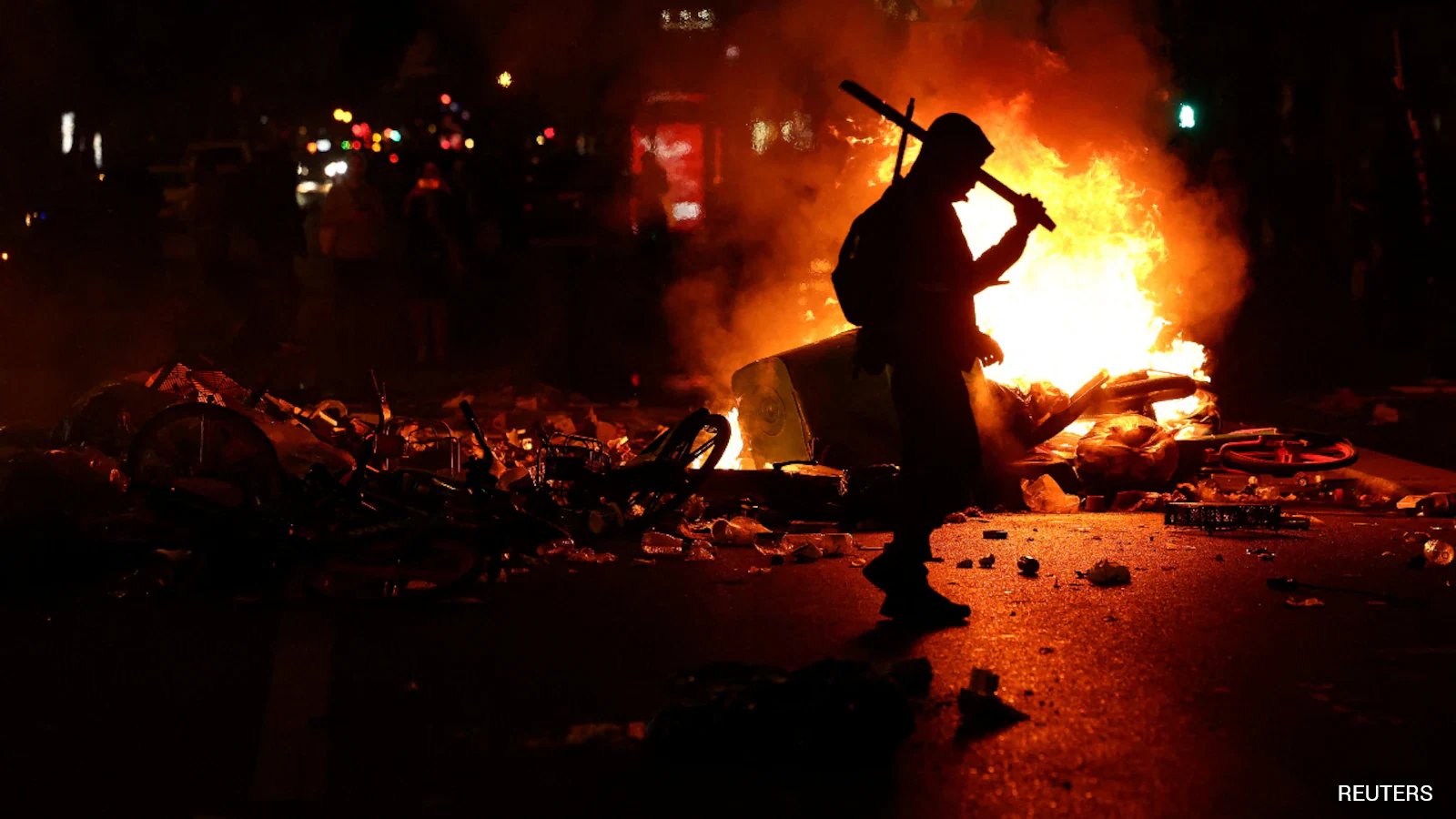
French President Emmanuel Macron condemned the violent weekend across France, where the 19th‑century city hall in Limoges was set ablaze and thousands were arrested. He ordered an investigation into intelligence failures and instructed prefects to impose curfews and ban gatherings to curb further unrest.
Across Paris, Marseille and Lyon, mobs clashed with police, set cars ablaze and stormed public buildings—most visibly the 19th‑century city hall in Limoges, which nearly collapsed under the fire.
Macron denounced the "unrestrained violence" and blamed "insurrectionist elements from radical far‑left groups" and opportunistic criminals. He vowed an uncompromising stance, saying prefects could ban gatherings and use whatever measures are needed to protect businesses and public buildings.
The unrest echoes the 2018 yellow‑vest protests, with damage comparable to the first two weekends of December 2018, research professor Sebastian Roche observed. Earlier this year, a 17‑year‑old was shot by police outside Paris, sparking days of nationwide rioting that left shops looted and public buildings torched.
Police use of riot‑control weapons has drawn sharp scrutiny. Roche highlighted that six people, including minors, were maimed—losing hands or eyes—in the three‑week protests, a toll unseen in the past forty years. He noted France has the highest rate of protest‑related maims in Europe, with Spain second.
In response, authorities imposed localized curfews. A midnight curfew will take effect Monday evening in two Paris areas heavily affected by violence. Macron also ordered a probe into intelligence failures that may have led to underestimating the potential for violence.
The human cost lingers: a shopkeeper in Limoges lost a third of his inventory to looters, while a 17‑year‑old protester, shot by police in June, remains a symbol of the violence that erupted this weekend.