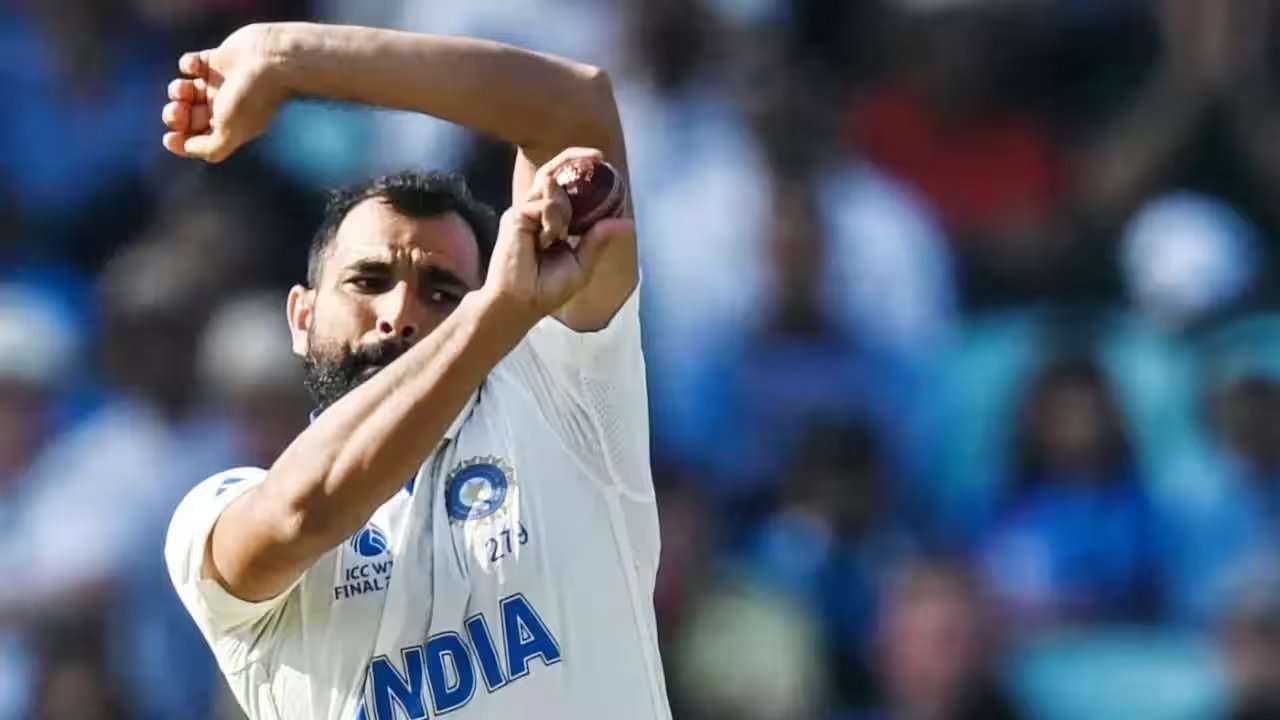
The most upright seam in modern cricket has delivered its final Test ball. Mohammed Shami has walked away from red-ball internationals after 64 Tests, ending a devastating twelve-year assault on world batting line-ups. He leaves on his own terms. Over a career born in the sugarcane plains of Sahaspur in Uttar Pradesh, Shami turned fast bowling into an exact, unforgiving science.
He did not blast batters out with raw, runaway pace. Instead, he snapped their technique in two. His wrist remained locked at ninety degrees until the millisecond of impact, presenting a seam so bolt-upright it looked drawn with a stencil. Alastair Cook found that out the hard way at Visakhapatnam in 2016. Shami dragged the England captain outside off stump with three consecutive outswingers, nudging his front pad further into open water. Then came the trapdoor. Shami tightened his release, jagged an inswinger off the deck, and shattered Cook's off stump before the left-hander could bring his bat down.
"It’s all in those beautiful wrists," his childhood coach Badruddin Siddiqui said. "The reason for his success was that he released the ball late and did not rush through his action. This helped him extract late swing off the track. With those malleable wrists, he made subtle changes at the point of release that batters found hard to pick."
Shami made good pitches look ordinary, but he made hostile tracks unplayable. His calling card was the 'heavy ball'—a deceptive length delivery that hit the turf, skidded through faster than batters expected, and jarred their hands. At the Wanderers in 2018, with South Africa cruising at 124 for 1 in pursuit of 241, Shami tore the Test match apart. He ripped through the middle order, triggered an astonishing collapse to 177 all out, and snatched a landmark 63-run victory with figures of 5 for 28. It altered the spine of India's pace attack abroad under Virat Kohli.
Yet the red-ball door slowly shut. Even after snaring 14 wickets across his last three Ranji Trophy matches at age 36, selectors looked elsewhere. "He was trying hard to make a comeback," Siddiqui explained. "But after a point, he realised he was not going to get another chance in Tests, which is why he chose to retire."
Younger pacers like Uttar Pradesh seamer Ankit Rajput credited Shami with demystifying reverse swing and death-overs execution during their IPL stints. Now, India faces the daunting prospect of filling a seam void as vast as the subcontinent itself. Shami is not putting down the white ball just yet. He boasts 55 wickets in 18 ODI World Cup matches at an astonishing 13.5 average, and the 36-year-old has his crosshairs set directly on next year's 50-over World Cup campaign.