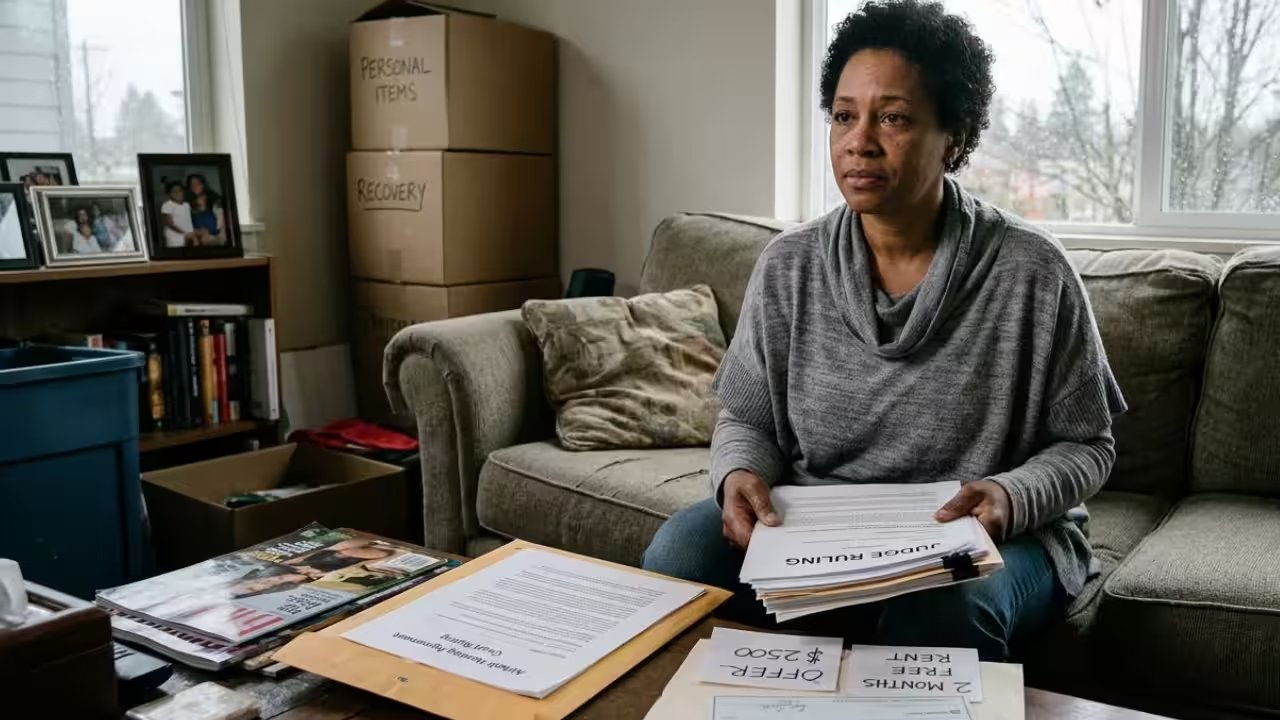
A short-term lodging booking in Northeast Washington has collapsed into an acrimonious courtroom standoff after a guest refused to vacate a private residence.
Rochanne Douglas, a 49-year-old Maryland real estate entrepreneur who bought the Northeast rowhouse in 2019, opened her doors in late February 2025 to Shadija Romero for what was agreed to be a temporary 32-day Airbnb stay. Romero arrived with a familiar urban plea. She said an apartment fire displaced her from her previous residence and that needed repairs would take roughly five weeks. Douglas set the rate at $100 a night. Romero paid the platform promptly and moved inside.
The trouble started when the initial booking expired.
Romero informed Douglas that the contractors renovating her burned apartment had fallen behind schedule. She asked to stay another month. Douglas agreed—but took the payment directly, stepping outside the Airbnb platform ecosystem. That procedural shift proved disastrous. Airbnb later stated that private, off-platform extensions fall outside its terms of service and legal protections. Romero had secured direct shelter, and Douglas lost the platform's enforcement levers.
By June, the money stopped arriving on schedule. Payments trickled in late or arrived in fractured amounts, paired with serial requests for extensions. Alarmed by the delays, Douglas opened District and state court dockets to investigate Romero’s background.
She uncovered an extensive history of housing litigation. D.C. court records revealed Romero owed nearly $50,000 in back rent for another District residence in 2024. In 2023, a judge signed an eviction order ejecting Romero from a separate District apartment complex after she defaulted on rent. Public filings in Maryland and Virginia cataloged at least a dozen civil judgments and liens stretching back to 2008, almost all tied to residential landlord disputes.
The discovery pushed Douglas into immediate action. When August arrived with no rent paid by mid-month, Douglas slapped Romero with both an immediate vacate notice and a formal 30-day eviction directive. Romero cobbled together the August fees, but September brought another round of piecemeal deposits. Douglas drew a hard line. She instructed Romero to clear out and warned that power to the property would terminate on October 15.
Douglas refused to negotiate further.
I told her she needed to vacate the property. And I specifically told her this is why I’m not a landlord because this is the kind of correspondence I don’t want to do. Airbnb is very clear. You book it, they pay you the next day. ... I didn’t want to be in a situation where I had to listen to this every month.
Rochanne Douglas, Northeast D.C. Homeowner
When October 15 came and went with Romero still living inside the rowhouse, Douglas severed the electric service. The blackout did not last long. Romero bypassed the homeowner entirely, contacting regional utility provider Pepco to transfer the account into her own name and restore the electricity.
Romero then mounted a defense based on District municipal housing law, asserting that her multi-month occupancy granted her full statutory tenant rights. Under Washington, D.C. regulations, a resident can establish legal tenancy without ever signing a formal written lease. Property owners cannot simply change locks or cut utilities to expel an occupant—even when rent defaults occur—without securing an eviction warrant through the Superior Court.
| Dispute Factor | Case Record & Timeline | Status Details |
|---|---|---|
| Booking Date | Late February 2025 | Initial 32-day term via Airbnb at $100/night |
| Off-Platform Transition | April 2025 | Guest negotiated direct off-platform payments |
| Prior D.C. Debt Record | 2024 Court Judgment | Nearly $50,000 in unpaid residential rent |
| Prior Eviction Record | 2023 Judicial Order | Ordered evicted from D.C. apartment complex |
Desperate to regain possession without enduring months of judicial delays, Douglas offered Romero $2,500 in direct cash alongside two full months of rent-free living if she surrendered the keys. Romero rejected the proposal. The dispute now sits before a D.C. Superior Court judge, who will rule on Douglas's formal petition for repossession and decide whether Romero qualifies as a protected tenant under District law.
| Civil Liens History |
| 2008 to Present |
| At least 12 landlord-tenant liens across MD & VA |
| Cash-For-Keys Offer | Autumn 2025 | $2,500 cash plus two months waived rent (Rejected) |
| Utility Escalation | October 15, 2025 | Account transferred to Pepco under guest's name |