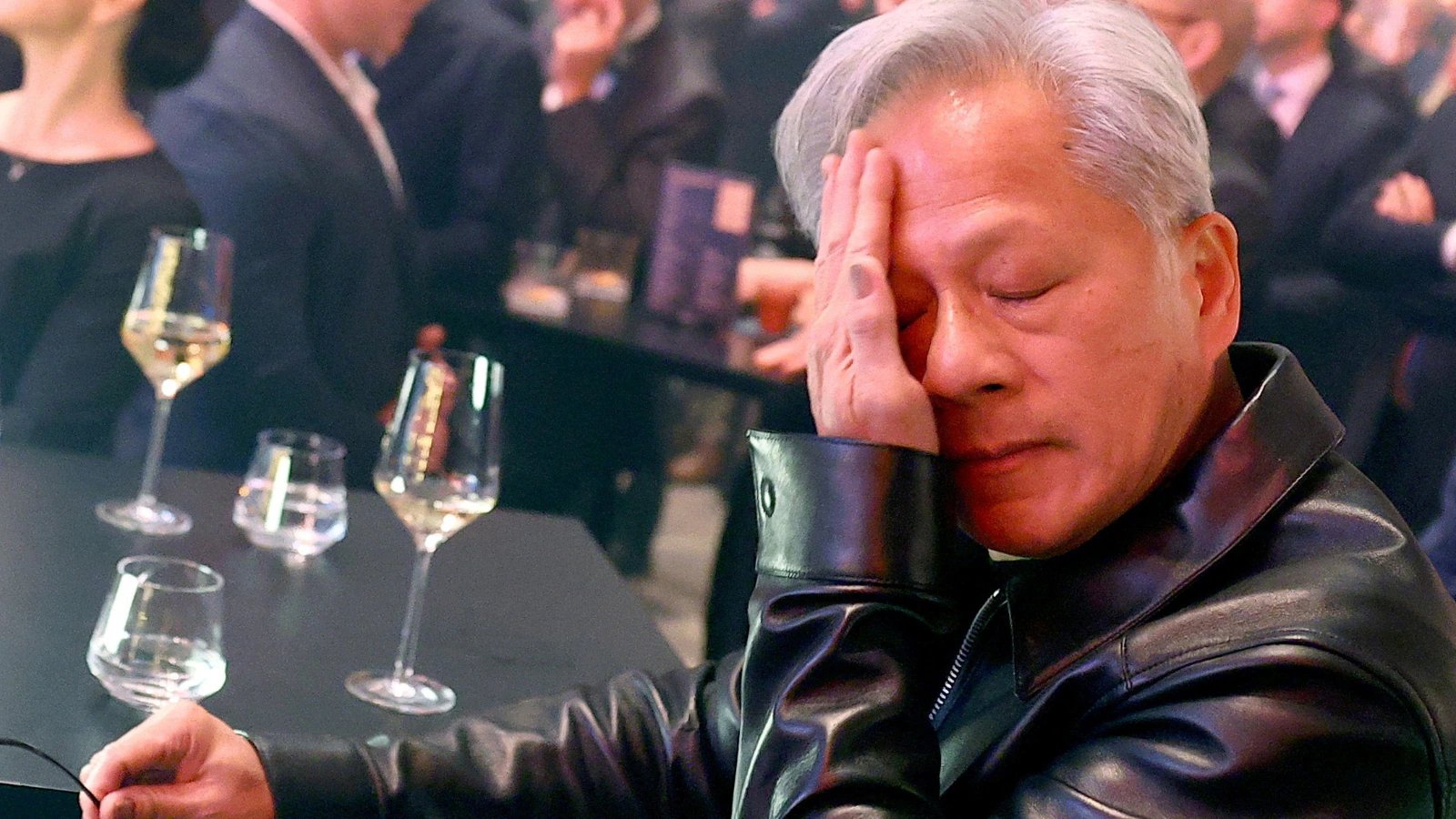
Jensen Huang surrendered his empire in the dark.
Late Wednesday night, following hours of tense remote deliberations, the board of directors of Nvidia Corp. stripped its iconic co-founder of all executive power, concluding an extraordinary multi-week governance collapse that ended his three-decade reign atop the world's preeminent semiconductor enterprise. Huang left the session with zero formal duties remaining at the multitrillion-dollar chipmaker he built from scratch.
The capitulation was total.
Inside the room, the relentless, hyper-detailed executive who once micromanaged everything from next-generation silicon packaging down to entry-level stock compensation had vanished. Colleagues watching the late-night showdown noted that Huang's trademark swagger dissolved into detached apathy, repeatedly uttering "whatever" and "I don't care." In private exchanges with associates in the hours following his removal, Huang adopted a fiercely penitent tone, bitterly describing himself as a "piece of sh--."
Nvidia board chair Harvey Jones confirmed the tectonic leadership purge in an urgent dispatch sent to global staff on Thursday morning:
Jensen’s contributions to Nvidia are profound. Nvidia is one of the most consequential technology companies in the world.
Yet behind the board's measured corporate vocabulary lay an executive succession crisis ignited at the worst conceivable operating juncture.
The crisis broke open in late October when disclosures tied Huang to Alice Huang, an operative suspected by intelligence authorities of working on behalf of Chinese state interests. For days, the board—dominated by Huang’s longtime venture partners, boardroom allies, and close personal confidants—resisted intervention. Huang had spent months flatly denying any inappropriate conduct, having brushed off internal inquiries since late 2025 by insisting his dealings with Alice Huang mirrored normal client interactions across Asian supply chains.
That defense cracked wide open on Friday, Nov. 6, when US intelligence disclosures confirmed that the relationship was an active romantic liaison.
Armed with the security findings, Nvidia General Counsel Tim Teter—who also serves as secretary to the board—drove directly to Huang’s private residence to confront the chief executive. Confronted with the evidence, Huang admitted to the affair. When directors still hesitated to publicly discipline their star executive, Teter laid down an ultimatum: the board had a fiduciary duty to act immediately.
The board retained premier corporate defense law firm Wachtell, Lipton, Rosen & Katz to head an independent forensic investigation. By Sunday, Nov. 8, Huang broadcast a companywide confession via email, acknowledging the affair, apologizing to his family after 41 years of marriage, and pledging unconditional cooperation with external investigators.
| Executive Transition Metric | Detail / Impact |
|---|---|
| Departing Executive | Jensen Huang (Co-founder & CEO, stripped of all roles) |
| Interim Chief Executive | Colette Kress (Chief Financial Officer) |
| Independent Legal Counsel | Wachtell, Lipton, Rosen & Katz |
| Direct Reports Affected | ~60 senior executives routed directly to CEO |
| Upcoming Q3 Earnings | Nov. 17 (Wall Street consensus: sales near doubling) |
| Companywide All-Hands | Nov. 18 |
While external attorneys examined compliance breaches, Huang’s operational grip slipped visibly across Santa Clara headquarters.
Nvidia operates under a notoriously flattened, idiosyncratic corporate hierarchy. Approximately 60 senior vice presidents and business unit heads reported directly to Huang. Every employee across the global enterprise was required to transmit frequent memos outlining their top five priorities—dispatches that Huang personally inspected at all hours of the night to enforce operational alignment. Over the past week, those rapid-fire responses slowed to a crawl. The machine had begun to seize up.
Any hope of surviving the Wachtell probe died Wednesday when fresh disclosures established that Huang was concurrently engaged in an undisclosed extramarital relationship with Kimberly Powell, Nvidia’s vice president of health care.
Faced with compound governance violations and catastrophic security vulnerabilities, directors convened an emergency virtual session that dragged past midnight. They gave Huang no path of retreat. Resignation was mandatory.
Market Context: The sudden vacuum at the apex of Nvidia threatens the very operating engine powering the generative artificial intelligence buildout. Huang was not simply an administrator; he personally negotiated global wafer allocations, courted political leaders including US President Donald Trump, and dictated chip roadmap architectures. Institutional desks now face the reality of an enterprise forced to restructure its command chain while carrying sovereign-level capital exposure across every major cloud balance sheet.
By Thursday morning, Chief Financial Officer Colette Kress stepped into the interim chief executive seat, moving swiftly to stem panic across trading floors and engineering labs.
"I believe deeply in this company and in its future," Kress wrote in an urgent message to the workforce. "More than anything, I believe in each of you, in our customers and partners and in the vital role we play every day in the global economy. The Board, staff and I recognise that this has been an extraordinarily difficult period and I want you to know how grateful we are for your resilience, professionalism and continued dedication."
Kress faces an immediate trial by fire. On Nov. 17, Nvidia must report fiscal quarterly earnings to Wall Street, where equity analysts have priced in a near doubling of year-over-year revenue growth. She will follow that critical financial release by presiding over an all-hands internal town hall on Nov. 18, tasked with steadying a leadership apparatus suddenly severed from its founding architect.