autonomous-truckplusainvidiatestingsecurity
PlusAI Autonomous‑Truck Testing Trailers Stolen, 20 Tons of Sand Gone
Published: September 29, 2026
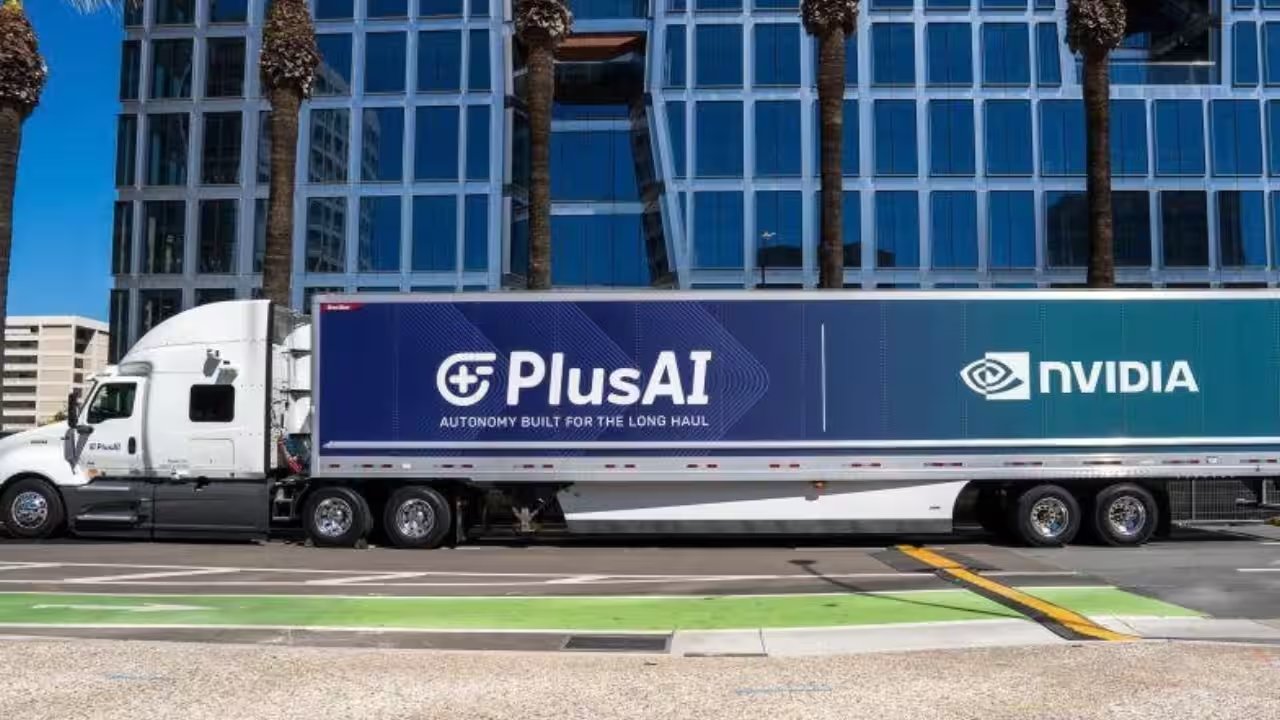
PlusAI’s autonomous‑truck testing trailers were stolen from its Fremont warehouse, carrying 40,000 pounds of sand—equivalent to 20 tons. The breach underscores the need for tighter security on test fleets and could push operators to rethink how they handle simulated cargo.
The theft, uncovered on September 23, 2026, saw two Nvidia‑branded trailers leave PlusAI’s Fremont warehouse overnight, each loaded with roughly 20,000 pounds of sand.
The trailers were part of PlusAI’s routine testing of its autonomous‑truck platform in collaboration with Nvidia; the sand mimics the weight of commercial freight, allowing engineers to assess acceleration, braking and handling under realistic load conditions.
While the company’s trucks themselves remained intact, the loss of the trailers and their 20‑ton payload raises questions about how test fleets are secured—especially when high‑profile brands like Nvidia are involved.
Industry peers such as Tesla Truck and Nikola have long used weighted cargo in their autonomous‑drive trials, but reports of vandalism or theft are rare, making this incident a first‑hand reminder that physical security is as critical as software safeguards.
Police footage captured two unidentified tractor units at the scene, and the trailers were later found half a mile away in Newark after an acquaintance of a PlusAI executive spotted them. The quick recovery of both trailers and their sand cargo suggests that the company’s incident‑response protocols were effective.
For fleet operators eyeing autonomous trucks, the event signals that investment in robust perimeter defenses—surveillance, lock‑picking deterrents, and real‑time asset tracking—must accompany software‑centric safety nets.
As the autonomous‑truck market edges closer to commercial deployment, such incidents will likely prompt regulators and manufacturers to tighten testing‑site security guidelines, ensuring that the path to full autonomy is paved with both technological and logistical reliability.