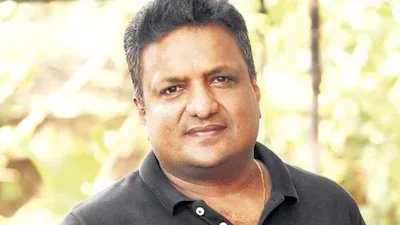
The man who turned Mumbai’s shadowy underworld into a cinematic spectacle is gone. Sanjay Gupta died on October 30, 2026, at the age of 57, according to Film Information. It was a quiet, tragic end for a filmmaker whose career was defined by the roar of gunshots and the hum of city traffic. He fell in his kitchen around 2:30 pm, sustaining a head injury that proved fatal. His wife and sons were present, yet the severity of the fall went unnoticed until it was too late. The exact circumstances remain under investigation, but the stillness of that afternoon stands in stark contrast to the kinetic energy he brought to every frame.
Gupta wasn’t just a director; he was the architect of a specific flavor of Bollywood crime drama. His partnership with Sanjay Dutt produced a string of memorable entries, from the heist thriller Kaante (2002) to the raw, unpolished Musafir (2004). But it was Shootout at Lokhandwala (2007) that cemented his reputation. Based on the real 1991 police encounter, Gupta didn’t just direct it; he produced and co-wrote it. The film’s gritty realism and Dutt’s intense performance set a new benchmark for the genre. He tried to replicate that authenticity with Shootout at Wadala in 2013, though the reception was more mixed.
His range extended beyond the crime bucket. In 2015, he helmed Jazbaa, bringing Aishwarya Rai Bachchan into a horror-thriller mix. Two years later, Kaabil paired Hrithik Roshan with Yami Gautam in a story about disability and determination. He also dabbled in anthologies like Dus Kahaniyaan and the more experimental Mumbai Saga in 2021, featuring John Abraham and Emraan Hashmi. Before directing, Gupta spent years in post-production and sound design, assisting Pankaj Parashar on Jalwa. That background in sound likely informed his visual style—crisp, loud, and deliberately unpolished.
As a producer through his banner White Feather Films, founded in 2001, he kept trying to push new narratives. His final projects, The Miranda Brothers and Visfot, both released in 2024, featured stars like Meezaan Jafri, Harshvardhan Rane, Riteish Deshmukh, and Fardeen Khan. The industry is reeling from the loss. Gupta’s death leaves a gap in the landscape of urban crime cinema, a space he helped define for a generation of filmmakers. He will be remembered not just for the films he made, but for the specific, gritty texture he gave to Mumbai on screen.