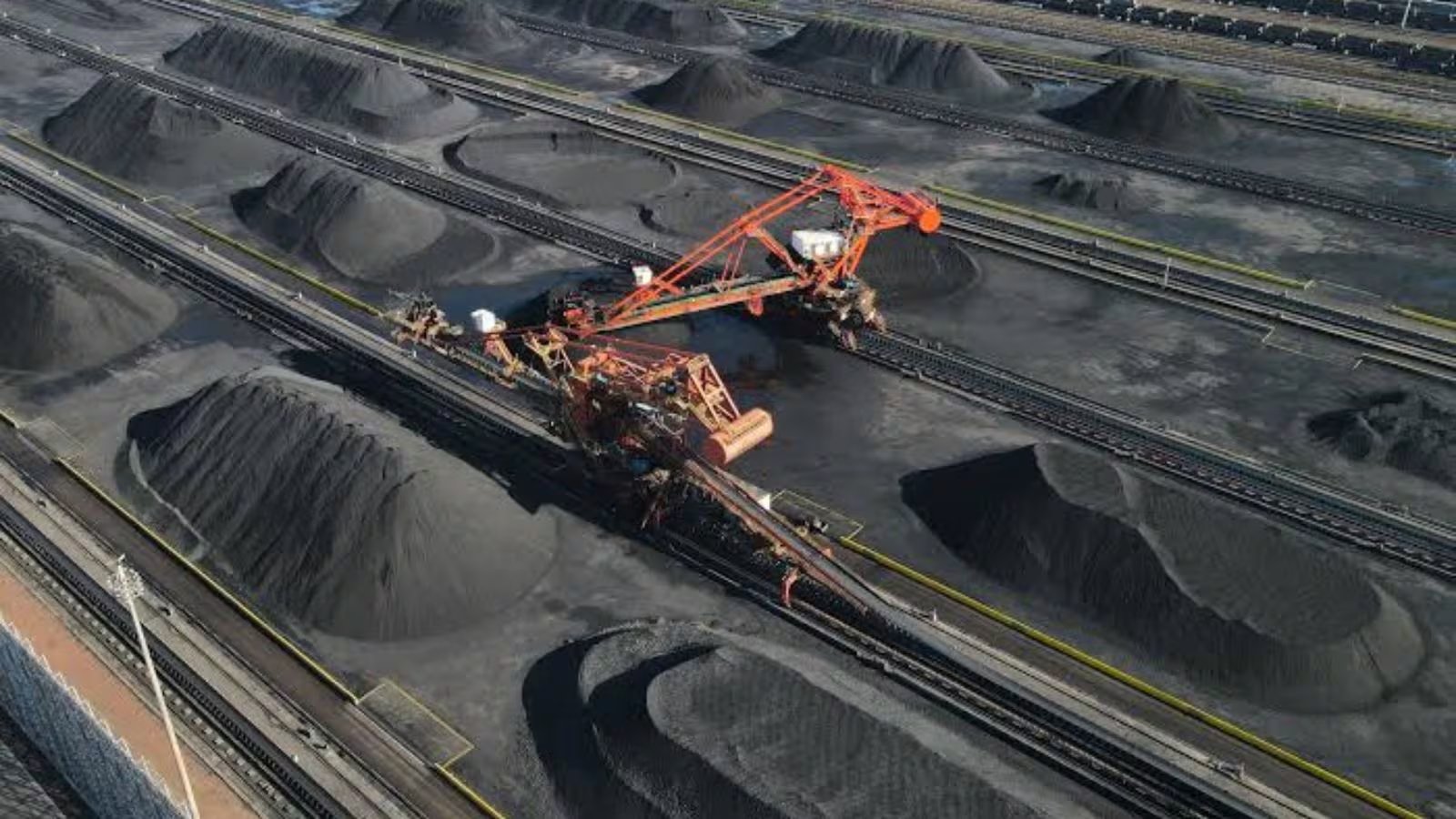
NTPC Ltd has stepped up its push into synthetic fuels. The state-run power producer submitted two project proposals under Round 2 of the Centre's national coal gasification program, staking out capacity in synthetic urea, methanol, and dimethyl ether.
Capital allocations followed immediately. The Coal Ministry closed Round 2 and launched Round 3 on November 10, 2026, setting a submission deadline of January 11, 2027, for both public and private operators eyeing commercial-scale coal and lignite gasification blocks. The successive tender windows feed into New Delhi's overarching mandate: gasifying 100 million tonnes of domestic coal annually by 2030.
The math centers on import substitution. Domestic coal currently fuels 55% of India's primary energy appetite and drives 74% of its utility-scale electricity generation. Yet the country remains hostage to volatile seaborne fuel markets, buying over 85% of its crude oil from overseas terminals. Converting pithead coal into synthesis gas, ammonia, and chemical feedstock offers an immediate buffer against foreign exchange outflows.
Cabinet approvals have already mobilized critical fiscal backing, establishing a ₹37,500 crore coal gasification program alongside an earlier ₹8,500 crore incentive mechanism. Government projections indicate mining royalties and operational receipts will yield ₹6,300 crore in annual state revenues once commercial extraction runs at scale.
| Project Parameter | Policy Target & Valuation Metric | Official Timeline / Status |
| :--- | :--- | :--- |
|---|---|---|
| Approved Gasification Outlay | ₹37,500 crore | Active cabinet framework |
| Initial Phase Experimental Support | ₹46,000 crore | Allocated for pilot commercial run |
| Dedicated Financial Incentive Pool | ₹8,500 crore | Pre-Cabinet sanctioned mechanism |
| Targeted Gasification Capacity | 100 million tonnes annually | Hard deadline by 2030 |
| Projected Mining State Revenue | ₹6,300 crore per year | At full operational scale |
| Total Planned Gasification Plants | 25 production units |
| Fast-Track Facilities | 4 advanced units | Completion scheduled within 1 year |
|---|---|---|
| Round 3 Bidding Window | Coal & lignite project submissions | Nov 10, 2026 – Jan 11, 2027 |
On October 23, Union Coal and Mines Minister G Kishan Reddy confirmed that the Centre had unlocked ₹46,000 crore in financial support for the opening phase of gasification projects to test technologies before scaling up production across heavy industries.
Efforts are underway to improve efficiency, technology, and private partnership in the sector. Plans for conversion into syngas, ammonia, urea, and methanol via coal gasification are being expedited, as MoUs have been completed after the auction to cut India's import dependence.
Technology sovereignty remains the primary operational hurdle. Indian coal runs high in ash content, requiring specialized gasifiers tailored to indigenous geological strata. Coal Ministry officials warned domestic syndicates against over-relying on turnkey European or East Asian proprietary technology.
Additional Secretary Rupinder Brar addressed the structural risk directly at an industry summit in New Delhi:
If you keep bringing technology from overseas, then you always wait for technicians to come over as a cascading effect.
The macroeconomic payoff of indigenisation is stark. Energy economists assess that if domestic coal gasification assets achieve steady-state operation, India's crude import bill—which currently covers 85% of domestic consumption—could sink to 65% or 70%. That shift alone would erase 15% to 20% of foreign currency expenditures on imported hydrocarbon volumes, though official projections regarding liquefied natural gas (LNG) and liquefied petroleum gas (LPG) replacement rates remain under calculation.
Market Context: Industrial urea production absorbs vast federal fertilizer subsidies, heavily tethered to volatile imported LNG prices. Synthetic urea manufactured via gasified domestic syngas bypasses seaborne gas price spikes, anchoring chemical operating margins for producers while curbing the Union government's fiscal deficit.
Beyond NTPC, corporate balance sheets are positioning for downstream participation. Three major Indian industrial conglomerates have submitted expressions of interest to deploy capital alongside state-owned entities. The Prime Minister's Office is monitoring joint ventures between Coal India and private infrastructure consortia.
Surface gasification plants are moving through active testing across eastern mining belts, but planners are directing capital toward underground coal gasification (UCG). Deep-seam in-situ gasification circumvents massive open-cast surface disruptions, cutting direct emissions profile in line with underground operations active across Canada, Germany, France, and China.
The execution clock is ticking. India has mapped out 25 commercial-scale gasification plants over the next five years, with four plants already deep into fabrication and targeted for completion within 12 months. With NTPC locking in its downstream chemicals pipeline and Round 3 bids closing on January 11, 2027, the sovereign focus turns from policy paper allocations to ground-level capital expenditure.
| 5-year execution timeline |